
Biography Category
Name :
Jonas Salk
Date :
Views :
392
Category :
Birth Date :
28/10/1914
Birth Place :
New York
Death Date :
JUNE 23, 1995
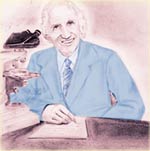
[b]On his early Memories[/b][br /]
[br /]
Salk wanted to be a lawyer but didn’t pursue it, for his mother thought he wouldn’t succeed in it – from his earlier Pre-Law he switched over to Pre-Med. His mother’s suggestion of him being a teacher did not appeal to him. He developed an interest in Science. As he says, "I was interested in Science and I began to think about the scientific aspect of Medicine. My intention was to go to medical school, and then become a medical scientist. I did not intend to practice medicine, although in medical school, and in my internship, I did all the things that were necessary to qualify me in that regard."[br /]
[br /]
He had an opportunity to drop medicine and get into science. He was told that he could get Ph.D. in biochemistry but his initial desire of being a lawyer lingered, but only with a distinction. As now he was "interested in the laws of native, as distinct from the laws that people make."[br /]
[br /]
[b]His important break[/b][br /]
[br /]
At the end of his first year of Medical School, Dr. R. Keith Cannon, Professor of Chemistry offered him an opportunity to work for one year, as a researcher in Chemistry. Salk seized the golden opportunity; though it meant him leaving the classes, being alone and after that one-year return to another class. But, since his initial desire was to do scientific research, he agreed and it laid the foundation for his future task.
His unconventional training[br /]
[br /]
He didn’t have the required degree of Ph.D. and was not classically trained. During his time, Medical Scientists were self-made and "there wasn’t a particular pattern, which of course provided me with a degree of freedom." Though he lacked the training, he was still able to contribute and his work was purposeful.[br /]
[br /]
[br /]
Salk wanted to be a lawyer but didn’t pursue it, for his mother thought he wouldn’t succeed in it – from his earlier Pre-Law he switched over to Pre-Med. His mother’s suggestion of him being a teacher did not appeal to him. He developed an interest in Science. As he says, "I was interested in Science and I began to think about the scientific aspect of Medicine. My intention was to go to medical school, and then become a medical scientist. I did not intend to practice medicine, although in medical school, and in my internship, I did all the things that were necessary to qualify me in that regard."[br /]
[br /]
He had an opportunity to drop medicine and get into science. He was told that he could get Ph.D. in biochemistry but his initial desire of being a lawyer lingered, but only with a distinction. As now he was "interested in the laws of native, as distinct from the laws that people make."[br /]
[br /]
[b]His important break[/b][br /]
[br /]
At the end of his first year of Medical School, Dr. R. Keith Cannon, Professor of Chemistry offered him an opportunity to work for one year, as a researcher in Chemistry. Salk seized the golden opportunity; though it meant him leaving the classes, being alone and after that one-year return to another class. But, since his initial desire was to do scientific research, he agreed and it laid the foundation for his future task.
His unconventional training[br /]
[br /]
He didn’t have the required degree of Ph.D. and was not classically trained. During his time, Medical Scientists were self-made and "there wasn’t a particular pattern, which of course provided me with a degree of freedom." Though he lacked the training, he was still able to contribute and his work was purposeful.[br /]
[br /]
Salk Jonas Edward, born on October 28, 1914, was the eldest and the smartest child in the Salk family. Though he had no role models, his mother’s persistence to see her children educated, made him reach the zenith of his career.[br /]
[br /]
Born to Russian-Jewish immigrant parents, who were neither formally educated nor rich enough to educate their children, Salk was the eldest amongst his siblings and had a keen desire to learn. His parents especially his mother, worked hard from a very young age so that Salk and his siblings could be educated. As they say, "Behind every successful man, there is a woman," holds true for Salk, as his mother influenced him a great deal. She was ambitious not for herself but for her children. Being the eldest, Salk got all her attention, at least till he had another brother, after a gap of five years. She wanted to make sure that her children advanced in their lives. All this ensured that Salk and his siblings never lacked moral support and encouragement from their parents and it became a driving factor in their lives, always inspiring them to be simply the best.[br /]
[br /]
As a child, Salk was not actually interested in science. He was interested in humans and this motivated and intrigued him the most. He always wanted to do something for mankind and in that sense was a very different child from the rest. Salk was a thinker. He observed and reflected about the past and the future. It is indeed this curiosity, observation and desire to know more that helped him attain success in life.[br /]
[br /]
Salk was the first in his family to attend college, graduating at the age of 15. His being intelligent was evident early in life when he got a scholarship for college. Along with his studies he worked in his spare hours to earn extra money. His initial desire to be a lawyer faded and after just a couple of months, he changed his subject and decided to major in medicine. Little did he know that this decision would change not just his life but would be a boon for mankind.[br /]
[br /]
It was here, through his medical years as a student that Salk was first exposed to research. He was invited to spend one year researching influenza; which paved a way for his latter successful research on developing a vaccine for polio. He attended the New York University and received his MD. It was here that he met Donna, whom he married and had three children.[br /]
[br /]
After completing medical school and internship, Salk returned to his study of influenza, the flu virus. He along with Thomas Francis were successful in inventing a vaccine for influenza.[br /]
[br /]
In 1947, Salk accepted an appointment at the University of Pittsburgh Medical School. While working there with the National Foundation for Infantile Paralysis, Salk got an opportunity to develop a vaccine for one of the most dreaded diseases – polio. It is pertinent to note that polio generally affects children between the ages 5-15 or even more as seen in some cases. The virus actually enters the body cells and resides for a long period. It gets active only when the body become weak loosing immunity during illness. With high body temperatures, the virus multiplies and starts affecting other healthy cells along the nerves reaching the brain cells. Finally, the part most afected, usually a leg or an arm or any other part of the body that starts growing thinner and weaker ultimately leading to paralysis. [br /]
[br /]
Salk did not work as a person or an individual; instead he worked as a team where every one explored the many facets of the problem and correlated the results, hence working faster and more efficiently. He slogged for eight years and was eventually successful in finding a vaccine for polio by using a ‘killed’ virus. In 1955, a major vaccination health program was undertaken which was the first of its kind in America. Children were successfully vaccinated and Salk was hailed as a ‘miracle worker’. Awards and honors were bestowed upon him from every nook and corner of the world. Unfortunately, inspite of all the fame, fortune and success, his personal life was not sailing smoothly. He and his wife were divorced. He remarried Francoise G’lot and though they did not have any children, they lived happily.
Salk’s continued to work after his success. He founded an institute for medical studies where he worked to find the cause and prevention of other deadly diseases like cancer and AIDS. He also wrote several books with his sons. His books dealt not just with the researches and their scientific aspects, but also on peace and mankind in general.[br /]
[br /]
He died at the age of 80, before he could make his second research see the light of the day.[br /]
[br /]
[br /]
Born to Russian-Jewish immigrant parents, who were neither formally educated nor rich enough to educate their children, Salk was the eldest amongst his siblings and had a keen desire to learn. His parents especially his mother, worked hard from a very young age so that Salk and his siblings could be educated. As they say, "Behind every successful man, there is a woman," holds true for Salk, as his mother influenced him a great deal. She was ambitious not for herself but for her children. Being the eldest, Salk got all her attention, at least till he had another brother, after a gap of five years. She wanted to make sure that her children advanced in their lives. All this ensured that Salk and his siblings never lacked moral support and encouragement from their parents and it became a driving factor in their lives, always inspiring them to be simply the best.[br /]
[br /]
As a child, Salk was not actually interested in science. He was interested in humans and this motivated and intrigued him the most. He always wanted to do something for mankind and in that sense was a very different child from the rest. Salk was a thinker. He observed and reflected about the past and the future. It is indeed this curiosity, observation and desire to know more that helped him attain success in life.[br /]
[br /]
Salk was the first in his family to attend college, graduating at the age of 15. His being intelligent was evident early in life when he got a scholarship for college. Along with his studies he worked in his spare hours to earn extra money. His initial desire to be a lawyer faded and after just a couple of months, he changed his subject and decided to major in medicine. Little did he know that this decision would change not just his life but would be a boon for mankind.[br /]
[br /]
It was here, through his medical years as a student that Salk was first exposed to research. He was invited to spend one year researching influenza; which paved a way for his latter successful research on developing a vaccine for polio. He attended the New York University and received his MD. It was here that he met Donna, whom he married and had three children.[br /]
[br /]
After completing medical school and internship, Salk returned to his study of influenza, the flu virus. He along with Thomas Francis were successful in inventing a vaccine for influenza.[br /]
[br /]
In 1947, Salk accepted an appointment at the University of Pittsburgh Medical School. While working there with the National Foundation for Infantile Paralysis, Salk got an opportunity to develop a vaccine for one of the most dreaded diseases – polio. It is pertinent to note that polio generally affects children between the ages 5-15 or even more as seen in some cases. The virus actually enters the body cells and resides for a long period. It gets active only when the body become weak loosing immunity during illness. With high body temperatures, the virus multiplies and starts affecting other healthy cells along the nerves reaching the brain cells. Finally, the part most afected, usually a leg or an arm or any other part of the body that starts growing thinner and weaker ultimately leading to paralysis. [br /]
[br /]
Salk did not work as a person or an individual; instead he worked as a team where every one explored the many facets of the problem and correlated the results, hence working faster and more efficiently. He slogged for eight years and was eventually successful in finding a vaccine for polio by using a ‘killed’ virus. In 1955, a major vaccination health program was undertaken which was the first of its kind in America. Children were successfully vaccinated and Salk was hailed as a ‘miracle worker’. Awards and honors were bestowed upon him from every nook and corner of the world. Unfortunately, inspite of all the fame, fortune and success, his personal life was not sailing smoothly. He and his wife were divorced. He remarried Francoise G’lot and though they did not have any children, they lived happily.
Salk’s continued to work after his success. He founded an institute for medical studies where he worked to find the cause and prevention of other deadly diseases like cancer and AIDS. He also wrote several books with his sons. His books dealt not just with the researches and their scientific aspects, but also on peace and mankind in general.[br /]
[br /]
He died at the age of 80, before he could make his second research see the light of the day.[br /]
[br /]
Jonas Salk, the great physician and medical researcher was the first to develop a safe and effective vaccine for poliomyelitis more commonly known as polio. An equally great humanitarian, he was hailed both by the public and his contemporaries for his magnanimous nature when he refused to patent his vaccine and instead insisted that it be distributed widely. In spite of not having illustrious parents, he reached the pinnacle of success, fame and fortune with the three D’s—Determination, Dedication and Diligence.[br /]
[br /]
For his work and efforts he was showered with many awards and honors. He wrote books not just on science and his related researches but also on peace and human survival. He also founded an institute for medical studies, Jonas Salk Institute For Biological Studies.[br /]
[br /]
His insatiable thirst for knowledge did not allow him to rest even after retirement and he continued research into finding causes, prevention and cure of diseases, like cancer and AIDS. He wanted to develop a vaccine particularly for AIDS but destiny had other plans for him. He passed away at the age of 80.[br /]
[br /]
As James Watson puts it, "Miracles are worked by people like Jonas Salk."[br /]
[br /]
[br /]
[br /]
For his work and efforts he was showered with many awards and honors. He wrote books not just on science and his related researches but also on peace and human survival. He also founded an institute for medical studies, Jonas Salk Institute For Biological Studies.[br /]
[br /]
His insatiable thirst for knowledge did not allow him to rest even after retirement and he continued research into finding causes, prevention and cure of diseases, like cancer and AIDS. He wanted to develop a vaccine particularly for AIDS but destiny had other plans for him. He passed away at the age of 80.[br /]
[br /]
As James Watson puts it, "Miracles are worked by people like Jonas Salk."[br /]
[br /]
[br /]
[b]OCT. 28, 1914[/b] He was born in New York City.[br /]
[br /]
[b]1936[/b] Went to the New York University.[br /]
[br /]
[b]1939[/b] Received his M.D., Got married to Donna.[br /]
[br /]
[b]1942[/b] Went to University of Michigan.[br /]
[br /]
[b]1947[/b] Was appointed head of the virus research laboratory at the University of Pittsburgh and the same year he was also appointed as the research professor of bacteriology.[br /]
[br /]
[b]1949-54[/b] Professor of preventive medicines.[br /]
[br /]
[b]1950[/b] The dreaded summer in America when many were caught in the trap of a dreaded disease Poliomyelitis.[br /]
[br /]
[b]1956[/b] Salk inoculated over a million and a half children with his polio vaccine.[br /]
[br /]
[b]APRIL 12,1955[/b] The biggest landmark in medical history when his vaccine was successful.[br /]
[br /]
[b]1963[/b] He founded the Jonas Salk Institute For Biological Studies.[br /]
[br /]
[b]1968[/b] He and Donna, his first wife, were divorced.[br /]
[br /]
[b]1985[/b] Retired but continued to work even after that, as he wanted to know more.[br /]
[br /]
[b]JUNE 23, 1995[/b] Expired at the age of eighty in San Diego.[br /]
[br /]
[br /]
[br /]
[b]1936[/b] Went to the New York University.[br /]
[br /]
[b]1939[/b] Received his M.D., Got married to Donna.[br /]
[br /]
[b]1942[/b] Went to University of Michigan.[br /]
[br /]
[b]1947[/b] Was appointed head of the virus research laboratory at the University of Pittsburgh and the same year he was also appointed as the research professor of bacteriology.[br /]
[br /]
[b]1949-54[/b] Professor of preventive medicines.[br /]
[br /]
[b]1950[/b] The dreaded summer in America when many were caught in the trap of a dreaded disease Poliomyelitis.[br /]
[br /]
[b]1956[/b] Salk inoculated over a million and a half children with his polio vaccine.[br /]
[br /]
[b]APRIL 12,1955[/b] The biggest landmark in medical history when his vaccine was successful.[br /]
[br /]
[b]1963[/b] He founded the Jonas Salk Institute For Biological Studies.[br /]
[br /]
[b]1968[/b] He and Donna, his first wife, were divorced.[br /]
[br /]
[b]1985[/b] Retired but continued to work even after that, as he wanted to know more.[br /]
[br /]
[b]JUNE 23, 1995[/b] Expired at the age of eighty in San Diego.[br /]
[br /]
[br /]
Poliomyelitis or ‘Polio’ as referred to by the hoi-polloi was caused by a virus, a fact well established before John Salk’s advent. It was a disease surrounded by many myths and misconceptions. Scientists, researchers and all medical practitioners spent a lot of time dawdling about the cause and prevention of this deadly disease. Polio would either mercilessly kill its victims or give them a life worse than death itself. The victims of this disease were forced to use crutches or wheel chairs as it paralyzed the legs or alternatively made the chest muscles go so weak that they could not duly perform their task of breathing and it (chest) had to be encased in iron.[br /]
[br /]
The disease was caused by a virus, which entered the digestive tract of a person. It spread through contaminated water, air, food or dirty fingers. Millions of people fell prey to this giant killer and though by the middle of the twentieth century all other infectious diseases were either preventable, curable or at least under control, this deadly disease prevailed. Fortunately, the twentieth century also produced a great man with an extraordinary brain, to fight off such an alarming disease. He was none other than Jonas Salk.[br /]
[br /]
Salk already had first hand experience of developing a vaccine for influenza while studying medical science. He, after graduating, worked with Thomas Francis in investigating the virus and learnt how to kill it with ultraviolet light. He discovered an interesting feature that though dead, the virus was still able to make the human body produce antibodies. This became the key to his latter efforts to fight polio.[br /]
[br /]
Salk started working on polio at the University of Pittsburgh with the staff of medical school. Earlier he believed that this was a nerve disease, as, the poliovirus affected the victim’s nerves and paralyzed them.[br /]
[br /]
Salk used an innovative way of working. He did not work as an individual but as a team, where all the men working together saw and attacked the problem taking different angles, correlated their results and then arrived at a conclusion. He realized that polio was caused by three different viruses and the vaccine had to be effective against all of them.[br /]
[br /]
In 1952, Doctors David Bodian and Dorothy Horstmann proved that polio entered the body through the digestive system. It next infected the blood causing a mild fever and then attacked the spine and the brain where it erupted into a full attack. This was enlightening for the researchers, as it gave them a chance to destroy the virus in the blood itself, before it manifested itself to its maximum potency.[br /]
[br /]
These discoveries were very helpful to Salk in expanding his horizon of knowledge. He was then working for the National Foundation and this put him at a place where he could receive reports from every researcher. By now, he was aware of the origin and spread of viruses. He mastered the technique of culture of the viruses. But he was now he faced with an uphill task of developing a vaccine that would kill these viruses and yet be safe for human beings.[br /]
[br /]
He had an option of using a weakened live virus, but it involved the risk of affecting the patient even if there was the slightest miscalculation.[br /]
[br /]
He had not forgotten his early discovery, that a dead virus could also cause the human body to produce antibodies, and decided to use this fact. He had to grow cultures of three different types of viruses that caused this disease. He performed this grueling task with the help of his medical staff and assistants. He painstakingly collected samples of each types of polio-infected monkeys, removed the fresh virus developed in them and set each type into a growth culture of his own. There was a long period of wait, what seemed as an eternity of endless days and nights, when the baths were carefully watched, tested and checked to see if they could produce antibodies when injected into otherwise healthy animals. During this entire process many animals were used as guinea pigs.[br /]
[br /]
Salk first had to ensure that the viruses were dead. For this he kept the viruses in a bath of formaldehyde at 99 degrees and carefully calculated the time it would take to kill every single virus. He reasoned that six days should suffice but kept the bath for nine days to be on the safer side. He wanted to be certain that his vaccine would be safe. When this was done, he combined the three solutions into one and finally had a vaccine that could safely protect humans from all types of polio. He conducted several tests on children and all proved to be effective.[br /]
[br /]
In the middle of 1954, over a million and a half children were inoculated agaist polio. The children were divided into two groups : one that received the original vaccine and other that received just plain liquid that had no effect at all. Even the doctors who gave the shots were unaware of the fact as to who got the actual vaccine. After spending a lot of restless nights, Salk was relieved when results were announced that the vaccine had protected 75% of the inoculated children. It was the greatest breakthrough in the history of polio. But Salk was not finished, he decided that an additional booster dose was required to enhance its effectiveness.[br /]
[br /]
A nationwide program was undertaken, but several deaths occurred that time and were traced directly to the vaccine. Meanwhile, Doctor Sabin had been quietly working on polio, and he was using a live but extremely weakened virus. He proved that this was more effective as the human body responds more readily to live virus. Moreover, it could be administered orally. But this discovery did not detract the original achievement of Jonas Salk. He was hailed by the world that breathed a sigh of relief, with the discovery of his polio vaccine. He was further praised when he refused to patent the vaccine and wanted it to be made available at every nook and corner of the world.[br /]
[br /]
The success also demonstrated the modern method of research, a technique where men work in teams that explore the different aspects of a problem and together arrive at a solution more quickly.[br /]
[br /]
In 1963, he founded an institute, named ‘Jonas Salk Institute For Biological Studies’, an innovative center for medical and scientific research. He continued to conduct researches and published books, some of which were written in collaboration with his sons, who were also medical scientists.[br /]
[br /]
[b]Eradication of Polio[/b][br /]
[br /]
Salk’s efforts paid off to a great extent and the deadly disease was almost eradicated. In 1960, there were 2,525 cases of paralytic polio, which dropped to measly 61 by 1965. It further reduced to an average of 8 between 1980 and 1990 and even those were saved by vaccination. In 1994, polio was declared eradicated in America.[br /]
[br /]
As the virus exists only in humans, who can be easily immunized, the World Health Organization (WHO) in 1988 set a goal for eradication of poliomyelitis from the entire world by 2000.[br /]
[br /]
In India too, the program for eradication of polio has been pursued on war like footing. Regular campaigns are carried through Radio, Television and Print media by the Government to publicise the announcement of dates for innoculations of children. This vigorous campaign will help eradicate polio from India which has millions of children affected by this scourge. The sustained efforts of the people and its awareness can only lead to such success that led to eradication of small pox form not only India, but throughout the world.[br /]
[br /]
For his efforts Salk was conferred many awards not just in America but also in various parts of the world. Salk did not rest even after retirement. He continued to work on other deadly diseases like multiple sclerosis, cancer and AIDS. But, unfortunately before he could meet with success in his latter works, he passed away at the age of 80. The world is indeed indebted to people like Salk, who rise beyond themselves and work for humanity, at large.[br /]
[br /]
His literary efforts[br /]
[br /]
Peace and human survival are the main themes of many of his books. Some of his illustrious works include [i]The Survival Of The Wisest, World Population and Human Values, Anatomy of Reality and Merging of Intuition and Reason.[/i][br /]
[br /]
[br /]
[br /]
[br /]
The disease was caused by a virus, which entered the digestive tract of a person. It spread through contaminated water, air, food or dirty fingers. Millions of people fell prey to this giant killer and though by the middle of the twentieth century all other infectious diseases were either preventable, curable or at least under control, this deadly disease prevailed. Fortunately, the twentieth century also produced a great man with an extraordinary brain, to fight off such an alarming disease. He was none other than Jonas Salk.[br /]
[br /]
Salk already had first hand experience of developing a vaccine for influenza while studying medical science. He, after graduating, worked with Thomas Francis in investigating the virus and learnt how to kill it with ultraviolet light. He discovered an interesting feature that though dead, the virus was still able to make the human body produce antibodies. This became the key to his latter efforts to fight polio.[br /]
[br /]
Salk started working on polio at the University of Pittsburgh with the staff of medical school. Earlier he believed that this was a nerve disease, as, the poliovirus affected the victim’s nerves and paralyzed them.[br /]
[br /]
Salk used an innovative way of working. He did not work as an individual but as a team, where all the men working together saw and attacked the problem taking different angles, correlated their results and then arrived at a conclusion. He realized that polio was caused by three different viruses and the vaccine had to be effective against all of them.[br /]
[br /]
In 1952, Doctors David Bodian and Dorothy Horstmann proved that polio entered the body through the digestive system. It next infected the blood causing a mild fever and then attacked the spine and the brain where it erupted into a full attack. This was enlightening for the researchers, as it gave them a chance to destroy the virus in the blood itself, before it manifested itself to its maximum potency.[br /]
[br /]
These discoveries were very helpful to Salk in expanding his horizon of knowledge. He was then working for the National Foundation and this put him at a place where he could receive reports from every researcher. By now, he was aware of the origin and spread of viruses. He mastered the technique of culture of the viruses. But he was now he faced with an uphill task of developing a vaccine that would kill these viruses and yet be safe for human beings.[br /]
[br /]
He had an option of using a weakened live virus, but it involved the risk of affecting the patient even if there was the slightest miscalculation.[br /]
[br /]
He had not forgotten his early discovery, that a dead virus could also cause the human body to produce antibodies, and decided to use this fact. He had to grow cultures of three different types of viruses that caused this disease. He performed this grueling task with the help of his medical staff and assistants. He painstakingly collected samples of each types of polio-infected monkeys, removed the fresh virus developed in them and set each type into a growth culture of his own. There was a long period of wait, what seemed as an eternity of endless days and nights, when the baths were carefully watched, tested and checked to see if they could produce antibodies when injected into otherwise healthy animals. During this entire process many animals were used as guinea pigs.[br /]
[br /]
Salk first had to ensure that the viruses were dead. For this he kept the viruses in a bath of formaldehyde at 99 degrees and carefully calculated the time it would take to kill every single virus. He reasoned that six days should suffice but kept the bath for nine days to be on the safer side. He wanted to be certain that his vaccine would be safe. When this was done, he combined the three solutions into one and finally had a vaccine that could safely protect humans from all types of polio. He conducted several tests on children and all proved to be effective.[br /]
[br /]
In the middle of 1954, over a million and a half children were inoculated agaist polio. The children were divided into two groups : one that received the original vaccine and other that received just plain liquid that had no effect at all. Even the doctors who gave the shots were unaware of the fact as to who got the actual vaccine. After spending a lot of restless nights, Salk was relieved when results were announced that the vaccine had protected 75% of the inoculated children. It was the greatest breakthrough in the history of polio. But Salk was not finished, he decided that an additional booster dose was required to enhance its effectiveness.[br /]
[br /]
A nationwide program was undertaken, but several deaths occurred that time and were traced directly to the vaccine. Meanwhile, Doctor Sabin had been quietly working on polio, and he was using a live but extremely weakened virus. He proved that this was more effective as the human body responds more readily to live virus. Moreover, it could be administered orally. But this discovery did not detract the original achievement of Jonas Salk. He was hailed by the world that breathed a sigh of relief, with the discovery of his polio vaccine. He was further praised when he refused to patent the vaccine and wanted it to be made available at every nook and corner of the world.[br /]
[br /]
The success also demonstrated the modern method of research, a technique where men work in teams that explore the different aspects of a problem and together arrive at a solution more quickly.[br /]
[br /]
In 1963, he founded an institute, named ‘Jonas Salk Institute For Biological Studies’, an innovative center for medical and scientific research. He continued to conduct researches and published books, some of which were written in collaboration with his sons, who were also medical scientists.[br /]
[br /]
[b]Eradication of Polio[/b][br /]
[br /]
Salk’s efforts paid off to a great extent and the deadly disease was almost eradicated. In 1960, there were 2,525 cases of paralytic polio, which dropped to measly 61 by 1965. It further reduced to an average of 8 between 1980 and 1990 and even those were saved by vaccination. In 1994, polio was declared eradicated in America.[br /]
[br /]
As the virus exists only in humans, who can be easily immunized, the World Health Organization (WHO) in 1988 set a goal for eradication of poliomyelitis from the entire world by 2000.[br /]
[br /]
In India too, the program for eradication of polio has been pursued on war like footing. Regular campaigns are carried through Radio, Television and Print media by the Government to publicise the announcement of dates for innoculations of children. This vigorous campaign will help eradicate polio from India which has millions of children affected by this scourge. The sustained efforts of the people and its awareness can only lead to such success that led to eradication of small pox form not only India, but throughout the world.[br /]
[br /]
For his efforts Salk was conferred many awards not just in America but also in various parts of the world. Salk did not rest even after retirement. He continued to work on other deadly diseases like multiple sclerosis, cancer and AIDS. But, unfortunately before he could meet with success in his latter works, he passed away at the age of 80. The world is indeed indebted to people like Salk, who rise beyond themselves and work for humanity, at large.[br /]
[br /]
His literary efforts[br /]
[br /]
Peace and human survival are the main themes of many of his books. Some of his illustrious works include [i]The Survival Of The Wisest, World Population and Human Values, Anatomy of Reality and Merging of Intuition and Reason.[/i][br /]
[br /]
[br /]
[br /]
Apart from the being a great scientist, Salk was also a great human being. Even as a child, he always had an inclination to work for humans. He was quite different from the rest of the children. He spent a great deal of time alone, thinking, wondering and pondering over various facets of life, in general. This habit stayed with him, all through life and was in fact responsible for creating the philanthropic attitude in him. He was greatly influenced by his parents, particularly his mother. It was she, who saw to it that her children never lacked in education and did her best to provide them with the right kind of atmosphere. She worked hard as they were not opulent enough, yet she imbibed in them the passionate ambition. Salk, being the eldest, got most of her attention and also her affection. He was also the brightest amongst all his siblings and proved it by attaining scholarship at a young age.[br /]
[br /]
Born in a mediocre family, Salk had certain innate qualities. These qualities were conspicuous right from his childhood. His inborn nature and his upbringing helped him reach and achieve something which only a few can dream of. Despite the fact that he had no role models, Salk worked his way to success due to the right kind of ambience provided by his mother. In Salk’s own words, "She (his mother) was very ambitious in a sense for her children. I was the eldest of the three sons and her favorite and the one who had all her attention, certainly till my brother was born. I was five years by then. I was essentially the only child in the sense of having her interest and concerns and attention. She wanted to be sure that we all were going to advance in the world."[br /]
[br /]
Salk started a novel way of conducting researches. He did not work as an individual any more, but as a team where everyone was equal and everyone’s efforts were counted. As a result, there are a few lonely researchers today. Instead, there are concentrated and concerted cooperative efforts, a logical procedure in a world where cooperation in every endeavor is a matter of necessity.[br /]
[br /]
When he started his work on polio, the world was reeling under the ruthless domination of the disease. His painstaking efforts of eight years were rewarded when he developed a vaccine for this deadly disease. The world heaved a sigh of relief when the news about the availability of polio vaccine broke out. Being of altruistic nature, Salk refused to patent the vaccine, as he was aware that not everyone would be able to afford the vaccine and polio affected the rich and poor alike.[br /]
[br /]
His yearning for knowledge and information was eternal. Even after his retirement, he could not rest and kept on working on other diseases; trying to find a cure for them. This yearning is evident in his saying, "I feel that the greatest reward for doing is the opportunity to do more." True, people like Salk leave their mark in whatever they do and the best tribute that, mortals can pay them, is by following their footsteps and by inculcating at least some of their qualities.[br /]
[br /]
[br /]
[br /]
Born in a mediocre family, Salk had certain innate qualities. These qualities were conspicuous right from his childhood. His inborn nature and his upbringing helped him reach and achieve something which only a few can dream of. Despite the fact that he had no role models, Salk worked his way to success due to the right kind of ambience provided by his mother. In Salk’s own words, "She (his mother) was very ambitious in a sense for her children. I was the eldest of the three sons and her favorite and the one who had all her attention, certainly till my brother was born. I was five years by then. I was essentially the only child in the sense of having her interest and concerns and attention. She wanted to be sure that we all were going to advance in the world."[br /]
[br /]
Salk started a novel way of conducting researches. He did not work as an individual any more, but as a team where everyone was equal and everyone’s efforts were counted. As a result, there are a few lonely researchers today. Instead, there are concentrated and concerted cooperative efforts, a logical procedure in a world where cooperation in every endeavor is a matter of necessity.[br /]
[br /]
When he started his work on polio, the world was reeling under the ruthless domination of the disease. His painstaking efforts of eight years were rewarded when he developed a vaccine for this deadly disease. The world heaved a sigh of relief when the news about the availability of polio vaccine broke out. Being of altruistic nature, Salk refused to patent the vaccine, as he was aware that not everyone would be able to afford the vaccine and polio affected the rich and poor alike.[br /]
[br /]
His yearning for knowledge and information was eternal. Even after his retirement, he could not rest and kept on working on other diseases; trying to find a cure for them. This yearning is evident in his saying, "I feel that the greatest reward for doing is the opportunity to do more." True, people like Salk leave their mark in whatever they do and the best tribute that, mortals can pay them, is by following their footsteps and by inculcating at least some of their qualities.[br /]
[br /]
[br /]

