
Biography Category
Name :
Hermann Ebbinghaus
Date :
Views :
523
Category :
Birth Date :
24/01/1850
Birth Place :
Bremen, Germany.
Death Date :
February 26, 1909
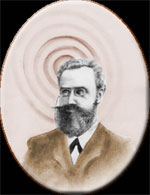
Hermann Ebbinghaus was first to research in the development of experimental methods for the measurement of role learning and memory. In his time, the methods available to those who worked in psychology’s first laboratories were relatively limited. He was a pioneer to begin programmatic and experimental research on higher mental processes. Using himself as a subject, he gathered data between 1879-80, and then replicated the entire procedure between 1883-1884, before publishing his well-known work on memory, in German as Über das Gedachtns and afterwards translated into English as Memory : A Contribution to Experimental Psychology.[br /]
[br /]
He was the first to invent stimulus material for this pioneering work on memory and other role learning experiments.[br /]
[br /]
He was the first to describe primacy and recency effects and to report that even a small amount of initial practice, far below that required for retention, can lead to savings in relearning. Ebbinghaus’ methodological innovations, and the care, with which he carried out his research, are not at all surprising, as his results have stood the test of time.[br /]
[br /]
He was a founder of two laboratories of psychology, one at Berlin, Germany in 1886 and Sewand, at Breslau, Germany in 1894.[br /]
[br /]
Ebbinghaus helped to bring clear and precise experimental techniques to the science of psychology.[br /]
[br /]
[br /]
[br /]
He was the first to invent stimulus material for this pioneering work on memory and other role learning experiments.[br /]
[br /]
He was the first to describe primacy and recency effects and to report that even a small amount of initial practice, far below that required for retention, can lead to savings in relearning. Ebbinghaus’ methodological innovations, and the care, with which he carried out his research, are not at all surprising, as his results have stood the test of time.[br /]
[br /]
He was a founder of two laboratories of psychology, one at Berlin, Germany in 1886 and Sewand, at Breslau, Germany in 1894.[br /]
[br /]
Ebbinghaus helped to bring clear and precise experimental techniques to the science of psychology.[br /]
[br /]
[br /]
Hermann Ebbinghaus was born on January 24, 1850, in Bremen, a small place near Bonn, situated in Rhenish Prussia, Germany. His education was the usual as in Bremen. At the age of 17, he entered the University of Bonn, where he developed interest in Philosophy. However, his studies were temporarily interrupted in 1870 at the outbreak of the Franco-Prussian War, when he enlisted in the Prussian army. He studied at the University of Bonn before attending Halle and Berlin Universities between 1867 to 1870. He resumed his studies a year later and he received his doctorate in 1873 from the University of Bonn. Ebbinghaus then returned to Berlin for a few years before moving to France and England for three years, both studying and lecturing.[br /]
[br /]
During his travel of the continent, studying and teaching intermittently, he came across a copy of Psychophysics in a second hand book store, which brought upon him something like an illumination and resolved to tackle the "higher mental processes" that Wilhelm Wundt (who had first established the laboratory for the experiments in psychology at Leipzig in 1879) had excluded from experimental treatment. Using himself as his only subject, Ebbinghaus set out in 1879, to demonstrate Wundt’s error. The result was his classic work on Memory (1885).[br /]
[br /]
In 1880, he became a private instructor at the University of Berlin. A year later he was appointed Ausserordentlicher Professor at the University of Berlin. Though his tenure lasted eight years, for some reason, Ebbinghaus was not promoted to the Chair of Philosophy, including psychology when it was vacant in 1894. At that time, the chair was offered to Stumpf who was then at Munich. Ebbinghaus accepted Lipp’s chair at Breslau where he remained until 1905.[br /]
[br /]
Ebbinghaus, using himself as a subject for observation, devised 2,300 letter nonsense syllables for measuring the formation of mental associations. His ingenious invention of nonsense syllables was significant. This led him to the discovery of meaningful material. His test was that of memorizing Lord Byron’s Don Juan so that he could recite it once flawlessly as compared to the same number of nonsensse syllables. Ebbinghaus found that meaningful material such as learning Lord Byron’s poem Don Juan could be learned approximately nine times faster than some meaningful material. These experiments, running over a duration of two years were undertaken in two periods in 1879 and from 1883 to 1884.[br /]
[br /]
This learning invention, together with the stringent control factors that he developed and his meticulous treatment of dates brought him to the conclusion that memory is orderly. His findings, which included the well known ‘Forgetting Curve’ relates forgetting to the passage of time, were reported in Über das Gedachtns in 1885.[br /]
[br /]
In 1886, he opened the psychological laboratory at the University of Berlin.[br /]
[br /]
After completing his work on memory, Ebbinghaus began to research on color vision.[br /]
[br /]
In 1890, Ebbinghaus founded the journal Zeitsschrift Für Psychologie und Physilogie der Sinnesorgane with the physicist Arthur Köning.[br /]
[br /]
In 1894, he established another laboratory at Breslau.[br /]
[br /]
In 1897, he created the word-completion test. This test was prepared with a study of mental capacities of Breslau school children, which is still used. In the same year, he published the first part of another work on which his reputation rests – Grundzüge der Psychologie. (‘Principles of Psychology’ – its translation in English was published in 1902).[br /]
[br /]
In 1905, he left Breslau for the University of Halle, where he wrote a still more popular work – Abrissder Psychologie (Its translation ‘Summary of Psychology’ was published in 1908). Ebbinghaus’ research showed that, contrary to prevailing beliefs, scientific methods could be applied to the study of the higher thoughts.[br /]
[br /]
In personality, Ebbinghaus was not versatile and ingenious, and it reminds one of Binet, and like him, his life was short. A radiant personality, pleasing in appearance and cooperative, he was the antithesis of Wundt. In short, Ebbinghaus was empirical, theoretical, research-oriented, modern psychologist. He died of pneumonia in February 1909, in Breslau at the age of 59.[br /]
[br /]
[br /]
[br /]
During his travel of the continent, studying and teaching intermittently, he came across a copy of Psychophysics in a second hand book store, which brought upon him something like an illumination and resolved to tackle the "higher mental processes" that Wilhelm Wundt (who had first established the laboratory for the experiments in psychology at Leipzig in 1879) had excluded from experimental treatment. Using himself as his only subject, Ebbinghaus set out in 1879, to demonstrate Wundt’s error. The result was his classic work on Memory (1885).[br /]
[br /]
In 1880, he became a private instructor at the University of Berlin. A year later he was appointed Ausserordentlicher Professor at the University of Berlin. Though his tenure lasted eight years, for some reason, Ebbinghaus was not promoted to the Chair of Philosophy, including psychology when it was vacant in 1894. At that time, the chair was offered to Stumpf who was then at Munich. Ebbinghaus accepted Lipp’s chair at Breslau where he remained until 1905.[br /]
[br /]
Ebbinghaus, using himself as a subject for observation, devised 2,300 letter nonsense syllables for measuring the formation of mental associations. His ingenious invention of nonsense syllables was significant. This led him to the discovery of meaningful material. His test was that of memorizing Lord Byron’s Don Juan so that he could recite it once flawlessly as compared to the same number of nonsensse syllables. Ebbinghaus found that meaningful material such as learning Lord Byron’s poem Don Juan could be learned approximately nine times faster than some meaningful material. These experiments, running over a duration of two years were undertaken in two periods in 1879 and from 1883 to 1884.[br /]
[br /]
This learning invention, together with the stringent control factors that he developed and his meticulous treatment of dates brought him to the conclusion that memory is orderly. His findings, which included the well known ‘Forgetting Curve’ relates forgetting to the passage of time, were reported in Über das Gedachtns in 1885.[br /]
[br /]
In 1886, he opened the psychological laboratory at the University of Berlin.[br /]
[br /]
After completing his work on memory, Ebbinghaus began to research on color vision.[br /]
[br /]
In 1890, Ebbinghaus founded the journal Zeitsschrift Für Psychologie und Physilogie der Sinnesorgane with the physicist Arthur Köning.[br /]
[br /]
In 1894, he established another laboratory at Breslau.[br /]
[br /]
In 1897, he created the word-completion test. This test was prepared with a study of mental capacities of Breslau school children, which is still used. In the same year, he published the first part of another work on which his reputation rests – Grundzüge der Psychologie. (‘Principles of Psychology’ – its translation in English was published in 1902).[br /]
[br /]
In 1905, he left Breslau for the University of Halle, where he wrote a still more popular work – Abrissder Psychologie (Its translation ‘Summary of Psychology’ was published in 1908). Ebbinghaus’ research showed that, contrary to prevailing beliefs, scientific methods could be applied to the study of the higher thoughts.[br /]
[br /]
In personality, Ebbinghaus was not versatile and ingenious, and it reminds one of Binet, and like him, his life was short. A radiant personality, pleasing in appearance and cooperative, he was the antithesis of Wundt. In short, Ebbinghaus was empirical, theoretical, research-oriented, modern psychologist. He died of pneumonia in February 1909, in Breslau at the age of 59.[br /]
[br /]
[br /]
HERMANN EBBINGHAUS (1850 - 1909) Hermann Ebbinghaus was born in Bremen, Germany. He taught at the University
oferlin, the University of Breslau and the University of Halle. He initiated the systematic study of human memory in experimental
psychology. He changed Wundt’s influence on the field by showing that cognition could be studied without introspection but with
statistical analysis and scientific methods. He was highly popular as a lecturer and had a good sense of humor. His style was
informal. His personal charm endeared him to students and colleagues alike. He was a radiant personality, pleasing in
appearance and always cooperative. Ebbinghaus’s contributions to Psychology are noteworthy. He died of pneumonia in Breslau at the age of 59.[br /]
[br /]
[br /]
oferlin, the University of Breslau and the University of Halle. He initiated the systematic study of human memory in experimental
psychology. He changed Wundt’s influence on the field by showing that cognition could be studied without introspection but with
statistical analysis and scientific methods. He was highly popular as a lecturer and had a good sense of humor. His style was
informal. His personal charm endeared him to students and colleagues alike. He was a radiant personality, pleasing in
appearance and always cooperative. Ebbinghaus’s contributions to Psychology are noteworthy. He died of pneumonia in Breslau at the age of 59.[br /]
[br /]
[br /]
January 24, 1850
Born to Lutheran merchant in Bremen, Germany.[br /]
[br /]
1867- 70 Educated at University of Bonn.[br /]
[br /]
1873 He received Ph. D from University of Bonn.[br /]
[br /]
1880 His publication on Memory : A contribution to Experimental Psychology (English Translation in, 1913).[br /]
[br /]
1880 – 1893 He was appointed as an assistant professor of psychology at the Berlin University.[br /]
[br /]
1885
He published the classic monograph Über das Gedachtns (English translation, Memory, 1913).[br /]
[br /]
1886 Was Assistant Professor at the Friedrich Wilhelm University, Berlin.He opened the psychological laboratory at the University of Berlin.[br /]
[br /]
1890
He founded the journal Zeitsschrift Für Psychologie und Physiologie der Sinnesorgane (journal of the psychology and the physiology of the sense organs).[br /]
[br /]
1894 He became Professor at the University of Breslau.[br /]
[br /]
1894 He established psychological laboratory at Breslau (Germany).[br /]
[br /]
1897 He published the first volume Grundzüge der Psychologie (Textbook of psychology).[br /]
[br /]
1905 – 1908 He was a professor at the University of Halle.[br /]
[br /]
1908 Publication of Abrissder Psychologie (English translation : Summary of psychology in 1922).[br /]
[br /]
February 26, 1909 He died of pneumonia in Breslau, Germany.[br /]
[br /]
[br /]
Born to Lutheran merchant in Bremen, Germany.[br /]
[br /]
1867- 70 Educated at University of Bonn.[br /]
[br /]
1873 He received Ph. D from University of Bonn.[br /]
[br /]
1880 His publication on Memory : A contribution to Experimental Psychology (English Translation in, 1913).[br /]
[br /]
1880 – 1893 He was appointed as an assistant professor of psychology at the Berlin University.[br /]
[br /]
1885
He published the classic monograph Über das Gedachtns (English translation, Memory, 1913).[br /]
[br /]
1886 Was Assistant Professor at the Friedrich Wilhelm University, Berlin.He opened the psychological laboratory at the University of Berlin.[br /]
[br /]
1890
He founded the journal Zeitsschrift Für Psychologie und Physiologie der Sinnesorgane (journal of the psychology and the physiology of the sense organs).[br /]
[br /]
1894 He became Professor at the University of Breslau.[br /]
[br /]
1894 He established psychological laboratory at Breslau (Germany).[br /]
[br /]
1897 He published the first volume Grundzüge der Psychologie (Textbook of psychology).[br /]
[br /]
1905 – 1908 He was a professor at the University of Halle.[br /]
[br /]
1908 Publication of Abrissder Psychologie (English translation : Summary of psychology in 1922).[br /]
[br /]
February 26, 1909 He died of pneumonia in Breslau, Germany.[br /]
[br /]
[br /]
[b]On Psychology :[/b][br /]
[br /]
Psychology as a science of the facts of experience have their dependency upon experiencing individuals.[br /]
[br /]
[b]On Individual Differences :[/b][br /]
[br /]
Individual differences always meet us; but no science is deterred by that fact from formulating general statements and laws.[br /]
[br /]
[b]On Physiology :[/b][br /]
[br /]
Physiology is described as inadequate to provide an explanation of psychic processes, and is therefore to be used cautiously : experiment, observation, and introspection are of more use than physiological hypotheses.[br /]
[br /]
[b]On Biological Sciences :[/b][br /]
[br /]
There is no attempt to import any matter that belongs to the biological sciences; the matter remains to the end strictly psychological.[br /]
[br /]
[b]On Memory :[/b][br /]
[br /]
The quotients from keeping and forgetting behave in reverse like the logarithms of the expired time.[br /]
[br /]
[b]On Psychophysical Parallelism :[/b][br /]
[br /]
There is not a psycho-physischer parallelism, an interaction between soul and body.[br /]
[br /]
There are no simple will documents, but only combination of feeling or conception and feeling.[br /]
[br /]
[b]On Learning and forgetting :[/b][br /]
[br /]
He who learns quickly also forgets quickly.[br /]
[br /]
Relatively long series of ideas are retained better than relatively short ones.[br /]
[br /]
Old people forget most quickly the things they learned last.[br /]
[br /]
[b]On Experiences :[/b][br /]
[br /]
We form certain conceptions during striking experiences, but we cannot find any realization of them in the similar but less striking experiences of every day life.[br /]
[br /]
[br /]
[br /]
Psychology as a science of the facts of experience have their dependency upon experiencing individuals.[br /]
[br /]
[b]On Individual Differences :[/b][br /]
[br /]
Individual differences always meet us; but no science is deterred by that fact from formulating general statements and laws.[br /]
[br /]
[b]On Physiology :[/b][br /]
[br /]
Physiology is described as inadequate to provide an explanation of psychic processes, and is therefore to be used cautiously : experiment, observation, and introspection are of more use than physiological hypotheses.[br /]
[br /]
[b]On Biological Sciences :[/b][br /]
[br /]
There is no attempt to import any matter that belongs to the biological sciences; the matter remains to the end strictly psychological.[br /]
[br /]
[b]On Memory :[/b][br /]
[br /]
The quotients from keeping and forgetting behave in reverse like the logarithms of the expired time.[br /]
[br /]
[b]On Psychophysical Parallelism :[/b][br /]
[br /]
There is not a psycho-physischer parallelism, an interaction between soul and body.[br /]
[br /]
There are no simple will documents, but only combination of feeling or conception and feeling.[br /]
[br /]
[b]On Learning and forgetting :[/b][br /]
[br /]
He who learns quickly also forgets quickly.[br /]
[br /]
Relatively long series of ideas are retained better than relatively short ones.[br /]
[br /]
Old people forget most quickly the things they learned last.[br /]
[br /]
[b]On Experiences :[/b][br /]
[br /]
We form certain conceptions during striking experiences, but we cannot find any realization of them in the similar but less striking experiences of every day life.[br /]
[br /]
[br /]

