
Biography Category
Name :
Friedrich Wilhelm Nietzsche
Date :
Views :
402
Category :
Birth Date :
15/10/1844
Birth Place :
Germany.
Death Date :
AUG. 25, 1900
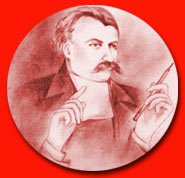
[b]A PSYCHOTIC PHILOSOPHER[/b][br /]
[br /]
Friedrich Nietzsche was suffering from lapses of depression and ill health, during his whole lifetime. He was an outspoken and harsh writer. He was an uncompromising natured philosopher. He faced many tragic incidents during his life- the rejection of his friend and mentor Richard Wagner, the love failure with Lou Von Salome, the attacks of nausea and two tragic deaths of his father and his younger brother. These incidents had a deep impact on his mind. His illness could not suppress his creativity. He was too bold to say ‘God is dead !’ His purpose in writing was to restore the quality of any human being’s life. In the last years, he was admitted to the mental asylum.[br /]
[br /]
He had expressed his views about life in ‘The Dawn’ as "How did reason come into the world ? As is fitting, in an irrational manner, by accident. One will have to guess at it as at a riddle."[br /]
[br /]
[b]A MUSICIAN[/b][br /]
[br /]
Apart from being a philosophical thinker, Nietzsche was a good musician. This side of his character is hidden behind the face of philosopher. His passion for music emerged with Gustav Krug’s friendship, who was acquainted with the composer Mendelssohn. During 1857 to 1862, he made many musical compositions. He started his musical career with ‘Allegro’ for piano. The next was the wonderful piano duet – ‘Life up your heads, O gates ! and be lifted up, O ancient doors ! that the King of glory may come in’. Nietzsche composed a fantasy for piano duet, which he presented as a birthday gift to Elizabeth, his very closed sister. Moreover, he formed a literary society to publish ‘Journal of Music’ with his friends Wilhelm Pindar and Gustav Krug.[br /]
[br /]
At Bayreauth, he attended the laying of the foundation stone of the theatre, there he played piano extensively. His friend Richard Wagner frostily remarked, ‘No Nietzsche, you play too well for a professor’.[br /]
[br /]
[b]AN ANTI – CHRIST[/b][br /]
[br /]
"After coming into contact with a religious man, I always feel I must wash my hands." – the dictum shows Nietzsche’s hatred towards Christianity. He was the child of a Lutheran Clergyman. He was pushed to follow his father’s dedicated path by his mother and sister. He was also awarded a scholarship to study theology and to became a ‘priest’. But , at the age of 18, he grew conscious to religion and began to rapidly lose faith. He firmly states – "What is more harmful than any vice ? – Active sympathy for the ill – constituted and weak – Christianity.[br /]
[br /]
[b]A POWER DRIVE[/b][br /]
[br /]
Contrary to Schopenhauer, Nietzsche believed that the instincts should not be repressed but given full vent, for they are life-giving. Guilt, a symptom of illness, should be repudiated. Instincts should be expressed, never repressed. A healthful joy is experienced in the feeling and venting of the will to power. Nietzsche had stated, "Life itself appears to me, as – an instinct for growth , for survival, for the accumulation of forces, for power : whenever the will to power fails, there is disaster."[br /]
[br /]
[br /]
[br /]
Friedrich Nietzsche was suffering from lapses of depression and ill health, during his whole lifetime. He was an outspoken and harsh writer. He was an uncompromising natured philosopher. He faced many tragic incidents during his life- the rejection of his friend and mentor Richard Wagner, the love failure with Lou Von Salome, the attacks of nausea and two tragic deaths of his father and his younger brother. These incidents had a deep impact on his mind. His illness could not suppress his creativity. He was too bold to say ‘God is dead !’ His purpose in writing was to restore the quality of any human being’s life. In the last years, he was admitted to the mental asylum.[br /]
[br /]
He had expressed his views about life in ‘The Dawn’ as "How did reason come into the world ? As is fitting, in an irrational manner, by accident. One will have to guess at it as at a riddle."[br /]
[br /]
[b]A MUSICIAN[/b][br /]
[br /]
Apart from being a philosophical thinker, Nietzsche was a good musician. This side of his character is hidden behind the face of philosopher. His passion for music emerged with Gustav Krug’s friendship, who was acquainted with the composer Mendelssohn. During 1857 to 1862, he made many musical compositions. He started his musical career with ‘Allegro’ for piano. The next was the wonderful piano duet – ‘Life up your heads, O gates ! and be lifted up, O ancient doors ! that the King of glory may come in’. Nietzsche composed a fantasy for piano duet, which he presented as a birthday gift to Elizabeth, his very closed sister. Moreover, he formed a literary society to publish ‘Journal of Music’ with his friends Wilhelm Pindar and Gustav Krug.[br /]
[br /]
At Bayreauth, he attended the laying of the foundation stone of the theatre, there he played piano extensively. His friend Richard Wagner frostily remarked, ‘No Nietzsche, you play too well for a professor’.[br /]
[br /]
[b]AN ANTI – CHRIST[/b][br /]
[br /]
"After coming into contact with a religious man, I always feel I must wash my hands." – the dictum shows Nietzsche’s hatred towards Christianity. He was the child of a Lutheran Clergyman. He was pushed to follow his father’s dedicated path by his mother and sister. He was also awarded a scholarship to study theology and to became a ‘priest’. But , at the age of 18, he grew conscious to religion and began to rapidly lose faith. He firmly states – "What is more harmful than any vice ? – Active sympathy for the ill – constituted and weak – Christianity.[br /]
[br /]
[b]A POWER DRIVE[/b][br /]
[br /]
Contrary to Schopenhauer, Nietzsche believed that the instincts should not be repressed but given full vent, for they are life-giving. Guilt, a symptom of illness, should be repudiated. Instincts should be expressed, never repressed. A healthful joy is experienced in the feeling and venting of the will to power. Nietzsche had stated, "Life itself appears to me, as – an instinct for growth , for survival, for the accumulation of forces, for power : whenever the will to power fails, there is disaster."[br /]
[br /]
[br /]
[b]A CHILD OF LUTHERAN CLERGYMAN[/b][br /]
[br /]
Friedrich Nietzsche was born in Rocken, near Leipzig in Saxony on 15th October, 1844. Five generations before him had followed the path of religion, including his paternal grandfather Friedrich August Ludwig, a distinguished preacher and his father Karl Ludwig, a pastor and tutor of the daughters of the Duke of Saxony. Nietzsche had younger sister Elizabeth who played very important role in his life.[br /]
[br /]
Inspite of his admixture of German blood, Nietzsche never forgot his ancestry, and his features remained distinctly Polish. He could count among his forebears a large number of Christian ministers, a fact that is not without significant in view of his own mission as preacher of a gospel. As for mental and physical vigor, the Nietzsche family was particularly well-endowed, there is no record, however, far back we go, of debility or mental oddity among them. Nietzsche’s mother also a large and long-lived family, was eighteen years old when the most gifted of her three children was born. And she outlived his sanity by several years.[br /]
[br /]
According to his sister Elizabeth, Friedrich was a good-looking, fair-haired boy, with exceptionally large dark eyes. At four years of age he could both read and write. He early showed signs of character, and although he was of quiet disposition, he would occasionally fly into a passion that startled everyone by its vehemence. But he was likewise capable of great feats of self-control, for instance, in order to demonstrate that the Roman Mucius Scaevola was not such a remarkable man after all, he several times held his hand in a flame without flinching.[br /]
[br /]
[b]SEVERED PATERNAL STRINES[/b][br /]
[br /]
His father a Lutheran clergyman, suffered a head injury from a fall that was reported to have caused brain deterioration. The accident took place in August, 1848 and resulting in death of his father almost a year later. Nietzsche was devastated by his father’s death, but masked it through a stern exterior, whilst withdrawing deeper into religion. He was only 5 at the time of his father’s death. After one year of his father’s death, his younger brother Joseph also died in the beginning of 1850.[br /]
[br /]
After the sudden deaths within two years, the Nietzsche family moved to Naumburg in 1850. Nietzsche’s immediate family now consisted of his grandmother, his two paternal aunts Auguste and Rosalie, his mother Franziska, and sister Elizabeth. At the urging of the grandmother, the family stayed at Naumburg, where she had lived prior to her marriage. In Naumburg, young Nietzsche was delighted by the 1854 visit of the king of Prussia, who had admired Friedrich Wilhelm IV since the revolution of 1848.[br /]
[br /]
[b]PASSION FOR MUSIC[/b][br /]
[br /]
Nietzsche got two very good friends Wilhelm Pindar and Gustav Krug at Naumburg. Krug’s and Pindar’s fathers were lawyers. Krug was acquainted with the composer Mendelssohn and himself was reputed to be a player of some talent. His love for music emerged from here. In the following years, he composed many songs for piano.[br /]
[br /]
[b]A STUDENT OF RITSCHL[/b][br /]
[br /]
Nietzsche joined the famous Pforta School at the age of 12. He left the school due to headaches and eyestrain. In October 1858, he was awarded a scholarship at the Schulpforta, a school for some 200 elite children. He studied hard though the standards of the school were very high, as was the discipline. The terms for his scholarship stated he was to study theology at University and prepare himself for priesthood. Both his mother and sister Elizabeth were equally pushing Nietzsche to follow this dedicated path. However, at the age of 18, he grew conscious to religion and began to rapidly lose faith.[br /]
[br /]
After passing the school-leaving exams in 1864, he began to study theology at the University of Bonn. Together with Deussen, he joined the fraternity Franconia, but was not all that impressed with it. As a result, he decided to give up the study of theology after his first year at Bonn.[br /]
[br /]
When his ‘teacher’ Ritschl departed for Leipzig University, Nietzsche left too, and continued his studies there. He choose classical philosophy as the main subject. At Leipzig, he started the ‘Philological Society’ following Ritschl’s encouragement.[br /]
[br /]
Nietzsche discovered Schopenhauer in 1865. Against his usual practice he bought his book entitled "The World as Will and Representation." Upon reading it, he immediately identified his own philosophy’s in Schopenhauer’s work – "It seemed as if Schopenhauer were addressing me personally. I felt his enthusiasm, and seemed to see him before me. Every line cried aloud for renunciation, denial , resignation".[br /]
[br /]
[b]BATTLE WORN CAVALIER[/b][br /]
[br /]
When Nietzsche was 23, he began his compulsory military service. Initially, he applied to the Berlin regiment but at the end, he served in a field artillery unit stationed close to Naumburg. This gave him an opportunity to live at home while performing his service. During training, he fell down from a horse, and sustained a chest and shoulder injuries. Because the injury was slow to heal, he received sick leave for the remainder of his service year. He utilized this time to continue his work in philology.[br /]
[br /]
[b]WARM FRIENDSHIPS[/b][br /]
[br /]
In the fall of 1868, he met Richard Wagner in the home of Ottilie Brockhaus, Wagner’s sister. Nietzsche was impressed by Wagner and later on wrote about him as : "He is then an incredibly lively and fiery man, who speaks very quickly, is very witty, and makes an intimate gathering of this sort very cheerful. Meanwhile I had a longer conversation with him about Schopenhauer : oh, you know what kind of pleasure it was for me, to hear him speak with indescribable warmth of what he owes him, how he is the only philosopher who has recognize the essence of music ! Then he inquired about how the philosophers currently treat him, laughed about the philosopher’s congress in Prague and spoke of the ‘philosophical butlers’. During the time, Nietzsche was warmed to Wagner’s wit, passion for music and mutual admiration for Schopenhauer.[br /]
[br /]
On the purely emotional side, too, he made more discoveries in music, above all Wagner’s ‘Mastersingers’, which caused ‘every nerve and fibre’ in him to thrill.[br /]
[br /]
During 1869, he considered dropping philosophy to study chemistry, but it never happened. At the age of 25, he was named as a professor of philology at Basel. The faculty of the university of Leipzig bestow the rank of doctor upon him, without examination. He whiled away his time lecturing and studying Greek and Latin works.[br /]
[br /]
In the May of 1869, he visited Richard Wagner in Tribshcen after being invited to his birthday. During this year, he became a close friend of Wagner, visiting him often. Nietzsche considered his friendship with Wagner as the greatest achievement of his life, next to that which he owed to Schopenhauer. He also spent his Christmas vacation with Richard and his partner Cosima. The next year, Franz Overbeck arrived in Basel to take up a professorship in theology. He moved into the same house as Nietzsche, and they became close friends. This relationship was one of the Nietzsche’s longest and the most important friendship. Nietzsche intended to write a fitting homage to Wagner’s music, but the plan was delayed by the war in 1870.[br /]
[br /]
[b]A COMPLETE MISFIT[/b][br /]
[br /]
French Parliament declared war against Prussia on July 15th, 1870. Nietzsche volunteered for military service, but it was refused due to weak upper body strength and poor eyesight. He was only accepted as a medical orderly. He managed to become a medic responsible for transporting supplies and casualties on the front-line. While serving on front, the experience of suffering and the sight of blood did not agree with him and soon he became sick. He fell ill with diphtheria and was sent home to recover for several months. During the next year, he wrote several letters to his mother complaining of his health.[br /]
[br /]
[b]‘BIRTH OF TRAGEDY’[/b][br /]
[br /]
When Nietzsche was 27, his first book `The Birth of Tragedy’ was published. It was poorly received, but now Nietzsche’s name was beginning to be well known. After reading the book, Wagner remarked to Cosima : "that is the book I have always wished for myself."[br /]
[br /]
The same year, Wagner and Nietzsche were able to convince Bismarck to agree to finance the Bayreuth theatre from which Wagner had a platform for this music. The theatre was completed after four years.[br /]
[br /]
[b]NO PRIEST AT GRAVESIDE[/b][br /]
[br /]
Nietzsche’s year began with a low in his health. In 1879, although unwell for some considerable time, he remarked – "three days I could not write a single line, again very badly off, felt poor the entire week…" and from the late February, he remarked – "since then I have suffered indescribably. A 4-day and a 6-day attack of the most brutal kind – attack upon attack of nausea."[br /]
[br /]
Believing that he was to die, he arranged his own funeral with help from his younger sister Elizabeth, saying "Promise me that when I die only my friends shall stand about my coffin, and no inquisitive crowd. See that no priest or anyone else utter falsehoods at my graveside, when I can no longer protect myself, and let me descend into my tomb as an honest pagan." Fortunately he recovered and went on to write ‘The Dawn of Day’ and ‘The Joyful Wisdom’, both written with a renewed sense for life.[br /]
[br /]
After recovery, he returned to Basel and on 2nd May he submitted his resignation on grounds of his ill health, which was officially accepted on 14th June, along with an official expression of regret and thanks. His successor was Jacob Wackernagel, a former student of Nietzsche. After resignation, he was granted a pension of 3000 Swiss Francs, which was two-thirds of Nietzsche’s regular salary. His resignation provoked expressions of sympathy even from Bayreuth. His sister came to Basel. Nietzsche’s furniture was sold and the majority of his personal library was stored in Zurich.[br /]
[br /]
During 1879, his friendship with Wagner was broken off after a series of long fights. Many of his friends worried about his health and his financial security. He moved to Venice, and various friends helped him to dictate the books. Although he soon moved to Marienbad. He enjoyed long hikes in his spare time. On July 8, 1881, ‘The Dawn’ was published. Unfortunately, his ill health worsened. He decided to live near Monaco and by the end of April, 1882, he stayed in Rome.[br /]
[br /]
[b]CUPID STRIKES[/b][br /]
[br /]
At the age of 38, he met Lou Von Salome a beautiful and intelligent Russian girl. She was seventeen yearsyounger than Nietzsche. She enjoyed his company and by the end of April, 1982, he proposed a two year trial marriage to Lou, but she refused. Later in May, Nietzsche proposed again, but was rejected once more. However, they remained friends and in July, during travels, Lou reported, "We are very cheerful with each other, we laugh a great deal."[br /]
[br /]
Unfortunately, Nietzsche’s mother disapproved greatly of Lou and refused to have her in their house. Jealous emotions lead to a misunderstanding between Nietzsche and his friend Paul, who was also a friend of Lou. He also broke off communications with his mother and sister for a duration, while his relations with Lou and Paul grew worse.[br /]
[br /]
[b]THE AILING BODY[/b][br /]
[br /]
In the beginning of the year 1883, Nietzsche was swinging between states of depression and high spirits. He had several weeks of good health, and was able to complete a copy of the first part of Zarathustra. He had some serious fights with his sister, and they did not talk for some time. Suffering from lapses of depression and ill health, he threw himself into his writing and between June and September, he moved to Sils Maria and completed the second part of ‘Thus Spoke Zarathustra’. He knew this to be one of his best pieces of work, but it was not received so well by his contemporaries .[br /]
[br /]
The publisher did not print the entire work, so Nietzsche himself paid the printing costs. Some mere 40 copies were sold and seven were given away freely. The same year his once friend and the most important figure of his life, Richard Wagner died. This probably only contributed to Nietzsche’s sense of loneliness like that of his character Zarathustra. Moreover, his supportive sister left him to marry anti-semite whom Nietzsche despised, he wrote, " The cursed anti-semitism is the cause of a radical break between me and my sister…" .The only person who support Nietzsche, during his loneliness, was a musician called Heinrich Koselitz whom Nietzsche later renamed ‘Peter Gast’. He was also a former student from Basel whom Nietzsche employed to transcribe his work to be used in ‘Beyond Good and Evil’.[br /]
[br /]
[b]LAST CREATIONS[/b][br /]
[br /]
• In 1886, Nietzsche started his new volume ‘All to Human’, which was published as ‘Beyond Good and Evil’. He spent his fifth summer in Sils Maria. He also read Dostoevsky, which instantly delighted him.[br /]
[br /]
• The following year, his book ‘On the Genealogie of Morals’ was published. It was just the beginning of a long, prolific spurt that was lasted throughout the next year.[br /]
[br /]
In 1888, Nietzsche finally gave up his summer residence and stayed in Turin. He then went for his sixth and final residency in Sils Maria. By the end of August he decided to publish ‘Twilight of the Idols’ and four volumes of ‘Revaluation of all values’. By November, he completed the final draft of ‘The Antichrist’.[br /]
[br /]
[b]HIS DEMISE[/b][br /]
[br /]
After his work on the Anti-Christ, Nietzsche believed that he would see his work run to a million copies in seven languages. However, on the 3rd January 1889, in the Piazza Carlo Alberto, he saw a carriage horse fall to the ground. He immediately rushed towards it, wrapping his arms around it in pity. This was Nietzsche’s last act of sanity. Then he collapsed suddenly and was taken home by his landlord, where he was later found by friends. He played the piano with his elbows and sang like a mad man. He also sent several letters to Overbeck. The ravings in these letters prompt Overbeck to visit Nietzsche. He was taken to the psychiatric hospital in Basel. By 13th January, his mother arrived and transferred him to the University clinic near his family home in Jena.[br /]
[br /]
His mother took him under her care in 1890, and nursed him in Naumburg for seven years until she died in 1897, leaving his sister Elizabeth to care for him.[br /]
[br /]
In 1892, Peter Gast issued new editions of many of Nietzsche’s works. But Elizabeth soon stopped the process. After two years, she purchased the rights of Nietzsche’s works from his mother. Collecting together Nietzsche’s work, Elizabeth pretended that the letters he had written to close friends were in fact addressed to her and used this lie to publicize her brother’s complete works, including a copy she presented to Adolf Hitler, allowing Nietzsche’s name to become tarnished.[br /]
[br /]
Nietzsche lost his reason out of loneliness and despair just as the movement when his name was becoming known all over Europe. ‘A profound man’, he had remarked needs friends, unless he has a God. And I have neither God nor friend.’ Consequently, the solitude in his mind became unendurable.[br /]
[br /]
In August 1897, Elizabeth and Nietzsche moved into a house in Weimar. The son of Ludwig Von Scheffler remarked, "Daddy, know what ? A crazy philosopher had moved in over there !"[br /]
[br /]
Thus so-called crazy philosopher took his last breath on 25th August, 1900, in the thirteenth year of his second childhood, left behind his invaluable treasure of literature[br /]
[br /]
[br /]
[br /]
Friedrich Nietzsche was born in Rocken, near Leipzig in Saxony on 15th October, 1844. Five generations before him had followed the path of religion, including his paternal grandfather Friedrich August Ludwig, a distinguished preacher and his father Karl Ludwig, a pastor and tutor of the daughters of the Duke of Saxony. Nietzsche had younger sister Elizabeth who played very important role in his life.[br /]
[br /]
Inspite of his admixture of German blood, Nietzsche never forgot his ancestry, and his features remained distinctly Polish. He could count among his forebears a large number of Christian ministers, a fact that is not without significant in view of his own mission as preacher of a gospel. As for mental and physical vigor, the Nietzsche family was particularly well-endowed, there is no record, however, far back we go, of debility or mental oddity among them. Nietzsche’s mother also a large and long-lived family, was eighteen years old when the most gifted of her three children was born. And she outlived his sanity by several years.[br /]
[br /]
According to his sister Elizabeth, Friedrich was a good-looking, fair-haired boy, with exceptionally large dark eyes. At four years of age he could both read and write. He early showed signs of character, and although he was of quiet disposition, he would occasionally fly into a passion that startled everyone by its vehemence. But he was likewise capable of great feats of self-control, for instance, in order to demonstrate that the Roman Mucius Scaevola was not such a remarkable man after all, he several times held his hand in a flame without flinching.[br /]
[br /]
[b]SEVERED PATERNAL STRINES[/b][br /]
[br /]
His father a Lutheran clergyman, suffered a head injury from a fall that was reported to have caused brain deterioration. The accident took place in August, 1848 and resulting in death of his father almost a year later. Nietzsche was devastated by his father’s death, but masked it through a stern exterior, whilst withdrawing deeper into religion. He was only 5 at the time of his father’s death. After one year of his father’s death, his younger brother Joseph also died in the beginning of 1850.[br /]
[br /]
After the sudden deaths within two years, the Nietzsche family moved to Naumburg in 1850. Nietzsche’s immediate family now consisted of his grandmother, his two paternal aunts Auguste and Rosalie, his mother Franziska, and sister Elizabeth. At the urging of the grandmother, the family stayed at Naumburg, where she had lived prior to her marriage. In Naumburg, young Nietzsche was delighted by the 1854 visit of the king of Prussia, who had admired Friedrich Wilhelm IV since the revolution of 1848.[br /]
[br /]
[b]PASSION FOR MUSIC[/b][br /]
[br /]
Nietzsche got two very good friends Wilhelm Pindar and Gustav Krug at Naumburg. Krug’s and Pindar’s fathers were lawyers. Krug was acquainted with the composer Mendelssohn and himself was reputed to be a player of some talent. His love for music emerged from here. In the following years, he composed many songs for piano.[br /]
[br /]
[b]A STUDENT OF RITSCHL[/b][br /]
[br /]
Nietzsche joined the famous Pforta School at the age of 12. He left the school due to headaches and eyestrain. In October 1858, he was awarded a scholarship at the Schulpforta, a school for some 200 elite children. He studied hard though the standards of the school were very high, as was the discipline. The terms for his scholarship stated he was to study theology at University and prepare himself for priesthood. Both his mother and sister Elizabeth were equally pushing Nietzsche to follow this dedicated path. However, at the age of 18, he grew conscious to religion and began to rapidly lose faith.[br /]
[br /]
After passing the school-leaving exams in 1864, he began to study theology at the University of Bonn. Together with Deussen, he joined the fraternity Franconia, but was not all that impressed with it. As a result, he decided to give up the study of theology after his first year at Bonn.[br /]
[br /]
When his ‘teacher’ Ritschl departed for Leipzig University, Nietzsche left too, and continued his studies there. He choose classical philosophy as the main subject. At Leipzig, he started the ‘Philological Society’ following Ritschl’s encouragement.[br /]
[br /]
Nietzsche discovered Schopenhauer in 1865. Against his usual practice he bought his book entitled "The World as Will and Representation." Upon reading it, he immediately identified his own philosophy’s in Schopenhauer’s work – "It seemed as if Schopenhauer were addressing me personally. I felt his enthusiasm, and seemed to see him before me. Every line cried aloud for renunciation, denial , resignation".[br /]
[br /]
[b]BATTLE WORN CAVALIER[/b][br /]
[br /]
When Nietzsche was 23, he began his compulsory military service. Initially, he applied to the Berlin regiment but at the end, he served in a field artillery unit stationed close to Naumburg. This gave him an opportunity to live at home while performing his service. During training, he fell down from a horse, and sustained a chest and shoulder injuries. Because the injury was slow to heal, he received sick leave for the remainder of his service year. He utilized this time to continue his work in philology.[br /]
[br /]
[b]WARM FRIENDSHIPS[/b][br /]
[br /]
In the fall of 1868, he met Richard Wagner in the home of Ottilie Brockhaus, Wagner’s sister. Nietzsche was impressed by Wagner and later on wrote about him as : "He is then an incredibly lively and fiery man, who speaks very quickly, is very witty, and makes an intimate gathering of this sort very cheerful. Meanwhile I had a longer conversation with him about Schopenhauer : oh, you know what kind of pleasure it was for me, to hear him speak with indescribable warmth of what he owes him, how he is the only philosopher who has recognize the essence of music ! Then he inquired about how the philosophers currently treat him, laughed about the philosopher’s congress in Prague and spoke of the ‘philosophical butlers’. During the time, Nietzsche was warmed to Wagner’s wit, passion for music and mutual admiration for Schopenhauer.[br /]
[br /]
On the purely emotional side, too, he made more discoveries in music, above all Wagner’s ‘Mastersingers’, which caused ‘every nerve and fibre’ in him to thrill.[br /]
[br /]
During 1869, he considered dropping philosophy to study chemistry, but it never happened. At the age of 25, he was named as a professor of philology at Basel. The faculty of the university of Leipzig bestow the rank of doctor upon him, without examination. He whiled away his time lecturing and studying Greek and Latin works.[br /]
[br /]
In the May of 1869, he visited Richard Wagner in Tribshcen after being invited to his birthday. During this year, he became a close friend of Wagner, visiting him often. Nietzsche considered his friendship with Wagner as the greatest achievement of his life, next to that which he owed to Schopenhauer. He also spent his Christmas vacation with Richard and his partner Cosima. The next year, Franz Overbeck arrived in Basel to take up a professorship in theology. He moved into the same house as Nietzsche, and they became close friends. This relationship was one of the Nietzsche’s longest and the most important friendship. Nietzsche intended to write a fitting homage to Wagner’s music, but the plan was delayed by the war in 1870.[br /]
[br /]
[b]A COMPLETE MISFIT[/b][br /]
[br /]
French Parliament declared war against Prussia on July 15th, 1870. Nietzsche volunteered for military service, but it was refused due to weak upper body strength and poor eyesight. He was only accepted as a medical orderly. He managed to become a medic responsible for transporting supplies and casualties on the front-line. While serving on front, the experience of suffering and the sight of blood did not agree with him and soon he became sick. He fell ill with diphtheria and was sent home to recover for several months. During the next year, he wrote several letters to his mother complaining of his health.[br /]
[br /]
[b]‘BIRTH OF TRAGEDY’[/b][br /]
[br /]
When Nietzsche was 27, his first book `The Birth of Tragedy’ was published. It was poorly received, but now Nietzsche’s name was beginning to be well known. After reading the book, Wagner remarked to Cosima : "that is the book I have always wished for myself."[br /]
[br /]
The same year, Wagner and Nietzsche were able to convince Bismarck to agree to finance the Bayreuth theatre from which Wagner had a platform for this music. The theatre was completed after four years.[br /]
[br /]
[b]NO PRIEST AT GRAVESIDE[/b][br /]
[br /]
Nietzsche’s year began with a low in his health. In 1879, although unwell for some considerable time, he remarked – "three days I could not write a single line, again very badly off, felt poor the entire week…" and from the late February, he remarked – "since then I have suffered indescribably. A 4-day and a 6-day attack of the most brutal kind – attack upon attack of nausea."[br /]
[br /]
Believing that he was to die, he arranged his own funeral with help from his younger sister Elizabeth, saying "Promise me that when I die only my friends shall stand about my coffin, and no inquisitive crowd. See that no priest or anyone else utter falsehoods at my graveside, when I can no longer protect myself, and let me descend into my tomb as an honest pagan." Fortunately he recovered and went on to write ‘The Dawn of Day’ and ‘The Joyful Wisdom’, both written with a renewed sense for life.[br /]
[br /]
After recovery, he returned to Basel and on 2nd May he submitted his resignation on grounds of his ill health, which was officially accepted on 14th June, along with an official expression of regret and thanks. His successor was Jacob Wackernagel, a former student of Nietzsche. After resignation, he was granted a pension of 3000 Swiss Francs, which was two-thirds of Nietzsche’s regular salary. His resignation provoked expressions of sympathy even from Bayreuth. His sister came to Basel. Nietzsche’s furniture was sold and the majority of his personal library was stored in Zurich.[br /]
[br /]
During 1879, his friendship with Wagner was broken off after a series of long fights. Many of his friends worried about his health and his financial security. He moved to Venice, and various friends helped him to dictate the books. Although he soon moved to Marienbad. He enjoyed long hikes in his spare time. On July 8, 1881, ‘The Dawn’ was published. Unfortunately, his ill health worsened. He decided to live near Monaco and by the end of April, 1882, he stayed in Rome.[br /]
[br /]
[b]CUPID STRIKES[/b][br /]
[br /]
At the age of 38, he met Lou Von Salome a beautiful and intelligent Russian girl. She was seventeen yearsyounger than Nietzsche. She enjoyed his company and by the end of April, 1982, he proposed a two year trial marriage to Lou, but she refused. Later in May, Nietzsche proposed again, but was rejected once more. However, they remained friends and in July, during travels, Lou reported, "We are very cheerful with each other, we laugh a great deal."[br /]
[br /]
Unfortunately, Nietzsche’s mother disapproved greatly of Lou and refused to have her in their house. Jealous emotions lead to a misunderstanding between Nietzsche and his friend Paul, who was also a friend of Lou. He also broke off communications with his mother and sister for a duration, while his relations with Lou and Paul grew worse.[br /]
[br /]
[b]THE AILING BODY[/b][br /]
[br /]
In the beginning of the year 1883, Nietzsche was swinging between states of depression and high spirits. He had several weeks of good health, and was able to complete a copy of the first part of Zarathustra. He had some serious fights with his sister, and they did not talk for some time. Suffering from lapses of depression and ill health, he threw himself into his writing and between June and September, he moved to Sils Maria and completed the second part of ‘Thus Spoke Zarathustra’. He knew this to be one of his best pieces of work, but it was not received so well by his contemporaries .[br /]
[br /]
The publisher did not print the entire work, so Nietzsche himself paid the printing costs. Some mere 40 copies were sold and seven were given away freely. The same year his once friend and the most important figure of his life, Richard Wagner died. This probably only contributed to Nietzsche’s sense of loneliness like that of his character Zarathustra. Moreover, his supportive sister left him to marry anti-semite whom Nietzsche despised, he wrote, " The cursed anti-semitism is the cause of a radical break between me and my sister…" .The only person who support Nietzsche, during his loneliness, was a musician called Heinrich Koselitz whom Nietzsche later renamed ‘Peter Gast’. He was also a former student from Basel whom Nietzsche employed to transcribe his work to be used in ‘Beyond Good and Evil’.[br /]
[br /]
[b]LAST CREATIONS[/b][br /]
[br /]
• In 1886, Nietzsche started his new volume ‘All to Human’, which was published as ‘Beyond Good and Evil’. He spent his fifth summer in Sils Maria. He also read Dostoevsky, which instantly delighted him.[br /]
[br /]
• The following year, his book ‘On the Genealogie of Morals’ was published. It was just the beginning of a long, prolific spurt that was lasted throughout the next year.[br /]
[br /]
In 1888, Nietzsche finally gave up his summer residence and stayed in Turin. He then went for his sixth and final residency in Sils Maria. By the end of August he decided to publish ‘Twilight of the Idols’ and four volumes of ‘Revaluation of all values’. By November, he completed the final draft of ‘The Antichrist’.[br /]
[br /]
[b]HIS DEMISE[/b][br /]
[br /]
After his work on the Anti-Christ, Nietzsche believed that he would see his work run to a million copies in seven languages. However, on the 3rd January 1889, in the Piazza Carlo Alberto, he saw a carriage horse fall to the ground. He immediately rushed towards it, wrapping his arms around it in pity. This was Nietzsche’s last act of sanity. Then he collapsed suddenly and was taken home by his landlord, where he was later found by friends. He played the piano with his elbows and sang like a mad man. He also sent several letters to Overbeck. The ravings in these letters prompt Overbeck to visit Nietzsche. He was taken to the psychiatric hospital in Basel. By 13th January, his mother arrived and transferred him to the University clinic near his family home in Jena.[br /]
[br /]
His mother took him under her care in 1890, and nursed him in Naumburg for seven years until she died in 1897, leaving his sister Elizabeth to care for him.[br /]
[br /]
In 1892, Peter Gast issued new editions of many of Nietzsche’s works. But Elizabeth soon stopped the process. After two years, she purchased the rights of Nietzsche’s works from his mother. Collecting together Nietzsche’s work, Elizabeth pretended that the letters he had written to close friends were in fact addressed to her and used this lie to publicize her brother’s complete works, including a copy she presented to Adolf Hitler, allowing Nietzsche’s name to become tarnished.[br /]
[br /]
Nietzsche lost his reason out of loneliness and despair just as the movement when his name was becoming known all over Europe. ‘A profound man’, he had remarked needs friends, unless he has a God. And I have neither God nor friend.’ Consequently, the solitude in his mind became unendurable.[br /]
[br /]
In August 1897, Elizabeth and Nietzsche moved into a house in Weimar. The son of Ludwig Von Scheffler remarked, "Daddy, know what ? A crazy philosopher had moved in over there !"[br /]
[br /]
Thus so-called crazy philosopher took his last breath on 25th August, 1900, in the thirteenth year of his second childhood, left behind his invaluable treasure of literature[br /]
[br /]
[br /]
[b]OCT. 15, 1844[/b] Friedrich Wilhelm Nietzsche was born in Rocken, near Leipzig, in Germany. His father Karl Ludwig Nietzsche was a Lutheran clergyman. His mother’s name Franziska Nietzsche.[br /]
[br /]
[b]JULY 10, 1846[/b] His younger sister Elizabeth Nietzsche was born.[br /]
[br /]
[b]1848 [/b]Karl Ludwig suffered a head injury from fall, which initiated a slow process of brain degeneration.[br /]
[br /]
[b]1849 [/b]His younger brother Joseph Nietzsche was born on 27th February. His father died after suffering a head injury, on 30th July.[br /]
[br /]
[b]1850 [/b]
His brother died on 4th January. At the urging of his grandmother, the family moved to Naumburg. At Naumburg, young Nietzsche met Wilhelm Pindar and Gustav Krug, and the meeting turned into friendship. This was the beginning of his love for music.[br /]
[br /]
[b]1857 [/b]His first musical composition : 'Allegro for Piano'.[br /]
[br /]
[b]1858 [/b]He joined the school at Pforta.He composed some other tunes for piano : Hoch tut euch auf for choir and Einleitung.[br /]
[br /]
[b]1859 [/b]Nietzsche composed a phantasie for piano duet as a Christmas present to his sister.[br /]
[br /]
[b]1860 [/b]
With his friends, Pindar and Krug, Nietzsche formed the Each member of the Society was required to contribute, each month, an essay to be read about and discussed.The group pooled their meagre financial resources to subscribe to the publication Zeitschrift fur Musik (Journal of Music) and to acquire the piano score of Wagner's Tristan und Isolde.[br /]
[br /]
[b]1861 [/b]Intense reading of the poetry of the then-unknown poet Hoderlin.He composed the songs-Einleitung and a Presto, Huter, its die Nacht bald hin [Watchman, is the night over soon] and Mein Platz vor der Tur [My Place before the door].[br /]
[br /]
[b]1862 [/b]His numerous musical compositions for the year include Heldenklage [Hero's Lament], Klavierstuck [a fragment piano], Ungurischer Marsch [Hungarian March], Zigeunertanz [Gypsy Dance] and a piece entitled Edes titok [Sweet Secret] for piano.[br /]
[br /]
[b]1863 [/b]In his last year at Schulpforta, he wrote an long essay in Latin on the life and work of Theogris of Megara.[br /]
[br /]
[b]1864 [/b]He began his study at the University in Bonn, in October. He studied under the distinguished professors Otto Jahn and Fredrich Wilhelm Ritschl.[br /]
[br /]
[b]1865 [/b]He left Bonn and continued his studies at Leipzig. He read intensively the book ‘Die Welt als Wille and Vorstellung’ [The World as Will and Representation], and was influenced by the work.[br /]
[br /]
[b]1866 [/b]The beginning of Nietzsche with Erwin Rhode.[br /]
[br /]
[b]OCT. 1867[/b] He was enlisted in Artillery regiment stationed in Naumburg. During the training, he fell from a horse and sustained a chest injury. He received sick leave and utilized the remainder of his service year to continue his work in philosophy.[br /]
[br /]
[b]1868 [/b]He was promoted to lancecoporal in April, and after five months he was discharged from Army.[br /]
[br /]
[b]1869 [/b]He was appointed as a professor of philosophy at Basel University, in January. On 19th April, he arrived at Basel, becoming Swiss citizen and settled there. His first meeting with Richard Wagner at Tribschen. He spent his first weekend and Christmas at Tribschen.[br /]
[br /]
[b]1870 [/b]He continued to visit Wagner on a regular basis. Erwin Rohde arrived in Basel for an extended visit on 29th May, and on 11th June, he and Nietzsche visited Tribschen. Franz Overbeck, the professor of theology arrived on 23rd April at Basel.[br /]
Nietzsche’s relationship with Overbeck became his most important and lasting friendship.[br /]
[br /]
[b]1859 [/b]Nietzsche composed a fantasize for piano duet as a Christmas present to his sister.[br /]
[br /]
[b]1860 [/b]With his friends, Pindar and Krug, Nietzsche formed the literary society "Germania".[br /]
[br /]
[b]1861 [/b]Intense reading of the poetry of the then-unknown poet Hoderlin. He composed the songs-Einleitung and a Presto, Huter, ist die Nacht bald hin [Watchman, is the night over soon ?] and Mein Platz vor der Tur [My Place before the door].[br /]
[br /]
[b]1862 [/b]
His numerous musical compositions for the year include Heldenklage [Hero’s Lament], Klavierstuck [a fragment piano], Ungurischer Marsch [Hungarian March], Zigeunertanz [Gypsy Dance] and a piece entitled Edes titok [Sweet Secret] for piano.[br /]
[br /]
[b]1871 [/b]In the first month of the year, he applied for chair of philosophy and recommended his friend Erwin Rohde as the successor for his chair of philology, but both failed. In November, his book ‘The Birth of Tragedy’ was published.[br /]
[br /]
[b]1872 [/b]During late September to early October, he spent his vacation alone in Switzerland. He visited Wagner in Strasbourg in November.[br /]
[br /]
[b]1873 [/b]He began to work on the first essay on David Strauss, Unzeitgemaj3e Betrachtung Sinne. (Untimel Meditation I) in April.[br /]
The next month, he complained of eye trouble and headaches. Unable to write for himself, he dictated to Paul Deussen, the manuscripts for Uber Wahrheit and Luge im aussermoralischen (on truth and lie in the extramoral sense), in July.[br /]
In November, he worked on the Essay on history (Untimely Meditations II)[br /]
[br /]
[b]1874 [/b]During March to September, he worked on Schopenhauer as Educator (Untimely Meditations III)[br /]
[br /]
[b]1875 [/b]He worked on a meditation to be entitled Wir Philologen (We philologists in March, but this work was never completed.) In late December, Nietzsche collapsed on Christmas day. It was a new decline in his health, with discomfort both in the eyes and stomach.[br /]
[br /]
[b]1876 [/b]
He was released from teaching at Paedagogium in January, and the next month he stopped teaching at University. In April, he visited Geneva. On 11th April, he proposed Mathilde Trampedach for marriage, having met her only hours before, but she declined. The same month, he finished his work on Richard Onzeitgemasse Betrachtungen. Untimely Meditations IV. In July, he visited Beyreuth festival. In August he began to work on ‘Human, All Too Human."After came back to Bayreuth on 12th August to attend the first performance of the Ring Cycle. It was attended by Kaiser Wilhelm and the Grand Duke of Weimar, the Emperor of Brazil.
He traveled with Paul Ree and they stayed in Sorrento along with Malwida Von Meysenbug. At Sorrento, his final meeting with Wagner took place, in November.[br /]
[br /]
[b]1877 [/b]In September, he finished his book ‘Human, All Too Human’.[br /]
[br /]
[b]1878 [/b]He fell ill, during the months of August and September. Wagner attacked on Nietzsche in the "Bayreuther Blaetter’. In December, the second part of ‘Human, All Too Human (Mixed Opinions and Maxims was published).[br /]
[br /]
[b]1879 [/b]Nietzsche’s illness worsened in the beginning of the year. He returned to Basel and on 2nd May, after resigning from the University on the grounds of his ill health. The next month, he settled in St. Mortiz. In December, the third part of ‘Human, All Too Human (The Wanderer and his Shadow) was published.[br /]
[br /]
[b]1880 [/b]Nietzsche started working on ‘The Dawn’, dictating it to Peter Gast.[br /]
[br /]
[b]1881 [/b]In February, ‘The Dawn’ was completed. In July, he went to Sils Maria. In August, he got initial ideas for ‘Zarathustra’ and the conception of the eternal return. It developed into the creation ‘The Gay Science’, in December.[br /]
[br /]
[b]1882 [/b]Three Volumes of ‘ The Gay Science’ were completed in February, and the fourth volume in March, when Paul Ree arrived in Genoa.[br /]
In May, he met Lou Salome in Rome. In August, Lou came to Tautenburg. In September, Nietzsche planned for the three of them - Lou, Tee and himself to live together. During October, Lou, Ree, and Nietzsche stayed in Leipzig together in Paris. At the end of the month, Lou and Ree left Nietzsche.[br /]
[br /]
[b]1883 [/b]‘Zarathustra’, Volume I , was written in January. Wagner died in February. He met Elizabeth in Rome in the month of April. In October, he settled in Nice for the winter.[br /]
[br /]
[b]1884 [/b]‘Zarathustra’ volume II was published in January. His relationship with Elizabeth came to an end. He went to Sils Maria to work on ‘Zarathustra Volume III’, in July. In December, he worked on ‘Zarathustra’ , volume IV.[br /]
[br /]
[b]1885 [/b]Elizabeth married Berhnard Foerster, in May. The next month, he began to work on "Beyond Good and Evil".[br /]
[br /]
[b]1886 [/b]He completed the book ‘Beyond Good and Evil’, in January, and in August it was published. In October, he wrote the fifth volume of ‘The Gay Science.’[br /]
[br /]
[b]1887 [/b]During April and May, he traveled to Cannabio, Zurich, and Chur. The next month he moved to Sils Maria and worked on ‘The Genealogy of Morals’, which was published in November.[br /]
[br /]
[b]1888 [/b]He moved to Turin in April and worked on ‘The Wagner Case’ in May. In June, he left Turin and went to Sils Maria. There he wrote ‘Twilight of the Idols’. In September, he finished ‘The Wagner Case’ and began to work on ‘The Antichrist’. In October, he celebrated his 44th birthday by beginning ‘Ecce Homo’.[br /]
[br /]
[b]1889 [/b]He collapsed in the street of Turin, due to ill health. Overbeck took him to Basel, where he was treated. On 13th January, his mother arrived to Basel. After one week, he went to Jena for further treatment.[br /]
[br /]
[b]SEPT. 1893[/b] His sister Elizabeth returned from Paraguay and began to work on the Nietzsche Archive.[br /]
[br /]
[b]DEC. 1895[/b] His mother signed a document surrendering all rights to Nietzsche’s works, opening the way for Elizabeth Nietzsche to gain complete control over Nietzsche works.[br /]
[br /]
[b]1897 [/b]His mother died. In August, Nietzsche and his sister Elizabeth moved into a house in Weimar.[br /]
[br /]
[b]AUG. 25, 1900[/b] He died in Weimar, at the age of 56.[br /]
[br /]
[br /]
[br /]
[b]JULY 10, 1846[/b] His younger sister Elizabeth Nietzsche was born.[br /]
[br /]
[b]1848 [/b]Karl Ludwig suffered a head injury from fall, which initiated a slow process of brain degeneration.[br /]
[br /]
[b]1849 [/b]His younger brother Joseph Nietzsche was born on 27th February. His father died after suffering a head injury, on 30th July.[br /]
[br /]
[b]1850 [/b]
His brother died on 4th January. At the urging of his grandmother, the family moved to Naumburg. At Naumburg, young Nietzsche met Wilhelm Pindar and Gustav Krug, and the meeting turned into friendship. This was the beginning of his love for music.[br /]
[br /]
[b]1857 [/b]His first musical composition : 'Allegro for Piano'.[br /]
[br /]
[b]1858 [/b]He joined the school at Pforta.He composed some other tunes for piano : Hoch tut euch auf for choir and Einleitung.[br /]
[br /]
[b]1859 [/b]Nietzsche composed a phantasie for piano duet as a Christmas present to his sister.[br /]
[br /]
[b]1860 [/b]
With his friends, Pindar and Krug, Nietzsche formed the Each member of the Society was required to contribute, each month, an essay to be read about and discussed.The group pooled their meagre financial resources to subscribe to the publication Zeitschrift fur Musik (Journal of Music) and to acquire the piano score of Wagner's Tristan und Isolde.[br /]
[br /]
[b]1861 [/b]Intense reading of the poetry of the then-unknown poet Hoderlin.He composed the songs-Einleitung and a Presto, Huter, its die Nacht bald hin [Watchman, is the night over soon] and Mein Platz vor der Tur [My Place before the door].[br /]
[br /]
[b]1862 [/b]His numerous musical compositions for the year include Heldenklage [Hero's Lament], Klavierstuck [a fragment piano], Ungurischer Marsch [Hungarian March], Zigeunertanz [Gypsy Dance] and a piece entitled Edes titok [Sweet Secret] for piano.[br /]
[br /]
[b]1863 [/b]In his last year at Schulpforta, he wrote an long essay in Latin on the life and work of Theogris of Megara.[br /]
[br /]
[b]1864 [/b]He began his study at the University in Bonn, in October. He studied under the distinguished professors Otto Jahn and Fredrich Wilhelm Ritschl.[br /]
[br /]
[b]1865 [/b]He left Bonn and continued his studies at Leipzig. He read intensively the book ‘Die Welt als Wille and Vorstellung’ [The World as Will and Representation], and was influenced by the work.[br /]
[br /]
[b]1866 [/b]The beginning of Nietzsche with Erwin Rhode.[br /]
[br /]
[b]OCT. 1867[/b] He was enlisted in Artillery regiment stationed in Naumburg. During the training, he fell from a horse and sustained a chest injury. He received sick leave and utilized the remainder of his service year to continue his work in philosophy.[br /]
[br /]
[b]1868 [/b]He was promoted to lancecoporal in April, and after five months he was discharged from Army.[br /]
[br /]
[b]1869 [/b]He was appointed as a professor of philosophy at Basel University, in January. On 19th April, he arrived at Basel, becoming Swiss citizen and settled there. His first meeting with Richard Wagner at Tribschen. He spent his first weekend and Christmas at Tribschen.[br /]
[br /]
[b]1870 [/b]He continued to visit Wagner on a regular basis. Erwin Rohde arrived in Basel for an extended visit on 29th May, and on 11th June, he and Nietzsche visited Tribschen. Franz Overbeck, the professor of theology arrived on 23rd April at Basel.[br /]
Nietzsche’s relationship with Overbeck became his most important and lasting friendship.[br /]
[br /]
[b]1859 [/b]Nietzsche composed a fantasize for piano duet as a Christmas present to his sister.[br /]
[br /]
[b]1860 [/b]With his friends, Pindar and Krug, Nietzsche formed the literary society "Germania".[br /]
[br /]
[b]1861 [/b]Intense reading of the poetry of the then-unknown poet Hoderlin. He composed the songs-Einleitung and a Presto, Huter, ist die Nacht bald hin [Watchman, is the night over soon ?] and Mein Platz vor der Tur [My Place before the door].[br /]
[br /]
[b]1862 [/b]
His numerous musical compositions for the year include Heldenklage [Hero’s Lament], Klavierstuck [a fragment piano], Ungurischer Marsch [Hungarian March], Zigeunertanz [Gypsy Dance] and a piece entitled Edes titok [Sweet Secret] for piano.[br /]
[br /]
[b]1871 [/b]In the first month of the year, he applied for chair of philosophy and recommended his friend Erwin Rohde as the successor for his chair of philology, but both failed. In November, his book ‘The Birth of Tragedy’ was published.[br /]
[br /]
[b]1872 [/b]During late September to early October, he spent his vacation alone in Switzerland. He visited Wagner in Strasbourg in November.[br /]
[br /]
[b]1873 [/b]He began to work on the first essay on David Strauss, Unzeitgemaj3e Betrachtung Sinne. (Untimel Meditation I) in April.[br /]
The next month, he complained of eye trouble and headaches. Unable to write for himself, he dictated to Paul Deussen, the manuscripts for Uber Wahrheit and Luge im aussermoralischen (on truth and lie in the extramoral sense), in July.[br /]
In November, he worked on the Essay on history (Untimely Meditations II)[br /]
[br /]
[b]1874 [/b]During March to September, he worked on Schopenhauer as Educator (Untimely Meditations III)[br /]
[br /]
[b]1875 [/b]He worked on a meditation to be entitled Wir Philologen (We philologists in March, but this work was never completed.) In late December, Nietzsche collapsed on Christmas day. It was a new decline in his health, with discomfort both in the eyes and stomach.[br /]
[br /]
[b]1876 [/b]
He was released from teaching at Paedagogium in January, and the next month he stopped teaching at University. In April, he visited Geneva. On 11th April, he proposed Mathilde Trampedach for marriage, having met her only hours before, but she declined. The same month, he finished his work on Richard Onzeitgemasse Betrachtungen. Untimely Meditations IV. In July, he visited Beyreuth festival. In August he began to work on ‘Human, All Too Human."After came back to Bayreuth on 12th August to attend the first performance of the Ring Cycle. It was attended by Kaiser Wilhelm and the Grand Duke of Weimar, the Emperor of Brazil.
He traveled with Paul Ree and they stayed in Sorrento along with Malwida Von Meysenbug. At Sorrento, his final meeting with Wagner took place, in November.[br /]
[br /]
[b]1877 [/b]In September, he finished his book ‘Human, All Too Human’.[br /]
[br /]
[b]1878 [/b]He fell ill, during the months of August and September. Wagner attacked on Nietzsche in the "Bayreuther Blaetter’. In December, the second part of ‘Human, All Too Human (Mixed Opinions and Maxims was published).[br /]
[br /]
[b]1879 [/b]Nietzsche’s illness worsened in the beginning of the year. He returned to Basel and on 2nd May, after resigning from the University on the grounds of his ill health. The next month, he settled in St. Mortiz. In December, the third part of ‘Human, All Too Human (The Wanderer and his Shadow) was published.[br /]
[br /]
[b]1880 [/b]Nietzsche started working on ‘The Dawn’, dictating it to Peter Gast.[br /]
[br /]
[b]1881 [/b]In February, ‘The Dawn’ was completed. In July, he went to Sils Maria. In August, he got initial ideas for ‘Zarathustra’ and the conception of the eternal return. It developed into the creation ‘The Gay Science’, in December.[br /]
[br /]
[b]1882 [/b]Three Volumes of ‘ The Gay Science’ were completed in February, and the fourth volume in March, when Paul Ree arrived in Genoa.[br /]
In May, he met Lou Salome in Rome. In August, Lou came to Tautenburg. In September, Nietzsche planned for the three of them - Lou, Tee and himself to live together. During October, Lou, Ree, and Nietzsche stayed in Leipzig together in Paris. At the end of the month, Lou and Ree left Nietzsche.[br /]
[br /]
[b]1883 [/b]‘Zarathustra’, Volume I , was written in January. Wagner died in February. He met Elizabeth in Rome in the month of April. In October, he settled in Nice for the winter.[br /]
[br /]
[b]1884 [/b]‘Zarathustra’ volume II was published in January. His relationship with Elizabeth came to an end. He went to Sils Maria to work on ‘Zarathustra Volume III’, in July. In December, he worked on ‘Zarathustra’ , volume IV.[br /]
[br /]
[b]1885 [/b]Elizabeth married Berhnard Foerster, in May. The next month, he began to work on "Beyond Good and Evil".[br /]
[br /]
[b]1886 [/b]He completed the book ‘Beyond Good and Evil’, in January, and in August it was published. In October, he wrote the fifth volume of ‘The Gay Science.’[br /]
[br /]
[b]1887 [/b]During April and May, he traveled to Cannabio, Zurich, and Chur. The next month he moved to Sils Maria and worked on ‘The Genealogy of Morals’, which was published in November.[br /]
[br /]
[b]1888 [/b]He moved to Turin in April and worked on ‘The Wagner Case’ in May. In June, he left Turin and went to Sils Maria. There he wrote ‘Twilight of the Idols’. In September, he finished ‘The Wagner Case’ and began to work on ‘The Antichrist’. In October, he celebrated his 44th birthday by beginning ‘Ecce Homo’.[br /]
[br /]
[b]1889 [/b]He collapsed in the street of Turin, due to ill health. Overbeck took him to Basel, where he was treated. On 13th January, his mother arrived to Basel. After one week, he went to Jena for further treatment.[br /]
[br /]
[b]SEPT. 1893[/b] His sister Elizabeth returned from Paraguay and began to work on the Nietzsche Archive.[br /]
[br /]
[b]DEC. 1895[/b] His mother signed a document surrendering all rights to Nietzsche’s works, opening the way for Elizabeth Nietzsche to gain complete control over Nietzsche works.[br /]
[br /]
[b]1897 [/b]His mother died. In August, Nietzsche and his sister Elizabeth moved into a house in Weimar.[br /]
[br /]
[b]AUG. 25, 1900[/b] He died in Weimar, at the age of 56.[br /]
[br /]
[br /]
Nietzschean philosophy is a new way in the field of philosophy. Apart from a musician, he was a harsh and uncompromising writer, but rarely negative in intent. No modern philosopher has been more completely misquoted and misrepresented than Friedrich Nietzsche. He loathed mediocrity, his chief purpose in writing was to restore the quality of an individual’s life. During his literary career, almost 20 years, he created numerous writings which became precious heritage among intellectuals.[br /]
[br /]
The memorable creations of Nietzsche include :[br /]
[br /]
• The Birth of Tragedy (1872)[br /]
• Untimely Meditations (Vol. I to IV) (1873-1876)[br /]
• Human, All Too Human (1878 – 1879)[br /]
• The Dawn (1880)[br /]
• The Gay Science (1882 – 1886)[br /]
• Thus Spoke Zarathustra (1883 – 1885)[br /]
• Beyond Good and Evil (1886)[br /]
• The Genealogy of Morals (1887)[br /]
• The Wagner Case (1888)[br /]
• Twilight of the Idols (1888)[br /]
• The Antichrist (1888)[br /]
• Ecce Homo (1888)[br /]
• The Will To Power (1888)[br /]
[br /]
[b]THE BIRTH OF TRAGEDY[/b][br /]
[br /]
‘The Birth of Tragedy’ is rich in Nietzsche’s current enthusiasms for Greek literature and especially tragedy. It is dedicated to Richard Wagner, his best friend. Its central vision is the idea that only as an aesthetic phenomenon are existence and the world justified. Making his celebrated distinction between the Apolline and Dionysiac spirit. This was his first book, which was born by the exciting time of the Franco - Prussian War of 1870 to 1871. While the thunders of the Battle of Worth rolled away over Europe, the brooding lover of puzzles who was to be the father of this book sat in some corner of the Alps.[br /]
[br /]
Nietzsche presses us to consider why it is that we derive pleasure from tragic art, and what is the relationship between our experiences of suffering in life and in art.[br /]
[br /]
[b]UNTIMELY MEDITATIONS[/b][br /]
[br /]
Nietzsche wrote this book in four volumes. The four parts are :[br /]
[br /]
Vol. I David Strauss, the Confessor and the Writer[br /]
Vol. II The Use and Disadvantage of History for Life.[br /]
Vol. III Schopenhauer as Educator.[br /]
Vol. IV Richard Wagner in Bayreuth.[br /]
[br /]
Nietzsche was encouraged to read David Strauss "The Old and the New Faith" by the then good friend Wagner. Strauss had openly criticized Wagner, and so Nietzsche, defending his friend, attacked Strauss whose work he found superficial. When Strauss died some six months later, Nietzsche felt badly that he may of in some way saddened the last moments of Strauss’ life.[br /]
[br /]
In the second volume, he discusses the value of historical knowledge in the German education system and his third volume presents ‘self-discovery’. The third piece of ‘Untimely Meditations’ introduces Schopenhauer of whom Nietzsche was a dedicated follower. Nietzsche uses his love for Schopenhauer to discover his true self by asking the question, ‘what do I love ?’, They can find a self that is beyond the ego.[br /]
[br /]
The fourth volume presents some of the reasons why Nietzsche turned away from the Wagner’s friendship. He talks of Wagner’s idiosyncrasies about being anti-semitic and a nationalist.[br /]
[br /]
[b]HUMAN, ALL TOO HUMAN[/b][br /]
[br /]
This book sketches in his key theories about the ‘will to power.’ When Nietzsche felt compelled to reject not only Richard Wagner, his former mentor, as a man and a thinker, but also their common intellectual influence, Schopenhauer. Nietzsche sets out his unsettling views on topics ranging from art, arrogance and boredom to passion, science, vanity, women and youth. The book is a mirror of his mature philosophy.[br /]
[br /]
[b]THUS SPOKE ZARATHUSTRA[/b][br /]
[br /]
This book is one of the greatest pieces of Nietzsche’s work, and adopts a style more akin to biblical parables.[br /]
[br /]
The character of Zarathustra portrays the conscious mind working against the unconscious – a losing battle perhaps, but nevertheless, one fourth with optimism and passion. Nietzsche’s ‘Thus spoke Zarathustra’ is a spiritual odyssey through the modern world.[br /]
[br /]
The utterance, ‘God is dead’ gives the message that the meaning of life is to be found in purely human terms. It is extremely valuable in enabling a reader to judge Nietzsche as a brilliantly original thinker.[br /]
[br /]
In ‘Thus spoke Zarathustra’, he declared : ‘It is better to fall into the hands of a murderer than into the dreams of an ardent woman.’ Men who are total strangers to passion do not usually talk in that strain.[br /]
[br /]
[b]BEYOND GOOD AND EVIL[/b][br /]
[br /]
In this creation, Nietzsche presented his favorite theme : ‘ how cultures lose their creative drive and become decadent.’ He offers a wealth of fresh insights into the self-destructive urge of Christianity, the terrible dangers in the headlong pursuit of philosophical or scientific truth and the prevalence of ‘slave moralities’.[br /]
[br /]
[b]TWILIGHT OF THE IDOLS OF THE ANTICHRIST[/b][br /]
[br /]
Both works show Nietzsche lashing out at self-deception, astounded at how often morality is based on vengefulness and resentment. Both combine utterly unfair attacks on individuals with amazingly acute surveys of whole contemporary cultural scene.[br /]
[br /]
‘Twilight of Idols’ offers a lightening tour of Nietzsche’s whole philosophy. It also prepares the way for ‘The Antichrist’, a final assault on institutional Christianity. Both the work reveal a profound understanding of human mean spiritedness which still cannot destroy the underlying optimism of Nietzsche.[br /]
[br /]
[b]ON NIETZSCHE[/b][br /]
[br /]
"Much of our view of the enhancement of the self-esteem as the guiding fiction is included in Nietzsche’s , ‘will to power’ and ‘will to seem’. Our view touches in many points also on those of Fere and older authors, according to whom the feeling of pleasure is founded in a feeling of power, that of displeasure in a feeling of powerlessness.’ - [b]Adler[/b][br /]
[br /]
[br /]
[br /]
The memorable creations of Nietzsche include :[br /]
[br /]
• The Birth of Tragedy (1872)[br /]
• Untimely Meditations (Vol. I to IV) (1873-1876)[br /]
• Human, All Too Human (1878 – 1879)[br /]
• The Dawn (1880)[br /]
• The Gay Science (1882 – 1886)[br /]
• Thus Spoke Zarathustra (1883 – 1885)[br /]
• Beyond Good and Evil (1886)[br /]
• The Genealogy of Morals (1887)[br /]
• The Wagner Case (1888)[br /]
• Twilight of the Idols (1888)[br /]
• The Antichrist (1888)[br /]
• Ecce Homo (1888)[br /]
• The Will To Power (1888)[br /]
[br /]
[b]THE BIRTH OF TRAGEDY[/b][br /]
[br /]
‘The Birth of Tragedy’ is rich in Nietzsche’s current enthusiasms for Greek literature and especially tragedy. It is dedicated to Richard Wagner, his best friend. Its central vision is the idea that only as an aesthetic phenomenon are existence and the world justified. Making his celebrated distinction between the Apolline and Dionysiac spirit. This was his first book, which was born by the exciting time of the Franco - Prussian War of 1870 to 1871. While the thunders of the Battle of Worth rolled away over Europe, the brooding lover of puzzles who was to be the father of this book sat in some corner of the Alps.[br /]
[br /]
Nietzsche presses us to consider why it is that we derive pleasure from tragic art, and what is the relationship between our experiences of suffering in life and in art.[br /]
[br /]
[b]UNTIMELY MEDITATIONS[/b][br /]
[br /]
Nietzsche wrote this book in four volumes. The four parts are :[br /]
[br /]
Vol. I David Strauss, the Confessor and the Writer[br /]
Vol. II The Use and Disadvantage of History for Life.[br /]
Vol. III Schopenhauer as Educator.[br /]
Vol. IV Richard Wagner in Bayreuth.[br /]
[br /]
Nietzsche was encouraged to read David Strauss "The Old and the New Faith" by the then good friend Wagner. Strauss had openly criticized Wagner, and so Nietzsche, defending his friend, attacked Strauss whose work he found superficial. When Strauss died some six months later, Nietzsche felt badly that he may of in some way saddened the last moments of Strauss’ life.[br /]
[br /]
In the second volume, he discusses the value of historical knowledge in the German education system and his third volume presents ‘self-discovery’. The third piece of ‘Untimely Meditations’ introduces Schopenhauer of whom Nietzsche was a dedicated follower. Nietzsche uses his love for Schopenhauer to discover his true self by asking the question, ‘what do I love ?’, They can find a self that is beyond the ego.[br /]
[br /]
The fourth volume presents some of the reasons why Nietzsche turned away from the Wagner’s friendship. He talks of Wagner’s idiosyncrasies about being anti-semitic and a nationalist.[br /]
[br /]
[b]HUMAN, ALL TOO HUMAN[/b][br /]
[br /]
This book sketches in his key theories about the ‘will to power.’ When Nietzsche felt compelled to reject not only Richard Wagner, his former mentor, as a man and a thinker, but also their common intellectual influence, Schopenhauer. Nietzsche sets out his unsettling views on topics ranging from art, arrogance and boredom to passion, science, vanity, women and youth. The book is a mirror of his mature philosophy.[br /]
[br /]
[b]THUS SPOKE ZARATHUSTRA[/b][br /]
[br /]
This book is one of the greatest pieces of Nietzsche’s work, and adopts a style more akin to biblical parables.[br /]
[br /]
The character of Zarathustra portrays the conscious mind working against the unconscious – a losing battle perhaps, but nevertheless, one fourth with optimism and passion. Nietzsche’s ‘Thus spoke Zarathustra’ is a spiritual odyssey through the modern world.[br /]
[br /]
The utterance, ‘God is dead’ gives the message that the meaning of life is to be found in purely human terms. It is extremely valuable in enabling a reader to judge Nietzsche as a brilliantly original thinker.[br /]
[br /]
In ‘Thus spoke Zarathustra’, he declared : ‘It is better to fall into the hands of a murderer than into the dreams of an ardent woman.’ Men who are total strangers to passion do not usually talk in that strain.[br /]
[br /]
[b]BEYOND GOOD AND EVIL[/b][br /]
[br /]
In this creation, Nietzsche presented his favorite theme : ‘ how cultures lose their creative drive and become decadent.’ He offers a wealth of fresh insights into the self-destructive urge of Christianity, the terrible dangers in the headlong pursuit of philosophical or scientific truth and the prevalence of ‘slave moralities’.[br /]
[br /]
[b]TWILIGHT OF THE IDOLS OF THE ANTICHRIST[/b][br /]
[br /]
Both works show Nietzsche lashing out at self-deception, astounded at how often morality is based on vengefulness and resentment. Both combine utterly unfair attacks on individuals with amazingly acute surveys of whole contemporary cultural scene.[br /]
[br /]
‘Twilight of Idols’ offers a lightening tour of Nietzsche’s whole philosophy. It also prepares the way for ‘The Antichrist’, a final assault on institutional Christianity. Both the work reveal a profound understanding of human mean spiritedness which still cannot destroy the underlying optimism of Nietzsche.[br /]
[br /]
[b]ON NIETZSCHE[/b][br /]
[br /]
"Much of our view of the enhancement of the self-esteem as the guiding fiction is included in Nietzsche’s , ‘will to power’ and ‘will to seem’. Our view touches in many points also on those of Fere and older authors, according to whom the feeling of pleasure is founded in a feeling of power, that of displeasure in a feeling of powerlessness.’ - [b]Adler[/b][br /]
[br /]
[br /]
• The sage as astronomer - As long as you still feel the stars as being something 'over you' you still lack the eye of the man of knowledge.[br /]
[br /]
• Tragedy absorbs the highest musical ecstasies, and thus brings music to a state of true perfection.[br /]
[br /]
• Christianity is called the religion of pity. - Pity stands in antithesis to the tonic emotions which enhance the energy of the feeling of life; it has a depressive effect.[br /]
[br /]
• I want to teach men the meaning of their existence: which is the Superman, the lightning from the dark cloud man.[br /]
[br /]
• He who fights monsters should look to it that he himself does not become a monster. And when you gaze long into an abyss the abyss also gazes into you.[br /]
[br /]
• As far as landscape is concerned, Recoaro is one of my most beautiful experiences. I literally chased after its beauty, and expended a great deal of energy and enthusiasm on it. The beauty of nature, like every other kind of beauty, is quite jealous; it demands that one serve it alone.[br /]
[br /]
• Suspicious - To admit a belief merely because it is a custom - but that means to be dishonest, cowardly, lazy ! - And so could dishonesty, cowardice and laziness be the preconditions for morality ?[br /]
[br /]
• You are young and desire marriage and children. But I ask you: are you a man who ought to desire a child ? Are you the victor, the self-conqueror, the ruler of your senses, the lord of your virtues ? Thus I ask you. Or do the animal and necessity speak from your desire? Or isolation ? Or disharmony with yourself ?[br /]
[br /]
• Beautiful and Ugly - Nothing is so conditional, let us say circumscribed, as our feeling for the beautiful.[br /]
[br /]
• Every profound thinker is more afraid of being understood than of being misunderstood. The latter may perhaps wound his vanity; but the former will wound his heart, his sympathy, which says always : 'alas, why do you want to have as hard a time of it as I had ?[br /]
[br /]
• Have you ever watched your friend asleep - to discover what he looked like? Yet your friend's face is something else beside. It is your own face, in a rough and imperfect mirror.[br /]
[br /]
• Have you ever watched your friend asleep ? Were you not startled to see what he looked like ? O my friend, man is something that must be overcome.[br /]
[br /]
• When we hear the ancient bells growling on a Sunday morning we ask ourselves: Is it really possible ! This, for a Jew, crucified two thousand years ago, who said he was God's son? The proof of such a claim is lacking. Certainly the Christian religion is an antiquity projected into our times from remote prehistory; and the fact that the claim is believed - whereas one is otherwise so strict in examining pretensions - is perhaps the most ancient piece of this heritage.[br /]
[br /]
• Christianity was from the beginning, essentially and fundamentally, life's nausea and disgust with life, merely concealed behind, masked by, dressed up as, faith in "another" or "better" life.[br /]
[br /]
• As soon as a religion comes to dominate it has as its opponents all those who would have been its first disciples.[br /]
[br /]
• As long as a man knows very well the strength and weaknesses of his teaching, his art, his religion, its power is still slight. The pupil and apostle who, blinded by the authority of the master and by the pity he feels toward him, pays no attention to the weaknesses of a teaching, a religion, and soon usually has for that reason more power than the master. The influence of a man has never yet grown great without his blind pupils. To help a perception to achieve victory often means merely to unite it with stupidity so intimately that the weight of the latter also enforces the victory of the former.[br /]
[br /]
• A Jesus Christ was possible only in a Jewish landscape--I mean one over which the gloomy and sublime thunder cloud of the wrathful Yahweh was brooding continually. Only here was the rare and sudden piercing of the gruesome and perpetual general day-night by a single ray of the sun experienced as if it were a miracle of "love" and the ray of unmerited "grace." Only here could Jesus dream of his rainbow and his ladder to heaven on which God descended to man. Everywhere else good weather and sunshine were considered the rule and everyday occurrences.[br /]
[br /]
• If the Christian dogmas of a revengeful God, universal sinfulness, election by divine grace and the danger of eternal damnation were true, it would be a sign of weak-mindedness and lack of character not to become a priest, apostle or hermit and, in fear and trembling, to work solely on one's own salvation; it would be senseless to lose sight of ones eternal advantage for the sake of temporal comfort.
• The Christian church is an encyclopaedia of prehistoric cults and conceptions of the most diverse origin, and that is why it is so capable of proselytizing :[br /]
[br /]
• Christianity possesses the hunters instinct for all those who can by one means or another be brought to despair - of which only a portion of mankind is capable.[br /]
[br /]
• The reverse side of Christian compassion for the suffering of one's neighbor is a profound suspicion of all the joy of one's neighbor, of his joy in all that he wants to do and can.[br /]
[br /]
• Christianity has done its utmost to close the circle and declared even doubt to be sin.[br /]
[br /]
• Christianity had brought into life a quite novel and limitless perilousness, and therewith quite novel securities, pleasures, recreations and evaluations of all things. Our century denies this perilousness, and does so with a good conscience : and yet it continues to drag along with it the old habits of Christian security, Christian enjoyment, recreation, evaluation ! It even drags them into its noblest arts and philosophies ![br /]
[br /]
• What distinguishes us [scientists] from the pious and the believers is not the quality but the quantity of belief and piety; we are contented with less.[br /]
[br /]
• In former times, one sought to prove that there is no God - today one indicates how the belief that there is a God arose and how this belief acquired its weight and importance : a counter-proof that there is no God thereby becomes superfluous.[br /]
[br /]
• But in the end one also has to understand that the needs that religion has satisfied and philosophy is now supposed to satisfy are not immutable; they can be weakened and exterminated.[br /]
[br /]
[br /]
[br /]
• Tragedy absorbs the highest musical ecstasies, and thus brings music to a state of true perfection.[br /]
[br /]
• Christianity is called the religion of pity. - Pity stands in antithesis to the tonic emotions which enhance the energy of the feeling of life; it has a depressive effect.[br /]
[br /]
• I want to teach men the meaning of their existence: which is the Superman, the lightning from the dark cloud man.[br /]
[br /]
• He who fights monsters should look to it that he himself does not become a monster. And when you gaze long into an abyss the abyss also gazes into you.[br /]
[br /]
• As far as landscape is concerned, Recoaro is one of my most beautiful experiences. I literally chased after its beauty, and expended a great deal of energy and enthusiasm on it. The beauty of nature, like every other kind of beauty, is quite jealous; it demands that one serve it alone.[br /]
[br /]
• Suspicious - To admit a belief merely because it is a custom - but that means to be dishonest, cowardly, lazy ! - And so could dishonesty, cowardice and laziness be the preconditions for morality ?[br /]
[br /]
• You are young and desire marriage and children. But I ask you: are you a man who ought to desire a child ? Are you the victor, the self-conqueror, the ruler of your senses, the lord of your virtues ? Thus I ask you. Or do the animal and necessity speak from your desire? Or isolation ? Or disharmony with yourself ?[br /]
[br /]
• Beautiful and Ugly - Nothing is so conditional, let us say circumscribed, as our feeling for the beautiful.[br /]
[br /]
• Every profound thinker is more afraid of being understood than of being misunderstood. The latter may perhaps wound his vanity; but the former will wound his heart, his sympathy, which says always : 'alas, why do you want to have as hard a time of it as I had ?[br /]
[br /]
• Have you ever watched your friend asleep - to discover what he looked like? Yet your friend's face is something else beside. It is your own face, in a rough and imperfect mirror.[br /]
[br /]
• Have you ever watched your friend asleep ? Were you not startled to see what he looked like ? O my friend, man is something that must be overcome.[br /]
[br /]
• When we hear the ancient bells growling on a Sunday morning we ask ourselves: Is it really possible ! This, for a Jew, crucified two thousand years ago, who said he was God's son? The proof of such a claim is lacking. Certainly the Christian religion is an antiquity projected into our times from remote prehistory; and the fact that the claim is believed - whereas one is otherwise so strict in examining pretensions - is perhaps the most ancient piece of this heritage.[br /]
[br /]
• Christianity was from the beginning, essentially and fundamentally, life's nausea and disgust with life, merely concealed behind, masked by, dressed up as, faith in "another" or "better" life.[br /]
[br /]
• As soon as a religion comes to dominate it has as its opponents all those who would have been its first disciples.[br /]
[br /]
• As long as a man knows very well the strength and weaknesses of his teaching, his art, his religion, its power is still slight. The pupil and apostle who, blinded by the authority of the master and by the pity he feels toward him, pays no attention to the weaknesses of a teaching, a religion, and soon usually has for that reason more power than the master. The influence of a man has never yet grown great without his blind pupils. To help a perception to achieve victory often means merely to unite it with stupidity so intimately that the weight of the latter also enforces the victory of the former.[br /]
[br /]
• A Jesus Christ was possible only in a Jewish landscape--I mean one over which the gloomy and sublime thunder cloud of the wrathful Yahweh was brooding continually. Only here was the rare and sudden piercing of the gruesome and perpetual general day-night by a single ray of the sun experienced as if it were a miracle of "love" and the ray of unmerited "grace." Only here could Jesus dream of his rainbow and his ladder to heaven on which God descended to man. Everywhere else good weather and sunshine were considered the rule and everyday occurrences.[br /]
[br /]
• If the Christian dogmas of a revengeful God, universal sinfulness, election by divine grace and the danger of eternal damnation were true, it would be a sign of weak-mindedness and lack of character not to become a priest, apostle or hermit and, in fear and trembling, to work solely on one's own salvation; it would be senseless to lose sight of ones eternal advantage for the sake of temporal comfort.
• The Christian church is an encyclopaedia of prehistoric cults and conceptions of the most diverse origin, and that is why it is so capable of proselytizing :[br /]
[br /]
• Christianity possesses the hunters instinct for all those who can by one means or another be brought to despair - of which only a portion of mankind is capable.[br /]
[br /]
• The reverse side of Christian compassion for the suffering of one's neighbor is a profound suspicion of all the joy of one's neighbor, of his joy in all that he wants to do and can.[br /]
[br /]
• Christianity has done its utmost to close the circle and declared even doubt to be sin.[br /]
[br /]
• Christianity had brought into life a quite novel and limitless perilousness, and therewith quite novel securities, pleasures, recreations and evaluations of all things. Our century denies this perilousness, and does so with a good conscience : and yet it continues to drag along with it the old habits of Christian security, Christian enjoyment, recreation, evaluation ! It even drags them into its noblest arts and philosophies ![br /]
[br /]
• What distinguishes us [scientists] from the pious and the believers is not the quality but the quantity of belief and piety; we are contented with less.[br /]
[br /]
• In former times, one sought to prove that there is no God - today one indicates how the belief that there is a God arose and how this belief acquired its weight and importance : a counter-proof that there is no God thereby becomes superfluous.[br /]
[br /]
• But in the end one also has to understand that the needs that religion has satisfied and philosophy is now supposed to satisfy are not immutable; they can be weakened and exterminated.[br /]
[br /]
[br /]
Friedrich Nietzsche obtained his Ph.D. from the University of Jena.[br /]
[br /]
He was awarded a scholarship at the Schulpforta, a school for some 200 elite children, in October, 1858.[br /]
[br /]
At the age of twenty four, he was awarded the chair of philosophy at the University of Basel, in 1868.[br /]
[br /]
Though his literary career extended less than twenty years, he wrote number of books despite his ill health.[br /]
[br /]
[br /]
[br /]
He was awarded a scholarship at the Schulpforta, a school for some 200 elite children, in October, 1858.[br /]
[br /]
At the age of twenty four, he was awarded the chair of philosophy at the University of Basel, in 1868.[br /]
[br /]
Though his literary career extended less than twenty years, he wrote number of books despite his ill health.[br /]
[br /]
[br /]

