
Biography Category
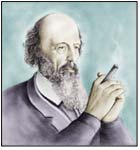
Name :
Alfred Tennyson
Date :
Views :
485
Category :
Birth Date :
06/08/1809
Birth Place :
Somersby Lincolnshire.
Death Date :
1892
[b]Criticisms on Poems[/b][br /]
[br /]
Timbuctoo – Arthur Hallam – ‘The splendid imaginative power that pervades it will be seen through all hindrances, I consider Tennyson as promising fair to be the greatest poet of our generation, perhaps of our country.'[br /]
[br /]
Poems, chiefly Lyrical, – Arthur Hallam – ‘It shows us much more of the character of its parent mind, than many books we have known of much larger compass and more boastful pretensions. The features of original genius are clearly and strongly marked. The author imitates nobody, we recognize the spirit of his age, his thoughts bear no more resemblance to Byron or Scott, Shelley or Coleridge, than to Homer or Calderon, Firdusi or Calidasa.'[br /]
[br /]
Arthur Hallam adds that there are ‘five distinctive excellencies of his own manner’. Firstly, his luxuriance of imagination, and at the same time his control over it.’ Secondly, his power of embodying himself in ideal characters, or rather moods of character, with such extreme accuracy of adjustment. Thirdly, his vivid picturesque delineation of objects and the peculiar skill with which he holds all of them fused, to borrow a metaphor from science, in a medium of strong emotion. Fourthly, the variety of his lyrical measures, and exquisite modulation of harmonious words and cadences to the swell and fall of the feelings expressed. Fifthly, the elevated habits of thought, implied in these compositions, and imparting a mellow soberness of tone, more impressive, to our minds, than if the author had drawn up a set of opinions in verse, and sought to instruct the understanding rather to communicate the love of beauty to the heart.'[br /]
[br /]
In Memoriam – Edward Fitzgerald – ‘We have surely had enough of men reporting their sorrows : especially when one is aware all the time that the poet willfully portrays what he complains of, magnifies it in the imagination puts it into all the shapes of fancy : and yet we are to condole with him, and be taught to ruminate our losses and sorrows in the same way. I felt that if Tennyson had got on a horse and ridden 20 miles, instead of moaning over his pipe, he would have been cured of his sorrows in half the time. As it is, it is about 3 years before the Poetic soul walks itself out of darkness and despair into commons sensue.[br /]
[br /]
Queen Victoria – ‘I told him how much I admired his glorious lives to my precious Albert and how much comfort I found on his In Memoriam. He was full of unbounded appreciation of beloved Albert. When he spoke of my own loss, of that to the Nation, his eyes quite filled with tears.’[br /]
[br /]
George Eliot – Maud – ‘It’s tone is throughout morbid, it opens to us the self-revelations of a morbid mind, and what it presents as the cure for his mental disease is itself a morbid conception of human relations.’[br /]
[br /]
Elizabeth Barrett Browning – Idylls of the King – ‘Am I forced to admit that after the joy of receiving them other joys fell short, rather ? – That the work, as a whole produced a feeling of disappointment – It must be admitted. I fear, perhaps we had been expecting too-long-had made too large an idea to fit a reality. Perhaps the breathing throbbing life around us in this Italy, where a nation is being newborn, may throw King Arthur too far off and flat. But, whatever the cause, the effect was so. The color, the temperature, the very music, left me cold. Here are exquisite things, but the whole did not affect me as a whole from Tennyson’s hands.’[br /]
[br /]
Thomas Carlyle – ‘We read at first, Tennyson’s Idylls with profound recognition of the finely elaborated execution, and also of the inward perfection of vacancy – and, to say truth, with considerable impatience of being treated so very like infants, tho’ the lollipops were so superlative.’[br /]
[br /]
Mathew Arnold – ‘The fault I find with Tennyson in his Idylls of the King is that the peculiar charm and aroma of the Middle Age, he does not give in them….. The real truth is that Tennyson, with all his temperament and artistic skill, is deficient in intellectual power, and no modern poet can make very much of his business unless he is pre-eminently strong in this.'[br /]
[br /]
W B Yeats, - The Death of Œnone – ‘As years passed over him the poet grew not less and man grew incomparably greater, and this growth was accompanied ever by a shedding off of hopes based upon mere mechanical change and mere scientific or political inventiveness, until at last his soul came near to standing, as the soul of the poet should – ‘naked under the heavens.’[br /]
[br /]
[br /]
[br /]
Timbuctoo – Arthur Hallam – ‘The splendid imaginative power that pervades it will be seen through all hindrances, I consider Tennyson as promising fair to be the greatest poet of our generation, perhaps of our country.'[br /]
[br /]
Poems, chiefly Lyrical, – Arthur Hallam – ‘It shows us much more of the character of its parent mind, than many books we have known of much larger compass and more boastful pretensions. The features of original genius are clearly and strongly marked. The author imitates nobody, we recognize the spirit of his age, his thoughts bear no more resemblance to Byron or Scott, Shelley or Coleridge, than to Homer or Calderon, Firdusi or Calidasa.'[br /]
[br /]
Arthur Hallam adds that there are ‘five distinctive excellencies of his own manner’. Firstly, his luxuriance of imagination, and at the same time his control over it.’ Secondly, his power of embodying himself in ideal characters, or rather moods of character, with such extreme accuracy of adjustment. Thirdly, his vivid picturesque delineation of objects and the peculiar skill with which he holds all of them fused, to borrow a metaphor from science, in a medium of strong emotion. Fourthly, the variety of his lyrical measures, and exquisite modulation of harmonious words and cadences to the swell and fall of the feelings expressed. Fifthly, the elevated habits of thought, implied in these compositions, and imparting a mellow soberness of tone, more impressive, to our minds, than if the author had drawn up a set of opinions in verse, and sought to instruct the understanding rather to communicate the love of beauty to the heart.'[br /]
[br /]
In Memoriam – Edward Fitzgerald – ‘We have surely had enough of men reporting their sorrows : especially when one is aware all the time that the poet willfully portrays what he complains of, magnifies it in the imagination puts it into all the shapes of fancy : and yet we are to condole with him, and be taught to ruminate our losses and sorrows in the same way. I felt that if Tennyson had got on a horse and ridden 20 miles, instead of moaning over his pipe, he would have been cured of his sorrows in half the time. As it is, it is about 3 years before the Poetic soul walks itself out of darkness and despair into commons sensue.[br /]
[br /]
Queen Victoria – ‘I told him how much I admired his glorious lives to my precious Albert and how much comfort I found on his In Memoriam. He was full of unbounded appreciation of beloved Albert. When he spoke of my own loss, of that to the Nation, his eyes quite filled with tears.’[br /]
[br /]
George Eliot – Maud – ‘It’s tone is throughout morbid, it opens to us the self-revelations of a morbid mind, and what it presents as the cure for his mental disease is itself a morbid conception of human relations.’[br /]
[br /]
Elizabeth Barrett Browning – Idylls of the King – ‘Am I forced to admit that after the joy of receiving them other joys fell short, rather ? – That the work, as a whole produced a feeling of disappointment – It must be admitted. I fear, perhaps we had been expecting too-long-had made too large an idea to fit a reality. Perhaps the breathing throbbing life around us in this Italy, where a nation is being newborn, may throw King Arthur too far off and flat. But, whatever the cause, the effect was so. The color, the temperature, the very music, left me cold. Here are exquisite things, but the whole did not affect me as a whole from Tennyson’s hands.’[br /]
[br /]
Thomas Carlyle – ‘We read at first, Tennyson’s Idylls with profound recognition of the finely elaborated execution, and also of the inward perfection of vacancy – and, to say truth, with considerable impatience of being treated so very like infants, tho’ the lollipops were so superlative.’[br /]
[br /]
Mathew Arnold – ‘The fault I find with Tennyson in his Idylls of the King is that the peculiar charm and aroma of the Middle Age, he does not give in them….. The real truth is that Tennyson, with all his temperament and artistic skill, is deficient in intellectual power, and no modern poet can make very much of his business unless he is pre-eminently strong in this.'[br /]
[br /]
W B Yeats, - The Death of Œnone – ‘As years passed over him the poet grew not less and man grew incomparably greater, and this growth was accompanied ever by a shedding off of hopes based upon mere mechanical change and mere scientific or political inventiveness, until at last his soul came near to standing, as the soul of the poet should – ‘naked under the heavens.’[br /]
[br /]
[br /]
[b]Birth Of A Prodigy[/b][br /]
[br /]
Alfred Tennyson was born at Somersby Rectory on August 6, 1809, 10 years prior to the birth of Queen Victoria. He was the fourth of the 12 children of a handsome, talented, yet unhappy couple George Tennyson and Elizabeth. George, the man of imagination and cool temperament, was unforgivably disinherited and forced into the church by his father. His wife Elizabeth was one of the beauties of Lincolnshire, ‘one of the most angelic creature on God’s earth.’ She was aware of the George’s precarious situation and was permanently outraged by favoritism shown to his younger brother, who inherited his father’s wealth. George’s impulsive nature was constantly at war with himself.[br /]
[br /]
[b]First Writing[/b][br /]
[br /]
Father’s gloom and mother’s piety had a profound impact on Alfred, but simultaneously, he also inherited splendid looks and passion of his parents. Alfred displayed strikingly precocious talent for poetry. The first poetry that spirited and stimulated him was his own and at the age of five he stretched out his arms to the gale and yelled:[br /]
[br /]
[i]I hear,[br /]
I hear ‘the strange voices in the wind’.[/i][br /]
[br /]
Once recalling this moving act in wonderment, he said : "When I was eight, I remembered making a line I thought grander than Campbell or Byron or Scott, I rolled it out and was greatly moved by it: ‘with slaughterous sons of thunder rolled the flood’ – great nonsense, of course, but I thought it fine". In a conversation with Sir George Groove, the historian of music, he said, "I perfectly well remember, that when I was eight years old, I was unwell one Sunday and could not go to the Church and my elder brother gave me a slate and said: ‘See if you can write verse,’ on the subject "flowers", and before he came back I had covered both sides of the slate (a large one) with very fair Thomsonian verse and perfectly metrical. On seeing that he said, ‘You’ve done it.’ When I was 13 or 14, I wrote an Epic between four and five thousand lines in Scott’s octo-syllabic, mingled with heroics, perfectly metrical. I can still recollect portions of it – happily it has vanished from the face of the earth… and when about 14 or 15, I commenced a drama perfectly metrical which I have yet, but I shall make away with it before I pass.’[br /]
[br /]
[b]Education[/b][br /]
[br /]
Later, in 1815, Alfred was capable enough to repeat the four books of the Odes of Horace and his father thought, he should then follow Fredrick and Charles (his elder brothers) to Louth Grammar School. The headmaster of the school Reverend J Waite was a mysterious and a sadist figure. Probably due to this Alfred hated the school so intensely that in his later life he totally avoided going down the street on which it stood. Alfred and his brother Charles were taught by their father from 1826 till the time he went to Cambridge in 1827. "Our father had a purpose to teach us," wrote Alfred.[br /]
[br /]
"I have known some satisfaction in thinking that my boys will turn out to be clever men. Phoenix-like, I trust (though I don’t think myself a Phoenix) they will spring from my ashes, in consequence of the exertions I have bestowed upon them."[br /]
[br /]
[b]The Genius Recognized[/b][br /]
[br /]
George had recognized the Phoenix-like element in Alfred and this incited George to pay extra attention to his son. Soon, the dull student of Louth blossomed and the foresight as a boy of 11 was evident by a manuscript volume of 1820, succinctly labeled: ‘The Poetry of Tennyson, the Lyrical Poetry of Tennyson, and the Prose writing of Tennyson.’[br /]
[br /]
The Tennysons benefited from the primitive seclusion of Somersby. Mary Russell Mitford, a novelist, wrote about them : ‘They are all simple-hearted and simple-minded, full of taste and cultivation, and above all, singularly unworldly.’ Tennysons fished and fenced, acted in plays and told stories. Charles and Alfred would very often walk on opposite sides of a hedge, composing poetry and shouting lines to each other. They wandered in the woods, indifferent to time, and many a times absorbed themselves in reading or argument. Once Alfred wished ‘good day’ at four in the morning to a Mablethorpe fisherman and the fisherman said, ‘Thou poor fool, thou doesn’t know whether it be day or night.’ But the fisherman was not aware of the fact that Alfred was absorbed in the stuff of poetry.[br /]
[br /]
[b]The Poet Duo[/b][br /]
[br /]
The year 1827 saw the appearance of Poems by Two Brothers, a selection from Charles Tennyson’s work, which also included the poems by Alfred written between the age of 15 and 17. They were mere juvenilia, giving no indication of a future poet in the making. April 1828 brought new horizons for Alfred. The two brothers joined the Trinity College, Cambridge, where Fredrick was. Charles Merivale, the future Dean of Ely, wrote at home to Alfred’s father. ‘I have got the third of the Tennysons in my room, who is an immense poet.’ Alfred’s admirers stalking along King’s Parade had indeed an Olympian aspect : ‘Something like Hyperion shorn of his Beams in Keats’s Poem; with a Pipe in his mouth’ said Edward Fitzgerald, Alfred’s friend, about Alfred reciting Clerke Sanders at one of the Cambridge gathering. However, rectory education had not limited his tastes, and once when Alfred read Rabelais, in a hilarious manner, the gathering ‘nearly tumbled off their chairs laughing’ and the atmosphere was thick with pipe smoke and arguments that they cherished for long.[br /]
[br /]
[b]Apostles[/b][br /]
[br /]
Apostles, the Cambridge Conversation Society was a small club formed in 1820 to debate on contemporary problems. The middle class was rising and with increasing nouvea riche, the status of aristocracy was in danger. There were economic and social problems as a result of the industrial revolution. Rousseau, Shelly and Godwin successfully stirred the social consciousness. Herschel Dalton, Davy and Faraday’s contribution extended the frontiers of science. People anticipated a change even in the Church, with the changing society. The Broad Church Movement came into existence and in 1830, Milman’s History of the Jews sifted the sacrosanct evidence, minimizing the role of Bible. Thus, the intellectual and spiritual fermentation led to the foundation of Apostles. Tennyson got elected in it in 1829, joining the august company, ever known of its time.[br /]
[br /]
Apostles met every Saturday night to consider essays, over smoke, coffee and sandwiches. They thought themselves to be a class of their own, and differed from other universities and considered themselves the pride of Cambridge and thought to be one of its kinds in existence. Oxford was spelt with small ‘o’ and once a languid Apostle drawled ‘I much, above those cursed idiotic oxford brutes’.[br /]
[br /]
Mentions Joanna Richardson in his book Preeminent Victorian : Tennyson’s association with Apostles made him a remarkable conversationalist. His speech was versatile and sparkling, ‘with its dry humor shading off suddenly into vehement earnestness, its felicity of epithet that at times flashed out like a searchlight and lighted up the whole subject of discussion, its underlying vein of robust common sense and its wealth of apt quotation and charming reminiscence.’[br /]
[br /]
[b]Arthur Hallam[/b][br /]
[br /]
And Cambridge, which triggered Tennyson’s intellect, became a passion for him. In 1828, Arthur Hallam joined Trinity. Arthur Hallam was two years younger to Alfred and had won much admiration for his charm and gaiety at Eton. He belonged to a wealthy family, who moved to a Whig Society. Hallam left Eton in 1827 and with that he had to leave friends like Milnes Gaskel and Gladstone and also an English girl called Anna Wintour with whom he had fallen in love along with. Hallam, at Cambridge, was deeply in need of an intimate friend with whom he could discuss his old friends and their relationship.[br /]
[br /]
On the other hand, Tennyson was much depressed by his father’s melancholia and his own estrangement from his family. So he too deeply needed an emotional outlet. Thus the critical conjunction of stars at Cambridge became obvious. Alfred struck friendship with this ‘beautiful’ young man; beautiful indeed, ‘for there was’, said one of the class-fellow, ‘a gentleness and purity almost virginal in his voice, manner and countenance, and the upper part of his face, his forehead and eyes, had an angelic radiance. On Arthur Hallam’s brows and eyes this heavenly light, so fugitive on other human faces, rested habitually.’[br /]
[br /]
Hallam subconsciously transferred his adolescent emotions from Gladstone, Gaskel and Anna to Tennyson, and he in turn phrased for Hallam a sublimated passion, which shaped his later life and work.[br /]
[br /]
[b]Attracting Attention[/b][br /]
[br /]
In 1829, Alfred received the Chancellor’s Medal for his poem Timbuctoo. Much impressed, Hallam commented : "The splendid imaginative power that pervades it will be seen through all hindrances. I consider Tennyson as promising fair to be the greatest poet of our generation, perhaps of our century."[br /]
[br /]
Poems, (chiefly lyrical) appeared in 1830, displayed the virtuoso of a future poet and some of his poems written thereafter, made him a poet of power. Some of these had serious metaphysical tastes, (probably inspired by Cambridge) as reflected in the supposed confessions of a second rate sensitive mind.[br /]
[br /]
[i]"Shall we not look into the laws[br /]
of life and death, and things that seem.[br /]
And things that be, and analyze[br /]
Our double nature, and compare[br /]
All creeds till we have found the one,[br /]
If one there be ? And me ! I fear[br /]
All may not doubt, but everywhere[br /]
Some must clasp idols. Yet my God,[br /]
Whom call I Idol ? Let thy dove[br /]
Shadow me over, and my sins[br /]
Be unremembered, and Thy love[br /]
Enlighten me, oh teach me yet[br /]
Some what before the heavy clod[br /]
Weighs on me, and the busy fret[br /]
Of that sharpheaded worms begin[br /]
In the gross blackness underneath…[/i][br /]
[br /]
This was, in fact, a plea that famously echoed.[br /]
[br /]
In 1830, John Sterling, an ardent ex-Apostle, incited Apostles’ ready imaginations to support the Spanish exiles in London. He along with General Torrijos, the leading Spanish exile, and Sterling’s cousin, Lieutenant Robert Boyd, bought and refurbished a gun-brig and sailed to southern Spain to launch an insurrection against Ferdinand VII. Tennyson and Hallam were eager to help this movement. However, the Spanish government got wind of the plan, and the vessel was seized before it started its journey in river Thames.[br /]
[br /]
[b]Visit To France[/b][br /]
[br /]
Alfred and Hallam drove through France with money and ciphered instruction for Torrijos’ confederates. They were shocked to see the confederates divided. They were disappointed on seeing the movement not going as per their expectations and so they returned to England.[br /]
[br /]
Alfred introduced Hallam to his family, on their return to Somersby, where Hallam fell in love with Alfred’s sister, Emily Tennyson. During the Christmas vacation, Hallam stayed at the rectory, and they declared their relation. As the pact cemented it drew Hallam closer to Alfred. But for Alfred the matter was different. He was highly devoted to Hallam and could not even think of an attachment to women. But in 1830, he caught a glimpse of his future wife while strolling in a valley and inquired of her: "Are you a Dryad or an Oread wandering here?"[br /]
[br /]
[b]The Trying Times[/b][br /]
[br /]
The year 1831, was a year of great distress for Alfred. He had enough problems on hand and so was unable to get a degree. Charles Marivale, a biographer wrote – ‘Alfred is trying to make his eyes bad enough to require an Aegrotate degree.’ Moreover, his father was seriously ill of low typhus and he died on March 16 at the age of 52. The same year Hallam was banned from Somersby. Emily’s unhappiness coupled with Hallam’s ban compounded Alfred’s own problem.[br /]
[br /]
Alfred and Hallam set off for the Rhine ‘by summer belts of wheat and vine’. Tennyson’s Poems were published by Edward Moxon in December 1832, 450 copies were printed and sold at six shillings each. Finally, Œnone proclaimed the work of a great poet and the seed were sown for the work like the Idylls of the king, and Tennyson’s own life and much of his later work.[br /]
[br /]
[i]Self-reverence, self-knowledge, self-control[br /]
These three alone lead life to sovereign power[br /]
Yet not for power (power of herself[br /]
would come uncalled for) but to live by law,[br /]
Acting the law we live by, without fear;[br /]
And because right is right, to follow right[br /]
Were wisdom in the scorn of consequence.[/i][br /]
[br /]
[b]Death Of Hallam[/b][br /]
[br /]
Tennyson, the moralist, was born. However, Poems were not received enthusiastically. Macready, a critic, recorded, ‘Am obliged to assent to the justice of their satire on Alfred Tennyson’. This drew Tennyson into controversy. During this rough-hewn and shaping of his career, there came a major blow. At the tender age of 22, Arthur Hallam died due to cerebral thrombosis. All his Cambridge friends mourned him as a man of uncommon powers. For Alfred, Hallam was a soul apart and his deep affliction was his sister’s grief at what she called ‘this deepening grave of tears’. Alfred never ceased to mourn Hallam’s loss for the next 59 years that he lived. Every moment for him was the blessed awareness of his (Hallam’s) spiritual presence.[br /]
[br /]
Tennyson family took months to recover from the death shock. Charles was ordained and he became a curate of Tealby, while Fredrick left for Italy and so the domestic responsibility fell upon Alfred and his only relief was an intensive program of study:[br /]
[br /]
[i]O leave not thou thy son forlorn :[br /]
Teach me, great Nature : make me live[/i][br /]
[br /]
[b]Domestic Responsibility[/b][br /]
[br /]
Domestic responsibilities were followed by months of bereavement. His friends helped him a lot through correspondence and company. Alfred began to turn to women for consolation. One was Sophie Rawnsley, the other was Rosa Baring, ‘Sole Rose of beauty loveliness complete’. Alfred was bit serious with Rosa, but her family did not encourage the relationship, and it met a premature end. Charles Tennyson married Louisa Sellwood. Louisa’s sister, Emily, was the bridesmaid. Alfred being best man for his brother escorted Emily to church. Alfred seeing Charles and Louisa standing at the altar rails felt a stir within. He was no longer a formal poet, he later recalled these memories in a sonnet.[br /]
[br /]
[i]Love lighted down between them full of glee[br /]
And over his left shoulder laughed at thee[br /]
‘O happy bridesmaid, make a happy bride[br /]
And all at once a pleasant truth I learn’d[br /]
For while the tender service made thee weep[br /]
I loved thee for the tear thou couldn’t hide,[br /]
And prest thy hand, and knew the press return’d [br /]
And thought, my life is sick of single sleep ![br /]
O happy bridesmaid, make a happy bride ![/i][br /]
[br /]
That very moment he took the decision that he ‘would break stones on the road’ to have Emily Sellwood as his wife. The warm beauty of Emily seemed to fill the emotional void created by the shocking death of Hallam.[br /]
[br /]
[b]Lonely At Epping[/b][br /]
[br /]
Tennyson left Somersby for Beech Hills house at Highbeech, Epping. But he felt nostalgic about his old place of which he wrote to Emily, "A known landscape is to me an old friend, that continually talks to me of my own youth and half – forgotten things and, indeed does more for me than many an old friend that I know." Being away from the landscape was not the only pain but also, it had taken him away from Emily, whom he loved too much. But there was relief as he had longed for seclusion and loved to live in the past.[br /]
[br /]
He felt the urge within to join the great river of human life. Beech Hill House being near to London, enthralled Tennyson.[br /]
Though the new place was interesting, Tennyson became more nervous. ‘Yesterday I dined with Alfred Tennyson at the Cock Tavern Temple Bar’ Speding', one of his friend reported ‘....When we had finished, I had to take his regrets to the Kembles; he could not go because he had influenza.’ Brookfield in turn reported, ‘A. T. has been with us for the last week. He is looking well in good spirits, but complains of nervousness. How should it be otherwise seeing that he smokes the strongest and most striking tobacco out of a small blackened pipe for on an average nine hours everyday ?’ Fitz, another friend informed Bernard Barton, the Quaker poet: ‘We have had Alfred Tennyson here. Very droll, and very wayward : and much sitting up of nights till two and three in the morning with pipes in our mouth : at which good hour we would get Alfred to give us some of his magic music… "All this has not cured my Influenza as you may imagine : but these hours shall be remembered long after the influenza is forgotten".’
Tennyson started writing extensively and one Aubrey de Vere reported, ‘he has been writing a great deal of late and, as his friend says, is much improved’. Perhaps, the reason for improvement and inspiration was Emily, who found him ‘Kingly’, and could scarcely conceive anything more glorious in human form. The engagement with Emily ended the long spell of depression caused due to Hallam’s death. Alfred wrote – "There is the glory of being loved, for so have we laid great bases for eternity."[br /]
[br /]
[b]Facing Opposition In Personal Life[/b][br /]
[br /]
In spite of all his ‘affectionate appreciation’, Mr Sellwood (Emily’s father) was unhappy because of Alfred’s lack of income and also, how could a conventional father and a strict churchman approve a son-in-law of bandit – like appearance and broad religious views, who ‘wasted himself in cigars’. Elizabeth Barrette explained ‘the smoke is said to so essentially Tennysonian that he couldn’t be supposed to rhyme without it’. Mr Sellwood seemed reluctant towards Emily’s correspondence with Alfred, but ‘in ourselves, wrote Emily, ‘there was no change’. Mrs Tennyson having a large family could only offer her son to allow him to marry. Alfred’s fear of failure didn’t allow him to stake security on a new volume of poems. The engagement was finally broken.[br /]
[br /]
[i]O then like those, who clench their nervous to rush[br /]
Upon their dissolution, we two rose,[br /]
There – closing like an individual life[br /]
If one blind cry of passion and of pain[br /]
Like bitter accusation even to death,[br /]
Caught up the whole of love and utter’d it[br /]
And bade adieu forever.[/i][br /]
[br /]
After a gap of 10 years, in 1842, Moxon published two volumes of Tennyson’s Poems. The critic, in the Edinburgh Review eulogized his work. ‘Mr. Tennyson has shown that he is capable of exercising a severe self-judgment, and that he has a strict notion of the responsibility, which his poetic talent... attaches to the possessor. He is called to take a lofty station among English poets of this age; let him duly regard and ever keep before his view, the greatness of his vacation.[br /]
[br /]
[b]The Hurt Within[/b][br /]
[br /]
The Edinburgh Review was in no way an exaggeration. The 1842 volumes poured out his lyrical brilliance as well as his pictorial felicity. The visual passages in Œnone were marvelous and the landscapes in The Palace of Art had a tinge of Keatsian inevitability. In Ulysses, poet is seen struggling and fighting with life after the loss of Hallam and also the loss of Emily,[br /]
[br /]
[i]Death closes all : but something ere the end[br /]
Same work of noble note, may yet be done…[br /]
The much is taken, much abides; and tho`[br /]
We are not now that strength which in old days[br /]
Moved earth and heaven; that which we are, we are;[br /]
One equal temper of heroic hearts,[br /]
Made weak by time and fate, but strong in will.[br /]
To strive, to seek, to find, and not to yield.[/i][br /]
[br /]
[b]Female Following[/b][br /]
[br /]
People became highly critical of the two volumes. Charles Kingsley, one of his friends advised his fiancée. ‘I have a book called Tennyson’s Poems, the most beautiful poetry of the last fifteen years… shall I send it to you ?" There were female admirers too. Tennyson was unable to hide his feelings, and became unattractive when not in mood. A famous beauty named Mrs Norton came all the way desirous of seeing Tennyson…but he did not hesitate to say that he shuddered sitting besides her. The remark was strange from a young man for a beautiful lady. It seemed that he was dreadfully embarrassed, particularly with women. He was entertaining at one moment, almost adoring, and the very next moment he was ineffably contempt, ‘adoration I suppose for what they might be – contempt for what they are !’ said Mrs Carlyle, ‘The only chance of my getting any right good of him was to make him forget my womanness – so, got out pipes and tobacco – and brandy and water with a deluge of tea over and above. The affect of these accessories was miraculous – he… smoked on … for three mortal hours ! – talking like an angel.’ Tennyson’s magic enthralled women in spite of the fact that he used to break his misogynistic silences with sudden, brilliant bursts of conversation. One Miss Barett engrossed by Tennyson admitted in her letter that : ‘I am ready to kiss his shoe-tyes any day.’[br /]
[br /]
[b]Meeting Of Two Legends[/b][br /]
[br /]
Meeting with Wordsworth was a rare occasion. Tennyson found him much gracious and once at a dinner party was extremely pleased and amused. ‘Come, brother bard, to dinner’. He admitted about the pleasure he got from Wordsworth’s writings.[br /]
[br /]
Tennyson was much pleased with Wordsworth. He said, he was fortunate of having learned to know him. Wordsworth was equally gratified. He told an American editor, that Tennyson ‘is decidedly the first of our living poets… you will be pleased to hear that he expressed in the strong terms his gratitude to my writings. To this I was far from indifferent.’ [br /]
[br /]
[b]Coping With Changing Times[/b][br /]
[br /]
With rapid industrialization and developments in science, people got deeply disturbed. Everything traditional was crumbling into the melting pot–religion, morality, social standards etc. Tennyson could not bear all this and rallied against the entire system of society, but he found himself helpless… "that he could no longer bear to be knocked about the world, and that he must marry and find love and peace or die." He felt that "he could not stand the chattering and conceit of clever men, or the worry of society, or the meaner of tuft-hunters, or the trouble of poverty, or the labor of a place, or the praying of heart on itself." He became conscious about his age. He was not interested in fame. He felt "his life was all thrown away for want of a competence and retirement." According to him, "no one had been in such a troubled state of anxiety." The reason for depression was celibacy. Perhaps, he wanted occupation and wife. He badly needed Emily, for "the warmth of double life."[br /]
[br /]
[b]The Honor[/b][br /]
[br /]
In 1843, Wordsworth received a letter from some Crabb Robinson, saying ‘The public are now asking one another who is to be the new Laureate… There is one old and there is one young poet – Each of whom it is said needs the small provision which the laurel (usually fruitless) brings with it – These are Campbell and Alfred Tennyson…’ At Oxford, the debate was ‘Tennyson is a greater poet than Wordsworth’.[br /]
[br /]
However Wordsworth succeeded Southey. But in 1845, third edition of the Poems appeared and Tennyson found himself thrown into the highest echelons of the literary society. He owed it largely to Hallam’s father. Some, Sir Robert Peel recommended to the Queen that a pension of £200 be given to, ‘Mr. Tennyson, a poet of whose powers of imagination and expression many competent judges think most highly… His pecuniary circumstances are far from being prosperous.’[br /]
[br /]
[b]The Poetry Within[/b][br /]
[br /]
In 1847, The Princess was published and was perhaps the last substantial poems of the Romantic Movement. In Memoriam, which was published in 1850 had a mixed reaction among readers. The Time criticized the poem saying it ‘much too long, obscure and difficult’. Charlotte Bronte in the state of bereavement (she lost Emily and Anne Bronte, her two sisters) confessed ‘I closed the book when I got about halfway. It is beautiful; it is mournful; it is monotonous. Many of the feelings bear in their utterance, the stamp of truth; yet if Arthur Hallam had been somewhat nearer Alfred Tennyson – his brother instead of his friend –, I should have distrusted this rhymed and measured and printed monument of grief. What change the lapse of years may work I do not know but it seems to me that bitter sorrow, while recent does not flow out in verse.’[br /]
[br /]
[b]Reunion With Emily[/b][br /]
[br /]
In 1850, Catherine Rawnsley, Emily’s cousin received a printed copy of Tennyson’s Elegies and she cleverly sent the book to Emily. Same year Emily and Alfred met at Catherine’s cousin's house. 14 years had passed since his brother’s marriage and Alfred never thought of any other woman in his life. At 41, he was more ‘kingly’ than ever, believing ‘that he must marry and find love and peace or die’. At 37, Emily was matured enough to understand the essence of marriage. ‘The longer one lives, the more one feels how serious nay how momentous an affair marriage is. The years of solitude and Alfred’s growing fame had made her anxious, uncertain and apprehensive. ‘In all these years I had lost courage and I don’t know if I should ever have ventured to become his wife knowing the greatness of the responsibility had not Kingsley, not merely encouraged but, urged me’. Charles Kingsley, an ardent admirer of Tennyson and Rawnsley’s close friend, was the motivation behind their marriage. On June 13, both got married. Years later, Emily recalled it saying it to her son, ‘The wedding was one of the quietest, which made your father say it was the nicest wedding he had ever been at. The cake had not arrived in time nor the dress, and the white gloves had disappeared in the depths of a carpet-bag. However, things were managed, and at all events I had real orange-flowers.’ The married life became successful and both tried to prove it’s unimagined worth beyond expectations. Tennyson much later said that he would have ‘broken stones’ on the road to have had her as his wife and that the peace of God came into his life when he married her. The sufferings mentioned in Love and Duty turned into blessings.[br /]
[br /]
[i]The Sun will run his orbit, and the moon[br /]
Her circle. Wait, and love himself will bring[br /]
The drooping flower of knowledge changed to fruit[br /]
Of wisdom Wait : My faith is large in Time,[br /]
And that which shapes it to same perfect end.[/i][br /]
[br /]
[b]Married Life : A Bliss[/b][br /]
[br /]
Marriage, its fruits and consequences created the basic situation of Tennyson’s later years. Sometimes men are hindered by their wives, led on to the wrong path or may get engrossed into domestic morass and dreams remain unfulfilled. Tennyson was lucky enough to get a wife who recognized his powers, and spent every waking moment of her long life in lifting his spirit and inspiring him. She was very much aware of his mission and considered herself as a divine responsibility towards him. For all the 42 years of married life, she created an atmosphere, keeping away all vexations of world, where Tennyson might work in peace and leave after himself the treasure– ‘useful to man and well-pleasing to God’. Tennyson’s views on marriage expressed in ‘The Princess’ were endorsed by Emily "The head of the woman is man". So, she said to her sister, ‘We object to competition between the two, tho’ we would have both developed to the utmost…woman should be the complement of the man not his rival – his helpmate." Later, she emphasized the same, ‘Oh yes I must cordially commend the action of Oxford as to the BA certificate !! Let woman be as educated as possible but let them remember that God has created Man the Head of the Woman, not his rival.’ Further, she said, ‘It would be hard indeed to have to obey from beginning to end of life were not man as a whole intellectually greater than woman as a whole…Let woman take care that they mate wisely with those to whom they are to be helpmates.’[br /]
[br /]
Apart from being her husband’s intellectual companion, Emily was also his tireless and excellent secretary, ‘18 to 20 letters…I have had some mornings to read before I could let Ally see them.’ She was in charge of household finances. "I have always said, we will not care about making our income as large as we can but we will keep it safe for our boys…Of-course the books make all easy for us" she adhered, throughout her life, to idealism : ‘One feels what a grand thing it must be to be rich, if one has the heart and mind given one to do the work that has to be done.’[br /]
[br /]
[b]Emily : Perfect Partner[/b][br /]
[br /]
Emily’s spiritual awareness was above all, her virtues, her words and action that radiated Christian aura, which blessed their household for almost half century. "Strange that we frail mortals should for one moment forget that every good and perfect gift is from Him. All is a mystery – save that one is quite sure that being after His Image we know what is good and bad and can give to Him the glory of good." Tennyson was a symbol of optimism for her. ‘My hope is that my Ally’s life will live…thro’ that of all who have loved him known and unknown and will help them to do their work in life. Yes, I believe indeed that all good words are inspired.’ At Tennyson’s death, she wrote : "I had been joyful in the hope of going with him, but my Hallam tells me that I can be a help in the work to be done and nothing I can do is too much to be done either for the father or the devoted son of our love.’ Once she wrote to her niece, ‘Will you address me Emily Lady Tennyson ? …A small matter but there seems to be in it a feeling that one is still his wife as one feels that one is.’[br /]
[br /]
[b]Poet Laureate[/b][br /]
[br /]
Wordsworth died in 1850 and the search began for the first poet of England. Samuel Rogers was one of the candidates, but at the age of 87, he was too old to get the Laureateship. Leigh Hunt was another candidate, but as he was imprisoned long back, he was living as stringent and an orthodox old man. The popularity of In Memoriam reached Prince Albert’s ears and when he read the poems, he greatly admired them. After a delicate inquiry it was informed to Prince Albert that Mr Tennyson was fit for the place of Poet Laureate. On November 19, 1850, Tennyson was appointed Poet Laureate. Tennyson’s aged mother was proud of her son. While traveling by omnibus she would turn to her fellow passengers and say, ‘It may interest you to know that I am the mother of the Poet Laureate.’ An American translator and a paradist said – ‘None fitter than he, and in him the title loses none of the glory it took from Wordsworth.’ Tennyson was not a person who would believe in Art for Art’s sake : His sufferings taught him that art must teach and console. His patriotism was a radiant example for his countrymen, which preached[br /]
[br /]
[i]Love, that endures not sordid ends[br /]
For English natures, freemen, friends,[br /]
Thy brothers and immortal souls…[/i][br /]
[br /]
On March 6, 1851, Tennyson went to Buckingham Palace for an audience. He was proud of wearing the court dress in which Wordsworth was presented, five years ago. Thackeray, the novelist, recorded, ‘he was much excited about his court dress and sword and as much pleased and innocent about it as a girl.’ After this, he and Emily settled at Chapel House, Twickenham.[br /]
[br /]
[b]National Spirit[/b][br /]
[br /]
Louis-Napoleon’s coup-d’-etat and talks of French invasion made Tennyson angry and worried. According to him, Napoleon would threaten the peace of Europe. He was ready to send £5 for the Rifles, to avoid the national panic and thus became the most enthusiastic national defender. But at the same time he never forgot his role to write patriotic stanzas. They were published anonymously to avoid any controversy, as they contained violent denunciations of the Catholic Church.[br /]
[br /]
[i]Tho’ niggard throats of Manchester may bawl[br /]
What England was, shall her true sons forget ?[br /]
We are not cotton-spinners all.[br /]
But some love England and her honor yet…
[/i][br /]
[br /]
[i][i]The composition of Hands All Found was so much emotional that while he was writing, tears streamed down his face.[/i][/i][br /]
[br /]
Tennyson’s first son, born in 1851, was still born. Hallam Tennyson, the second was born, in 1852. When Samuel Rogers took the baby in his hand he said, ‘Mrs. Tennyson, I made one great mistake in my life : I never married’. In 1854, Emily gave birth to a third son who was christened Lionel.[br /]
[br /]
[b]Lord Tennyson[/b][br /]
[br /]
Idylls of the King, the epic story of King Arthur and Camelot was published by Tennyson in 1859. With this income he was able to build another house at Aldworth in 1860. Prince Albert died in 1861 and poem written on his death was later added to Idylls and the complete work was dedicated to the Prince. Idylls got a mix reaction from all quarters. Queen wanted Tennyson to accept baronetcy but he was bit reluctant to it. Eventually in 1884, he accepted it and became Lord Tennyson. Alfred was probably the only one in England ever to earn a substantial income from his work. Due to his tall figure with cloak and wide sombrero, it was difficult for him to move anywhere unrecognized. Though outwardly he seemed harsh and domineering, the core of simplicity always remained within. He also wrote a couple of plays named Queen Mary and later Harold.[br /]
[br /]
[b]The Dusk[/b][br /]
[br /]
Alfred passed his last days at Aldworth. He became ill and probably had an intuition about his fast approaching end. One day, he asked the doctor, "Was it ‘Death’?" Doctor stood silently and the doctor’s silence confirmed his intuition. He murmured saying "That’s well." On October 5, 1892, he took in his hand, his well-thumbed Shakespeare and said faintly, "I have opened it." The doctor and the family waited for the end. On the early morning, on October 6, he breathed his last. Few hours later the vicar of the local Church came for the last ceremony and said, ‘Lord Tennyson, has had taken you, who made you a prince of men." These words were in fact the echo of whole of Victorian Era. Queen’s sympathy was published in the journal. ‘He was a great poet and his ideas were ever grand, noble and elevating.’[br /]
[br /]
[br /]
[br /]
Alfred Tennyson was born at Somersby Rectory on August 6, 1809, 10 years prior to the birth of Queen Victoria. He was the fourth of the 12 children of a handsome, talented, yet unhappy couple George Tennyson and Elizabeth. George, the man of imagination and cool temperament, was unforgivably disinherited and forced into the church by his father. His wife Elizabeth was one of the beauties of Lincolnshire, ‘one of the most angelic creature on God’s earth.’ She was aware of the George’s precarious situation and was permanently outraged by favoritism shown to his younger brother, who inherited his father’s wealth. George’s impulsive nature was constantly at war with himself.[br /]
[br /]
[b]First Writing[/b][br /]
[br /]
Father’s gloom and mother’s piety had a profound impact on Alfred, but simultaneously, he also inherited splendid looks and passion of his parents. Alfred displayed strikingly precocious talent for poetry. The first poetry that spirited and stimulated him was his own and at the age of five he stretched out his arms to the gale and yelled:[br /]
[br /]
[i]I hear,[br /]
I hear ‘the strange voices in the wind’.[/i][br /]
[br /]
Once recalling this moving act in wonderment, he said : "When I was eight, I remembered making a line I thought grander than Campbell or Byron or Scott, I rolled it out and was greatly moved by it: ‘with slaughterous sons of thunder rolled the flood’ – great nonsense, of course, but I thought it fine". In a conversation with Sir George Groove, the historian of music, he said, "I perfectly well remember, that when I was eight years old, I was unwell one Sunday and could not go to the Church and my elder brother gave me a slate and said: ‘See if you can write verse,’ on the subject "flowers", and before he came back I had covered both sides of the slate (a large one) with very fair Thomsonian verse and perfectly metrical. On seeing that he said, ‘You’ve done it.’ When I was 13 or 14, I wrote an Epic between four and five thousand lines in Scott’s octo-syllabic, mingled with heroics, perfectly metrical. I can still recollect portions of it – happily it has vanished from the face of the earth… and when about 14 or 15, I commenced a drama perfectly metrical which I have yet, but I shall make away with it before I pass.’[br /]
[br /]
[b]Education[/b][br /]
[br /]
Later, in 1815, Alfred was capable enough to repeat the four books of the Odes of Horace and his father thought, he should then follow Fredrick and Charles (his elder brothers) to Louth Grammar School. The headmaster of the school Reverend J Waite was a mysterious and a sadist figure. Probably due to this Alfred hated the school so intensely that in his later life he totally avoided going down the street on which it stood. Alfred and his brother Charles were taught by their father from 1826 till the time he went to Cambridge in 1827. "Our father had a purpose to teach us," wrote Alfred.[br /]
[br /]
"I have known some satisfaction in thinking that my boys will turn out to be clever men. Phoenix-like, I trust (though I don’t think myself a Phoenix) they will spring from my ashes, in consequence of the exertions I have bestowed upon them."[br /]
[br /]
[b]The Genius Recognized[/b][br /]
[br /]
George had recognized the Phoenix-like element in Alfred and this incited George to pay extra attention to his son. Soon, the dull student of Louth blossomed and the foresight as a boy of 11 was evident by a manuscript volume of 1820, succinctly labeled: ‘The Poetry of Tennyson, the Lyrical Poetry of Tennyson, and the Prose writing of Tennyson.’[br /]
[br /]
The Tennysons benefited from the primitive seclusion of Somersby. Mary Russell Mitford, a novelist, wrote about them : ‘They are all simple-hearted and simple-minded, full of taste and cultivation, and above all, singularly unworldly.’ Tennysons fished and fenced, acted in plays and told stories. Charles and Alfred would very often walk on opposite sides of a hedge, composing poetry and shouting lines to each other. They wandered in the woods, indifferent to time, and many a times absorbed themselves in reading or argument. Once Alfred wished ‘good day’ at four in the morning to a Mablethorpe fisherman and the fisherman said, ‘Thou poor fool, thou doesn’t know whether it be day or night.’ But the fisherman was not aware of the fact that Alfred was absorbed in the stuff of poetry.[br /]
[br /]
[b]The Poet Duo[/b][br /]
[br /]
The year 1827 saw the appearance of Poems by Two Brothers, a selection from Charles Tennyson’s work, which also included the poems by Alfred written between the age of 15 and 17. They were mere juvenilia, giving no indication of a future poet in the making. April 1828 brought new horizons for Alfred. The two brothers joined the Trinity College, Cambridge, where Fredrick was. Charles Merivale, the future Dean of Ely, wrote at home to Alfred’s father. ‘I have got the third of the Tennysons in my room, who is an immense poet.’ Alfred’s admirers stalking along King’s Parade had indeed an Olympian aspect : ‘Something like Hyperion shorn of his Beams in Keats’s Poem; with a Pipe in his mouth’ said Edward Fitzgerald, Alfred’s friend, about Alfred reciting Clerke Sanders at one of the Cambridge gathering. However, rectory education had not limited his tastes, and once when Alfred read Rabelais, in a hilarious manner, the gathering ‘nearly tumbled off their chairs laughing’ and the atmosphere was thick with pipe smoke and arguments that they cherished for long.[br /]
[br /]
[b]Apostles[/b][br /]
[br /]
Apostles, the Cambridge Conversation Society was a small club formed in 1820 to debate on contemporary problems. The middle class was rising and with increasing nouvea riche, the status of aristocracy was in danger. There were economic and social problems as a result of the industrial revolution. Rousseau, Shelly and Godwin successfully stirred the social consciousness. Herschel Dalton, Davy and Faraday’s contribution extended the frontiers of science. People anticipated a change even in the Church, with the changing society. The Broad Church Movement came into existence and in 1830, Milman’s History of the Jews sifted the sacrosanct evidence, minimizing the role of Bible. Thus, the intellectual and spiritual fermentation led to the foundation of Apostles. Tennyson got elected in it in 1829, joining the august company, ever known of its time.[br /]
[br /]
Apostles met every Saturday night to consider essays, over smoke, coffee and sandwiches. They thought themselves to be a class of their own, and differed from other universities and considered themselves the pride of Cambridge and thought to be one of its kinds in existence. Oxford was spelt with small ‘o’ and once a languid Apostle drawled ‘I much, above those cursed idiotic oxford brutes’.[br /]
[br /]
Mentions Joanna Richardson in his book Preeminent Victorian : Tennyson’s association with Apostles made him a remarkable conversationalist. His speech was versatile and sparkling, ‘with its dry humor shading off suddenly into vehement earnestness, its felicity of epithet that at times flashed out like a searchlight and lighted up the whole subject of discussion, its underlying vein of robust common sense and its wealth of apt quotation and charming reminiscence.’[br /]
[br /]
[b]Arthur Hallam[/b][br /]
[br /]
And Cambridge, which triggered Tennyson’s intellect, became a passion for him. In 1828, Arthur Hallam joined Trinity. Arthur Hallam was two years younger to Alfred and had won much admiration for his charm and gaiety at Eton. He belonged to a wealthy family, who moved to a Whig Society. Hallam left Eton in 1827 and with that he had to leave friends like Milnes Gaskel and Gladstone and also an English girl called Anna Wintour with whom he had fallen in love along with. Hallam, at Cambridge, was deeply in need of an intimate friend with whom he could discuss his old friends and their relationship.[br /]
[br /]
On the other hand, Tennyson was much depressed by his father’s melancholia and his own estrangement from his family. So he too deeply needed an emotional outlet. Thus the critical conjunction of stars at Cambridge became obvious. Alfred struck friendship with this ‘beautiful’ young man; beautiful indeed, ‘for there was’, said one of the class-fellow, ‘a gentleness and purity almost virginal in his voice, manner and countenance, and the upper part of his face, his forehead and eyes, had an angelic radiance. On Arthur Hallam’s brows and eyes this heavenly light, so fugitive on other human faces, rested habitually.’[br /]
[br /]
Hallam subconsciously transferred his adolescent emotions from Gladstone, Gaskel and Anna to Tennyson, and he in turn phrased for Hallam a sublimated passion, which shaped his later life and work.[br /]
[br /]
[b]Attracting Attention[/b][br /]
[br /]
In 1829, Alfred received the Chancellor’s Medal for his poem Timbuctoo. Much impressed, Hallam commented : "The splendid imaginative power that pervades it will be seen through all hindrances. I consider Tennyson as promising fair to be the greatest poet of our generation, perhaps of our century."[br /]
[br /]
Poems, (chiefly lyrical) appeared in 1830, displayed the virtuoso of a future poet and some of his poems written thereafter, made him a poet of power. Some of these had serious metaphysical tastes, (probably inspired by Cambridge) as reflected in the supposed confessions of a second rate sensitive mind.[br /]
[br /]
[i]"Shall we not look into the laws[br /]
of life and death, and things that seem.[br /]
And things that be, and analyze[br /]
Our double nature, and compare[br /]
All creeds till we have found the one,[br /]
If one there be ? And me ! I fear[br /]
All may not doubt, but everywhere[br /]
Some must clasp idols. Yet my God,[br /]
Whom call I Idol ? Let thy dove[br /]
Shadow me over, and my sins[br /]
Be unremembered, and Thy love[br /]
Enlighten me, oh teach me yet[br /]
Some what before the heavy clod[br /]
Weighs on me, and the busy fret[br /]
Of that sharpheaded worms begin[br /]
In the gross blackness underneath…[/i][br /]
[br /]
This was, in fact, a plea that famously echoed.[br /]
[br /]
In 1830, John Sterling, an ardent ex-Apostle, incited Apostles’ ready imaginations to support the Spanish exiles in London. He along with General Torrijos, the leading Spanish exile, and Sterling’s cousin, Lieutenant Robert Boyd, bought and refurbished a gun-brig and sailed to southern Spain to launch an insurrection against Ferdinand VII. Tennyson and Hallam were eager to help this movement. However, the Spanish government got wind of the plan, and the vessel was seized before it started its journey in river Thames.[br /]
[br /]
[b]Visit To France[/b][br /]
[br /]
Alfred and Hallam drove through France with money and ciphered instruction for Torrijos’ confederates. They were shocked to see the confederates divided. They were disappointed on seeing the movement not going as per their expectations and so they returned to England.[br /]
[br /]
Alfred introduced Hallam to his family, on their return to Somersby, where Hallam fell in love with Alfred’s sister, Emily Tennyson. During the Christmas vacation, Hallam stayed at the rectory, and they declared their relation. As the pact cemented it drew Hallam closer to Alfred. But for Alfred the matter was different. He was highly devoted to Hallam and could not even think of an attachment to women. But in 1830, he caught a glimpse of his future wife while strolling in a valley and inquired of her: "Are you a Dryad or an Oread wandering here?"[br /]
[br /]
[b]The Trying Times[/b][br /]
[br /]
The year 1831, was a year of great distress for Alfred. He had enough problems on hand and so was unable to get a degree. Charles Marivale, a biographer wrote – ‘Alfred is trying to make his eyes bad enough to require an Aegrotate degree.’ Moreover, his father was seriously ill of low typhus and he died on March 16 at the age of 52. The same year Hallam was banned from Somersby. Emily’s unhappiness coupled with Hallam’s ban compounded Alfred’s own problem.[br /]
[br /]
Alfred and Hallam set off for the Rhine ‘by summer belts of wheat and vine’. Tennyson’s Poems were published by Edward Moxon in December 1832, 450 copies were printed and sold at six shillings each. Finally, Œnone proclaimed the work of a great poet and the seed were sown for the work like the Idylls of the king, and Tennyson’s own life and much of his later work.[br /]
[br /]
[i]Self-reverence, self-knowledge, self-control[br /]
These three alone lead life to sovereign power[br /]
Yet not for power (power of herself[br /]
would come uncalled for) but to live by law,[br /]
Acting the law we live by, without fear;[br /]
And because right is right, to follow right[br /]
Were wisdom in the scorn of consequence.[/i][br /]
[br /]
[b]Death Of Hallam[/b][br /]
[br /]
Tennyson, the moralist, was born. However, Poems were not received enthusiastically. Macready, a critic, recorded, ‘Am obliged to assent to the justice of their satire on Alfred Tennyson’. This drew Tennyson into controversy. During this rough-hewn and shaping of his career, there came a major blow. At the tender age of 22, Arthur Hallam died due to cerebral thrombosis. All his Cambridge friends mourned him as a man of uncommon powers. For Alfred, Hallam was a soul apart and his deep affliction was his sister’s grief at what she called ‘this deepening grave of tears’. Alfred never ceased to mourn Hallam’s loss for the next 59 years that he lived. Every moment for him was the blessed awareness of his (Hallam’s) spiritual presence.[br /]
[br /]
Tennyson family took months to recover from the death shock. Charles was ordained and he became a curate of Tealby, while Fredrick left for Italy and so the domestic responsibility fell upon Alfred and his only relief was an intensive program of study:[br /]
[br /]
[i]O leave not thou thy son forlorn :[br /]
Teach me, great Nature : make me live[/i][br /]
[br /]
[b]Domestic Responsibility[/b][br /]
[br /]
Domestic responsibilities were followed by months of bereavement. His friends helped him a lot through correspondence and company. Alfred began to turn to women for consolation. One was Sophie Rawnsley, the other was Rosa Baring, ‘Sole Rose of beauty loveliness complete’. Alfred was bit serious with Rosa, but her family did not encourage the relationship, and it met a premature end. Charles Tennyson married Louisa Sellwood. Louisa’s sister, Emily, was the bridesmaid. Alfred being best man for his brother escorted Emily to church. Alfred seeing Charles and Louisa standing at the altar rails felt a stir within. He was no longer a formal poet, he later recalled these memories in a sonnet.[br /]
[br /]
[i]Love lighted down between them full of glee[br /]
And over his left shoulder laughed at thee[br /]
‘O happy bridesmaid, make a happy bride[br /]
And all at once a pleasant truth I learn’d[br /]
For while the tender service made thee weep[br /]
I loved thee for the tear thou couldn’t hide,[br /]
And prest thy hand, and knew the press return’d [br /]
And thought, my life is sick of single sleep ![br /]
O happy bridesmaid, make a happy bride ![/i][br /]
[br /]
That very moment he took the decision that he ‘would break stones on the road’ to have Emily Sellwood as his wife. The warm beauty of Emily seemed to fill the emotional void created by the shocking death of Hallam.[br /]
[br /]
[b]Lonely At Epping[/b][br /]
[br /]
Tennyson left Somersby for Beech Hills house at Highbeech, Epping. But he felt nostalgic about his old place of which he wrote to Emily, "A known landscape is to me an old friend, that continually talks to me of my own youth and half – forgotten things and, indeed does more for me than many an old friend that I know." Being away from the landscape was not the only pain but also, it had taken him away from Emily, whom he loved too much. But there was relief as he had longed for seclusion and loved to live in the past.[br /]
[br /]
He felt the urge within to join the great river of human life. Beech Hill House being near to London, enthralled Tennyson.[br /]
Though the new place was interesting, Tennyson became more nervous. ‘Yesterday I dined with Alfred Tennyson at the Cock Tavern Temple Bar’ Speding', one of his friend reported ‘....When we had finished, I had to take his regrets to the Kembles; he could not go because he had influenza.’ Brookfield in turn reported, ‘A. T. has been with us for the last week. He is looking well in good spirits, but complains of nervousness. How should it be otherwise seeing that he smokes the strongest and most striking tobacco out of a small blackened pipe for on an average nine hours everyday ?’ Fitz, another friend informed Bernard Barton, the Quaker poet: ‘We have had Alfred Tennyson here. Very droll, and very wayward : and much sitting up of nights till two and three in the morning with pipes in our mouth : at which good hour we would get Alfred to give us some of his magic music… "All this has not cured my Influenza as you may imagine : but these hours shall be remembered long after the influenza is forgotten".’
Tennyson started writing extensively and one Aubrey de Vere reported, ‘he has been writing a great deal of late and, as his friend says, is much improved’. Perhaps, the reason for improvement and inspiration was Emily, who found him ‘Kingly’, and could scarcely conceive anything more glorious in human form. The engagement with Emily ended the long spell of depression caused due to Hallam’s death. Alfred wrote – "There is the glory of being loved, for so have we laid great bases for eternity."[br /]
[br /]
[b]Facing Opposition In Personal Life[/b][br /]
[br /]
In spite of all his ‘affectionate appreciation’, Mr Sellwood (Emily’s father) was unhappy because of Alfred’s lack of income and also, how could a conventional father and a strict churchman approve a son-in-law of bandit – like appearance and broad religious views, who ‘wasted himself in cigars’. Elizabeth Barrette explained ‘the smoke is said to so essentially Tennysonian that he couldn’t be supposed to rhyme without it’. Mr Sellwood seemed reluctant towards Emily’s correspondence with Alfred, but ‘in ourselves, wrote Emily, ‘there was no change’. Mrs Tennyson having a large family could only offer her son to allow him to marry. Alfred’s fear of failure didn’t allow him to stake security on a new volume of poems. The engagement was finally broken.[br /]
[br /]
[i]O then like those, who clench their nervous to rush[br /]
Upon their dissolution, we two rose,[br /]
There – closing like an individual life[br /]
If one blind cry of passion and of pain[br /]
Like bitter accusation even to death,[br /]
Caught up the whole of love and utter’d it[br /]
And bade adieu forever.[/i][br /]
[br /]
After a gap of 10 years, in 1842, Moxon published two volumes of Tennyson’s Poems. The critic, in the Edinburgh Review eulogized his work. ‘Mr. Tennyson has shown that he is capable of exercising a severe self-judgment, and that he has a strict notion of the responsibility, which his poetic talent... attaches to the possessor. He is called to take a lofty station among English poets of this age; let him duly regard and ever keep before his view, the greatness of his vacation.[br /]
[br /]
[b]The Hurt Within[/b][br /]
[br /]
The Edinburgh Review was in no way an exaggeration. The 1842 volumes poured out his lyrical brilliance as well as his pictorial felicity. The visual passages in Œnone were marvelous and the landscapes in The Palace of Art had a tinge of Keatsian inevitability. In Ulysses, poet is seen struggling and fighting with life after the loss of Hallam and also the loss of Emily,[br /]
[br /]
[i]Death closes all : but something ere the end[br /]
Same work of noble note, may yet be done…[br /]
The much is taken, much abides; and tho`[br /]
We are not now that strength which in old days[br /]
Moved earth and heaven; that which we are, we are;[br /]
One equal temper of heroic hearts,[br /]
Made weak by time and fate, but strong in will.[br /]
To strive, to seek, to find, and not to yield.[/i][br /]
[br /]
[b]Female Following[/b][br /]
[br /]
People became highly critical of the two volumes. Charles Kingsley, one of his friends advised his fiancée. ‘I have a book called Tennyson’s Poems, the most beautiful poetry of the last fifteen years… shall I send it to you ?" There were female admirers too. Tennyson was unable to hide his feelings, and became unattractive when not in mood. A famous beauty named Mrs Norton came all the way desirous of seeing Tennyson…but he did not hesitate to say that he shuddered sitting besides her. The remark was strange from a young man for a beautiful lady. It seemed that he was dreadfully embarrassed, particularly with women. He was entertaining at one moment, almost adoring, and the very next moment he was ineffably contempt, ‘adoration I suppose for what they might be – contempt for what they are !’ said Mrs Carlyle, ‘The only chance of my getting any right good of him was to make him forget my womanness – so, got out pipes and tobacco – and brandy and water with a deluge of tea over and above. The affect of these accessories was miraculous – he… smoked on … for three mortal hours ! – talking like an angel.’ Tennyson’s magic enthralled women in spite of the fact that he used to break his misogynistic silences with sudden, brilliant bursts of conversation. One Miss Barett engrossed by Tennyson admitted in her letter that : ‘I am ready to kiss his shoe-tyes any day.’[br /]
[br /]
[b]Meeting Of Two Legends[/b][br /]
[br /]
Meeting with Wordsworth was a rare occasion. Tennyson found him much gracious and once at a dinner party was extremely pleased and amused. ‘Come, brother bard, to dinner’. He admitted about the pleasure he got from Wordsworth’s writings.[br /]
[br /]
Tennyson was much pleased with Wordsworth. He said, he was fortunate of having learned to know him. Wordsworth was equally gratified. He told an American editor, that Tennyson ‘is decidedly the first of our living poets… you will be pleased to hear that he expressed in the strong terms his gratitude to my writings. To this I was far from indifferent.’ [br /]
[br /]
[b]Coping With Changing Times[/b][br /]
[br /]
With rapid industrialization and developments in science, people got deeply disturbed. Everything traditional was crumbling into the melting pot–religion, morality, social standards etc. Tennyson could not bear all this and rallied against the entire system of society, but he found himself helpless… "that he could no longer bear to be knocked about the world, and that he must marry and find love and peace or die." He felt that "he could not stand the chattering and conceit of clever men, or the worry of society, or the meaner of tuft-hunters, or the trouble of poverty, or the labor of a place, or the praying of heart on itself." He became conscious about his age. He was not interested in fame. He felt "his life was all thrown away for want of a competence and retirement." According to him, "no one had been in such a troubled state of anxiety." The reason for depression was celibacy. Perhaps, he wanted occupation and wife. He badly needed Emily, for "the warmth of double life."[br /]
[br /]
[b]The Honor[/b][br /]
[br /]
In 1843, Wordsworth received a letter from some Crabb Robinson, saying ‘The public are now asking one another who is to be the new Laureate… There is one old and there is one young poet – Each of whom it is said needs the small provision which the laurel (usually fruitless) brings with it – These are Campbell and Alfred Tennyson…’ At Oxford, the debate was ‘Tennyson is a greater poet than Wordsworth’.[br /]
[br /]
However Wordsworth succeeded Southey. But in 1845, third edition of the Poems appeared and Tennyson found himself thrown into the highest echelons of the literary society. He owed it largely to Hallam’s father. Some, Sir Robert Peel recommended to the Queen that a pension of £200 be given to, ‘Mr. Tennyson, a poet of whose powers of imagination and expression many competent judges think most highly… His pecuniary circumstances are far from being prosperous.’[br /]
[br /]
[b]The Poetry Within[/b][br /]
[br /]
In 1847, The Princess was published and was perhaps the last substantial poems of the Romantic Movement. In Memoriam, which was published in 1850 had a mixed reaction among readers. The Time criticized the poem saying it ‘much too long, obscure and difficult’. Charlotte Bronte in the state of bereavement (she lost Emily and Anne Bronte, her two sisters) confessed ‘I closed the book when I got about halfway. It is beautiful; it is mournful; it is monotonous. Many of the feelings bear in their utterance, the stamp of truth; yet if Arthur Hallam had been somewhat nearer Alfred Tennyson – his brother instead of his friend –, I should have distrusted this rhymed and measured and printed monument of grief. What change the lapse of years may work I do not know but it seems to me that bitter sorrow, while recent does not flow out in verse.’[br /]
[br /]
[b]Reunion With Emily[/b][br /]
[br /]
In 1850, Catherine Rawnsley, Emily’s cousin received a printed copy of Tennyson’s Elegies and she cleverly sent the book to Emily. Same year Emily and Alfred met at Catherine’s cousin's house. 14 years had passed since his brother’s marriage and Alfred never thought of any other woman in his life. At 41, he was more ‘kingly’ than ever, believing ‘that he must marry and find love and peace or die’. At 37, Emily was matured enough to understand the essence of marriage. ‘The longer one lives, the more one feels how serious nay how momentous an affair marriage is. The years of solitude and Alfred’s growing fame had made her anxious, uncertain and apprehensive. ‘In all these years I had lost courage and I don’t know if I should ever have ventured to become his wife knowing the greatness of the responsibility had not Kingsley, not merely encouraged but, urged me’. Charles Kingsley, an ardent admirer of Tennyson and Rawnsley’s close friend, was the motivation behind their marriage. On June 13, both got married. Years later, Emily recalled it saying it to her son, ‘The wedding was one of the quietest, which made your father say it was the nicest wedding he had ever been at. The cake had not arrived in time nor the dress, and the white gloves had disappeared in the depths of a carpet-bag. However, things were managed, and at all events I had real orange-flowers.’ The married life became successful and both tried to prove it’s unimagined worth beyond expectations. Tennyson much later said that he would have ‘broken stones’ on the road to have had her as his wife and that the peace of God came into his life when he married her. The sufferings mentioned in Love and Duty turned into blessings.[br /]
[br /]
[i]The Sun will run his orbit, and the moon[br /]
Her circle. Wait, and love himself will bring[br /]
The drooping flower of knowledge changed to fruit[br /]
Of wisdom Wait : My faith is large in Time,[br /]
And that which shapes it to same perfect end.[/i][br /]
[br /]
[b]Married Life : A Bliss[/b][br /]
[br /]
Marriage, its fruits and consequences created the basic situation of Tennyson’s later years. Sometimes men are hindered by their wives, led on to the wrong path or may get engrossed into domestic morass and dreams remain unfulfilled. Tennyson was lucky enough to get a wife who recognized his powers, and spent every waking moment of her long life in lifting his spirit and inspiring him. She was very much aware of his mission and considered herself as a divine responsibility towards him. For all the 42 years of married life, she created an atmosphere, keeping away all vexations of world, where Tennyson might work in peace and leave after himself the treasure– ‘useful to man and well-pleasing to God’. Tennyson’s views on marriage expressed in ‘The Princess’ were endorsed by Emily "The head of the woman is man". So, she said to her sister, ‘We object to competition between the two, tho’ we would have both developed to the utmost…woman should be the complement of the man not his rival – his helpmate." Later, she emphasized the same, ‘Oh yes I must cordially commend the action of Oxford as to the BA certificate !! Let woman be as educated as possible but let them remember that God has created Man the Head of the Woman, not his rival.’ Further, she said, ‘It would be hard indeed to have to obey from beginning to end of life were not man as a whole intellectually greater than woman as a whole…Let woman take care that they mate wisely with those to whom they are to be helpmates.’[br /]
[br /]
Apart from being her husband’s intellectual companion, Emily was also his tireless and excellent secretary, ‘18 to 20 letters…I have had some mornings to read before I could let Ally see them.’ She was in charge of household finances. "I have always said, we will not care about making our income as large as we can but we will keep it safe for our boys…Of-course the books make all easy for us" she adhered, throughout her life, to idealism : ‘One feels what a grand thing it must be to be rich, if one has the heart and mind given one to do the work that has to be done.’[br /]
[br /]
[b]Emily : Perfect Partner[/b][br /]
[br /]
Emily’s spiritual awareness was above all, her virtues, her words and action that radiated Christian aura, which blessed their household for almost half century. "Strange that we frail mortals should for one moment forget that every good and perfect gift is from Him. All is a mystery – save that one is quite sure that being after His Image we know what is good and bad and can give to Him the glory of good." Tennyson was a symbol of optimism for her. ‘My hope is that my Ally’s life will live…thro’ that of all who have loved him known and unknown and will help them to do their work in life. Yes, I believe indeed that all good words are inspired.’ At Tennyson’s death, she wrote : "I had been joyful in the hope of going with him, but my Hallam tells me that I can be a help in the work to be done and nothing I can do is too much to be done either for the father or the devoted son of our love.’ Once she wrote to her niece, ‘Will you address me Emily Lady Tennyson ? …A small matter but there seems to be in it a feeling that one is still his wife as one feels that one is.’[br /]
[br /]
[b]Poet Laureate[/b][br /]
[br /]
Wordsworth died in 1850 and the search began for the first poet of England. Samuel Rogers was one of the candidates, but at the age of 87, he was too old to get the Laureateship. Leigh Hunt was another candidate, but as he was imprisoned long back, he was living as stringent and an orthodox old man. The popularity of In Memoriam reached Prince Albert’s ears and when he read the poems, he greatly admired them. After a delicate inquiry it was informed to Prince Albert that Mr Tennyson was fit for the place of Poet Laureate. On November 19, 1850, Tennyson was appointed Poet Laureate. Tennyson’s aged mother was proud of her son. While traveling by omnibus she would turn to her fellow passengers and say, ‘It may interest you to know that I am the mother of the Poet Laureate.’ An American translator and a paradist said – ‘None fitter than he, and in him the title loses none of the glory it took from Wordsworth.’ Tennyson was not a person who would believe in Art for Art’s sake : His sufferings taught him that art must teach and console. His patriotism was a radiant example for his countrymen, which preached[br /]
[br /]
[i]Love, that endures not sordid ends[br /]
For English natures, freemen, friends,[br /]
Thy brothers and immortal souls…[/i][br /]
[br /]
On March 6, 1851, Tennyson went to Buckingham Palace for an audience. He was proud of wearing the court dress in which Wordsworth was presented, five years ago. Thackeray, the novelist, recorded, ‘he was much excited about his court dress and sword and as much pleased and innocent about it as a girl.’ After this, he and Emily settled at Chapel House, Twickenham.[br /]
[br /]
[b]National Spirit[/b][br /]
[br /]
Louis-Napoleon’s coup-d’-etat and talks of French invasion made Tennyson angry and worried. According to him, Napoleon would threaten the peace of Europe. He was ready to send £5 for the Rifles, to avoid the national panic and thus became the most enthusiastic national defender. But at the same time he never forgot his role to write patriotic stanzas. They were published anonymously to avoid any controversy, as they contained violent denunciations of the Catholic Church.[br /]
[br /]
[i]Tho’ niggard throats of Manchester may bawl[br /]
What England was, shall her true sons forget ?[br /]
We are not cotton-spinners all.[br /]
But some love England and her honor yet…
[/i][br /]
[br /]
[i][i]The composition of Hands All Found was so much emotional that while he was writing, tears streamed down his face.[/i][/i][br /]
[br /]
Tennyson’s first son, born in 1851, was still born. Hallam Tennyson, the second was born, in 1852. When Samuel Rogers took the baby in his hand he said, ‘Mrs. Tennyson, I made one great mistake in my life : I never married’. In 1854, Emily gave birth to a third son who was christened Lionel.[br /]
[br /]
[b]Lord Tennyson[/b][br /]
[br /]
Idylls of the King, the epic story of King Arthur and Camelot was published by Tennyson in 1859. With this income he was able to build another house at Aldworth in 1860. Prince Albert died in 1861 and poem written on his death was later added to Idylls and the complete work was dedicated to the Prince. Idylls got a mix reaction from all quarters. Queen wanted Tennyson to accept baronetcy but he was bit reluctant to it. Eventually in 1884, he accepted it and became Lord Tennyson. Alfred was probably the only one in England ever to earn a substantial income from his work. Due to his tall figure with cloak and wide sombrero, it was difficult for him to move anywhere unrecognized. Though outwardly he seemed harsh and domineering, the core of simplicity always remained within. He also wrote a couple of plays named Queen Mary and later Harold.[br /]
[br /]
[b]The Dusk[/b][br /]
[br /]
Alfred passed his last days at Aldworth. He became ill and probably had an intuition about his fast approaching end. One day, he asked the doctor, "Was it ‘Death’?" Doctor stood silently and the doctor’s silence confirmed his intuition. He murmured saying "That’s well." On October 5, 1892, he took in his hand, his well-thumbed Shakespeare and said faintly, "I have opened it." The doctor and the family waited for the end. On the early morning, on October 6, he breathed his last. Few hours later the vicar of the local Church came for the last ceremony and said, ‘Lord Tennyson, has had taken you, who made you a prince of men." These words were in fact the echo of whole of Victorian Era. Queen’s sympathy was published in the journal. ‘He was a great poet and his ideas were ever grand, noble and elevating.’[br /]
[br /]
[br /]
[b][b]ALFRED TENNYSON [/b][/b][br /]
[br /]
[br /]
[b]Someone had blundered:[br /]
Theirs not to make reply,[br /]
Theirs not to reason why,[br /]
Theirs but to do and die.[/b]
[br /]
[br /]
[i]The Charge of the Light Brigade, Stanza 2.[/i][br /]
[br /]
‘To get at him there is always the oyster to open’, said Browning of Tennyson. Being a reticent egoist, he was a perfect paradox. He had the least pleasure in the prospect of biographers and would have been delighted if no record of his life had been written. However, this is neither a biography, nor an analysis of Tennyson’s techniques, or his research and achievements. It’s an information of a Victorian husband and a father, Victorian philosopher and a moralist – a Victorian social figure. A Victorian poet who was to his contemporaries, the incarnation of poetry.[br /]
[br /]
He was not just a poet laureate but the most fitting symbol of the Victorian age, next only to Queen Victoria. Today, he is probably the most enigmatic genius of the Victorian era in its maturity. He was the perfect mouthpiece of his age, as Queen Victoria was of its dominion, and Gladstone of its political morality. A broad outlook with profound sympathy characterizes his poetry with the deepest feelings raising aspirations of humanity in general. An intense realization of the problem of life and thought, an exquisite sense of beauty and an excellent power of subtle description achieved by a single felicitous phrase that culminated in the perfect match of rhyme and rhythm. He excelled over other poets in delicacy of language and precision with completeness of expression. As a lyricist, he ranked first amongst the English poets, as he added with a touch of humor to his works.[br /]
[br /]
However, his work later met the same disfavor like other Victorian works as he represented the art of his age both, in its merits and its shortcomings. If volume, variety and finish of his works are considered, he ranks as the greatest of English poets. According to R Brimley Johnson – his official biographer : ‘Tennyson stands for that stage in the development of civilization, which believed with enthusiasm in its own discoveries and panaceas; that liberalism which fought for progress without contemplating a change in the direction of advance; that faith which glorified the love of man…. He sings the message of Victorianism.’[br /]
[br /]
The man, the myth and the poetry of Tennyson, is on display in the following pages.[br /]
[br /]
[br /]
[br /]
[br /]
[b]Someone had blundered:[br /]
Theirs not to make reply,[br /]
Theirs not to reason why,[br /]
Theirs but to do and die.[/b]
[br /]
[br /]
[i]The Charge of the Light Brigade, Stanza 2.[/i][br /]
[br /]
‘To get at him there is always the oyster to open’, said Browning of Tennyson. Being a reticent egoist, he was a perfect paradox. He had the least pleasure in the prospect of biographers and would have been delighted if no record of his life had been written. However, this is neither a biography, nor an analysis of Tennyson’s techniques, or his research and achievements. It’s an information of a Victorian husband and a father, Victorian philosopher and a moralist – a Victorian social figure. A Victorian poet who was to his contemporaries, the incarnation of poetry.[br /]
[br /]
He was not just a poet laureate but the most fitting symbol of the Victorian age, next only to Queen Victoria. Today, he is probably the most enigmatic genius of the Victorian era in its maturity. He was the perfect mouthpiece of his age, as Queen Victoria was of its dominion, and Gladstone of its political morality. A broad outlook with profound sympathy characterizes his poetry with the deepest feelings raising aspirations of humanity in general. An intense realization of the problem of life and thought, an exquisite sense of beauty and an excellent power of subtle description achieved by a single felicitous phrase that culminated in the perfect match of rhyme and rhythm. He excelled over other poets in delicacy of language and precision with completeness of expression. As a lyricist, he ranked first amongst the English poets, as he added with a touch of humor to his works.[br /]
[br /]
However, his work later met the same disfavor like other Victorian works as he represented the art of his age both, in its merits and its shortcomings. If volume, variety and finish of his works are considered, he ranks as the greatest of English poets. According to R Brimley Johnson – his official biographer : ‘Tennyson stands for that stage in the development of civilization, which believed with enthusiasm in its own discoveries and panaceas; that liberalism which fought for progress without contemplating a change in the direction of advance; that faith which glorified the love of man…. He sings the message of Victorianism.’[br /]
[br /]
The man, the myth and the poetry of Tennyson, is on display in the following pages.[br /]
[br /]
[br /]
1809 Alfred Tennyson was born at Somersby Lincolnshire.[br /]
[br /]
1827
Joined Trinity College, Cambridge.[br /]
[br /]
1829 Joined the ‘Apostles group’ of undergraduates and met Arthur Henry Hallam, his best friend to be.[br /]
[br /]
1830
Tennyson was concerned about his mental health and visited a sanitarium.[br /]
[br /]
1831 Death of his father.[br /]
[br /]
1832 Death of Arthur Hallam.[br /]
[br /]
1836 Met Emily Sellwood, the love of his life.[br /]
[br /]
1845 Received a Civil List Pension of £ 200 a year, which helped relieve his financial difficulties.[br /]
[br /]
1850
Married Emily Sellwood and was crowned Poet Laureate.[br /]
[br /]
1851 Their first child was stillborn.[br /]
[br /]
1852 Son Hallam Tennyson was born.[br /]
[br /]
1854 Birth of son Lionel.[br /]
[br /]
1879
Tennyson’s brother Charles died.[br /]
[br /]
1884
Accepted the Baronetcy from the Queen and became Lord Tennyson.[br /]
[br /]
1892
He died peacefully, apparently of gout.[br /]
[br /]
[br /]
[br /]
[b]Chronology of Works[/b][br /]
[br /]
[br /]
1827 Poems by Two Brothers written along with his brother, won university prize for poetry.[br /]
[br /]
1828
O' Timbuctoo won the Chancellor’s Gold Medal for Tennyson.[br /]
[br /]
1830 Poems, chiefly lyrical won some critical praise, which included the popular Mariana.[br /]
[br /]
1833
Poems was published.[br /]
[br /]
1842 The new poems Locksley Hall, Ulysses, Morte d' Arthur, and Break, Break, Break, were published.[br /]
[br /]
1847 The Princess was published.[br /]
[br /]
1850
In Memoriam – a major poetic achievement was published.[br /]
[br /]
1855 Maude and other Poems – including the famous patriotic poem Charge of the Light Brigade were published.[br /]
[br /]
1859 The Idylls of the King was published.[br /]
[br /]
1874-79
Tennyson wrote several plays.[br /]
[br /]
1886 Locksley Hall Sixty Years After, was written.[br /]
[br /]
1892 Crossing the Bar his last volume of poems was published after his death.[br /]
[br /]
[br /]
[i][b]In Memoriam [/b][/i][br /]
[br /]
The deepest influence on Tennyson’s life was that of his friend Arthur Hallam. The profound affection further enhanced when Tennyson’s sister got engaged to Hallam. Unfortunately, Hallam died a premature death. The loss of the kindred spirit gave rise to this poem. In Memoriam revealed a reverent docility to the lessons of contemporary science. Geological survey show that ‘thousands types’ lived and vanished, but Tennyson was sure that man would always survive and constantly refine himself.[br /]
[br /]
[i]Arise and fly[br /]
The reeling Faun, the sensual feast;[br /]
Move upward, working out the beast,[br /]
And let the ape and tiger die.[/i][br /]
[br /]
‘Man was born to a higher destiny.’ Nature, when furious seems to give a false opinion of the God of Love. But God is Love, and had existed in the hearts and much of all human beings.[br /]
[br /]
[i]I found Him not in world or sun,[br /]
Or eagle’s wing, or insect’s eye:[br /]
Nor thro’ the questions men may try,[br /]
The Petty cobwebs we have spun;[br /]
If e’er when faith had fall’n asleep,[br /]
I heard a voice ‘believe no more’,[br /]
And heard an everbreaking shore[br /]
That humbled in the Godless deep;[br /]
A warmth within the breast would melt[br /]
The freezing reason’s colder part,[br /]
And like a man in wrath the heart[br /]
Stood up and answered ‘I have felt’.[/i][br /]
[br /]
In Memoriam was as sacred as hymns and sermons. It was like, springing of religion, virtue and truth. It went beyond the difference between theism and Christianity. It revealed the rock-bottom needs and perplexities of humanity. Tennyson said, "I have written what I have felt and known and I will never write anything else." In Memoriam was extremely personal. The personal sympathy and speculations about it made it a universal book of consolation.[br /]
[br /]
[i][b]The Princess[/b][/i][br /]
[br /]
Published in 1847, it was perhaps the last of the substantial poems of the romantic movements, the result of transition in English thought between the romantic and the naturalistic. The Princess was truly a poem of transition.[br /]
[br /]
Though The Princess elaborates the theme so dear to the next generation, it does not support the cause. Princess Ida’s university of women finally disintegrates and The Prince beseeches.[br /]
[br /]
[i]Accomplish thou my manhood and thyself;[br /]
Lay thy sweet hands in mine and trust to me…[/i][br /]
[br /]
Tennyson excellently apologies marriage.[br /]
[br /]
[i]Is half itself, and in true marriages lies[br /]
Nor equal nor unequal, each fulfils[br /]
Defect in each, and always thought in thought,[br /]
Purpose in purpose, will in will, they grow’[br /]
The single pure and perfect animal,[br /]
The two-cell’d heart beating, with one full stroke,[/i][br /]
[br /]
[i]Life[/i][br /]
[br /]
The Princess was like a period piece or Gothic and Victorian as the House of Parliament, its contemporary. According to Joanna Richardson, a critic The Princess was among the finest of Tennyson’s achievement in his life of some 60 years.[br /]
[br /]
[i][b]Enoch Arden[/b][/i][br /]
[br /]
Enoch Arden, a sailor’s orphan, grew up with Philip Ray, both loving Annie, ‘the prettiest little damsel in the port’.[br /]
[br /]
[i]Enoch Set[br /]
A purpose evermore before his eyes,[br /]
To heard all savings to the uttermost[br /]
To purchase his own boat, and make a home[br /]
For Annie.[br /]
He married her and had three children.[br /]
In him woke,[br /]
With his first babe’s first cry, the noble wish[br /]
To save all earnings to the uttermost,[br /]
And give his child a better bringing-up[br /]
Than his had been or hers…[/i][br /]
[br /]
For better prospects, Enoch embarked on a China-bound ship. After living as a shipwreck, he disappeared for 10 years. When he returned he found[br /]
[br /]
[i]The ruddy square of comfortable light[br /]
Far-blazing from the rear of Philip’s house[/i][br /]
[br /]
Annie, by then, was happy with her new husband. Enoch died unrecognized to everybody except the landlady who promised to keep his identity secret. She nursed Enoch throughout his illness and his parting gift for Annie handed to the landlady was a lock of hair from their own dead child. Enoch Arden had a strong appeal to both, Tennyson as well as his age. It evoked a series of moral questions. Should Enoch have left his family ? Was Annie’s decision to marry Philip without the certainty of Enoch’s death correct ? Such was the power to question and counter question the facts of life and the words of a great poet that was Lord Alfred Tennyson.
[br /]
[br /]
[b]Queen Mary. A Drama[/b][br /]
[br /]
Working on the line of Shakespearean historical plays, Tennyson selected the subject related to English Reformation. It was a long work, extending upto 23 scenes and 44 characters.[br /]
[br /]
[br /]

