
Biography Category
Name :
Akbar
Date :
Views :
573
Category :
Birth Date :
23/11/1542
Birth Place :
Umarkot Fort, Sind
Death Date :
27 October 1605
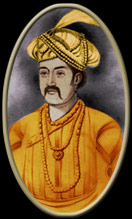
Neither a thoughtless sentiment nor a mere chivalrous regard for their valor dictated Akbar’s treatment of the Rajputs. Akbar realized early in life that his own clan, officials and followers served their own interests and were most unreliable ones. A long list of rebels against their own mentor is evident from his later experiences too. Afghans still resented Mughal overlordship and could erupt with opposition given a small opportunity. Akbar realized what his father and grandfather failed to see – the Rajputs, lords of vast kingdoms, masters of regions. Renowned for their valor and fidelity, they could be of great help if converted into friends. Therefore, he accepted their co-operation and used them as counterpoise against his other rivals. In fact, he went so far as to marry the Kachchwaha princess of Amber (Jaipur). He treated them on an equal footing with Muslim officials and commanders. He left many of them in possession of their autonomous states and treated them honorably. [br /]
[br /]
[br /]
One after the other, all the states of Rajasthan entered into alliance with him and were enrolled as mansabdars. Of course, this was not achieved totally without demonstration of military strength and battles. However, Mewar held off with disdain, even when its glory was at an all time low.[br /]
[br /]
[br /]
[b]Akbar[/b] was peculiarly free of religious prejudice and his treatment of Rajputs as his relatives made them his staunch supporters. Rajputs contributed in civil and military fields wholeheartedly for him and his descendants. This gave a stability, security and permanence to the Mughal dynasty. As a result the country made great progress in various fields, including a new synthesis of the Hindu-Muslim culture, which is a unique legacy of the Mughal rule in India.[br /]
[br /]
[br /]
[b]RELIGIOUS POLICY[/b][br /]
[br /]
[br /]
[b]Akbar[/b] grew up in comparatively liberal surroundings. Humayun was a Sunni, while Hamida Banu was a Shia. The first month of Akbar’s life was spent in the household of a Hindu chief. His tutor, Bairam Khan, a confirmed Shia, influenced Akbar greatly. One of Akbar’s tutors Mir Abdul Latif was so liberal that in a Sunni country he was dubbed a Shia and in a Shia country a Sunni. He taught the principle of Suleh-i-Kul (universal peace) which Akbar never forgot. Except for some minor acts, he never showed any capacity for narrow religious bigotry.[br /]
[br /]
[br /]
[b] Akbar[/b] was religious enough to ponder over the problems of life and death. He said, "On the completion of my 20th year, I experienced an internal bitterness due to lack of spiritual provision for my last journey, my soul was seized with exceeding sorrow."[br /]
[br /]
[br /]
Jizya or poll tax was a prevalent tax charged on non muslims. It was a great burden on poor. Many changed their religion just to escape it. As per the clause of Jizya all the non-muslims were compelled not to build new temple or repair their old ones. It further said that Hindus must allow Mohammedan travelers to stay in their temples and entertain them for at least three days in their homes and for a longer period also if they fall ill. Hindus had to respect Mohammedans and also were prevented to participate in Mohammedan’s meeting, to dress like them and to name their children with Mohammedan names. Hindus were also not allowed to possess arms and drink in public.[br /]
[br /]
[br /]
[b]Akbar's[/b] spiritual awakening resulted in abolition of pilgrim tax or the hated Jizya. Yet, he never gave up Islam. He prayed daily, sought company of holy men of Islam, devoutly pilgrimaged to Ajmer. But he had an inquisitive mind and wanted to know all about the principles of his own religion.[br /]
[br /]
With this object in view he built the Ibadat Khana at Fatehpur Sikri where regular sessions of religious discussions were held. At first confined to Muslim sections, these sessions soon turned into bickerings, which left Akbar dissatisfied with their explanation as well as behaviour. His belief in orthodox Islam was shaken. He threw open the debates to other faiths like Hindus, Jains, Zoroastrians and Christians. Then Mahzar or formal document was issued in September 1579, whereby Akbar claimed the supreme authority of an arbiter in all controversial causes, civil or eclectic, concerning Islam in the country. All important religious heads signed this document declaring their acceptance.[br /]
[br /]
[br /]
This document has been erroneously called Infallibility Decree. In fact it enjoined clauses to the effect that decision could go only in favor of one or the other party and no new line was to be adopted, and secondly that the decision was to be in accordance with a verse of the Quran. However, the authority was now vested in the Emperor and this undermined that of the Ulema and the Chief Sadr. These provisons confirmed that Akbar did not want to be a pope as well as the king, as some modern writers think.[br /]
[br /]
[br /]
[b]Akbar[/b] studied other faiths by discussing with people of importance. He revered each religion, so much that everyone thought that he belonged to their own religion. But none appealed to his soul completely.[br /]
[br /]
[br /]
[br /]
[br /]
One after the other, all the states of Rajasthan entered into alliance with him and were enrolled as mansabdars. Of course, this was not achieved totally without demonstration of military strength and battles. However, Mewar held off with disdain, even when its glory was at an all time low.[br /]
[br /]
[br /]
[b]Akbar[/b] was peculiarly free of religious prejudice and his treatment of Rajputs as his relatives made them his staunch supporters. Rajputs contributed in civil and military fields wholeheartedly for him and his descendants. This gave a stability, security and permanence to the Mughal dynasty. As a result the country made great progress in various fields, including a new synthesis of the Hindu-Muslim culture, which is a unique legacy of the Mughal rule in India.[br /]
[br /]
[br /]
[b]RELIGIOUS POLICY[/b][br /]
[br /]
[br /]
[b]Akbar[/b] grew up in comparatively liberal surroundings. Humayun was a Sunni, while Hamida Banu was a Shia. The first month of Akbar’s life was spent in the household of a Hindu chief. His tutor, Bairam Khan, a confirmed Shia, influenced Akbar greatly. One of Akbar’s tutors Mir Abdul Latif was so liberal that in a Sunni country he was dubbed a Shia and in a Shia country a Sunni. He taught the principle of Suleh-i-Kul (universal peace) which Akbar never forgot. Except for some minor acts, he never showed any capacity for narrow religious bigotry.[br /]
[br /]
[br /]
[b] Akbar[/b] was religious enough to ponder over the problems of life and death. He said, "On the completion of my 20th year, I experienced an internal bitterness due to lack of spiritual provision for my last journey, my soul was seized with exceeding sorrow."[br /]
[br /]
[br /]
Jizya or poll tax was a prevalent tax charged on non muslims. It was a great burden on poor. Many changed their religion just to escape it. As per the clause of Jizya all the non-muslims were compelled not to build new temple or repair their old ones. It further said that Hindus must allow Mohammedan travelers to stay in their temples and entertain them for at least three days in their homes and for a longer period also if they fall ill. Hindus had to respect Mohammedans and also were prevented to participate in Mohammedan’s meeting, to dress like them and to name their children with Mohammedan names. Hindus were also not allowed to possess arms and drink in public.[br /]
[br /]
[br /]
[b]Akbar's[/b] spiritual awakening resulted in abolition of pilgrim tax or the hated Jizya. Yet, he never gave up Islam. He prayed daily, sought company of holy men of Islam, devoutly pilgrimaged to Ajmer. But he had an inquisitive mind and wanted to know all about the principles of his own religion.[br /]
[br /]
With this object in view he built the Ibadat Khana at Fatehpur Sikri where regular sessions of religious discussions were held. At first confined to Muslim sections, these sessions soon turned into bickerings, which left Akbar dissatisfied with their explanation as well as behaviour. His belief in orthodox Islam was shaken. He threw open the debates to other faiths like Hindus, Jains, Zoroastrians and Christians. Then Mahzar or formal document was issued in September 1579, whereby Akbar claimed the supreme authority of an arbiter in all controversial causes, civil or eclectic, concerning Islam in the country. All important religious heads signed this document declaring their acceptance.[br /]
[br /]
[br /]
This document has been erroneously called Infallibility Decree. In fact it enjoined clauses to the effect that decision could go only in favor of one or the other party and no new line was to be adopted, and secondly that the decision was to be in accordance with a verse of the Quran. However, the authority was now vested in the Emperor and this undermined that of the Ulema and the Chief Sadr. These provisons confirmed that Akbar did not want to be a pope as well as the king, as some modern writers think.[br /]
[br /]
[br /]
[b]Akbar[/b] studied other faiths by discussing with people of importance. He revered each religion, so much that everyone thought that he belonged to their own religion. But none appealed to his soul completely.[br /]
[br /]
[br /]

